Get a Quote
Learn how marketing strategy helps businesses plan campaigns, target audiences, improve positioning, generate leads, and grow online.
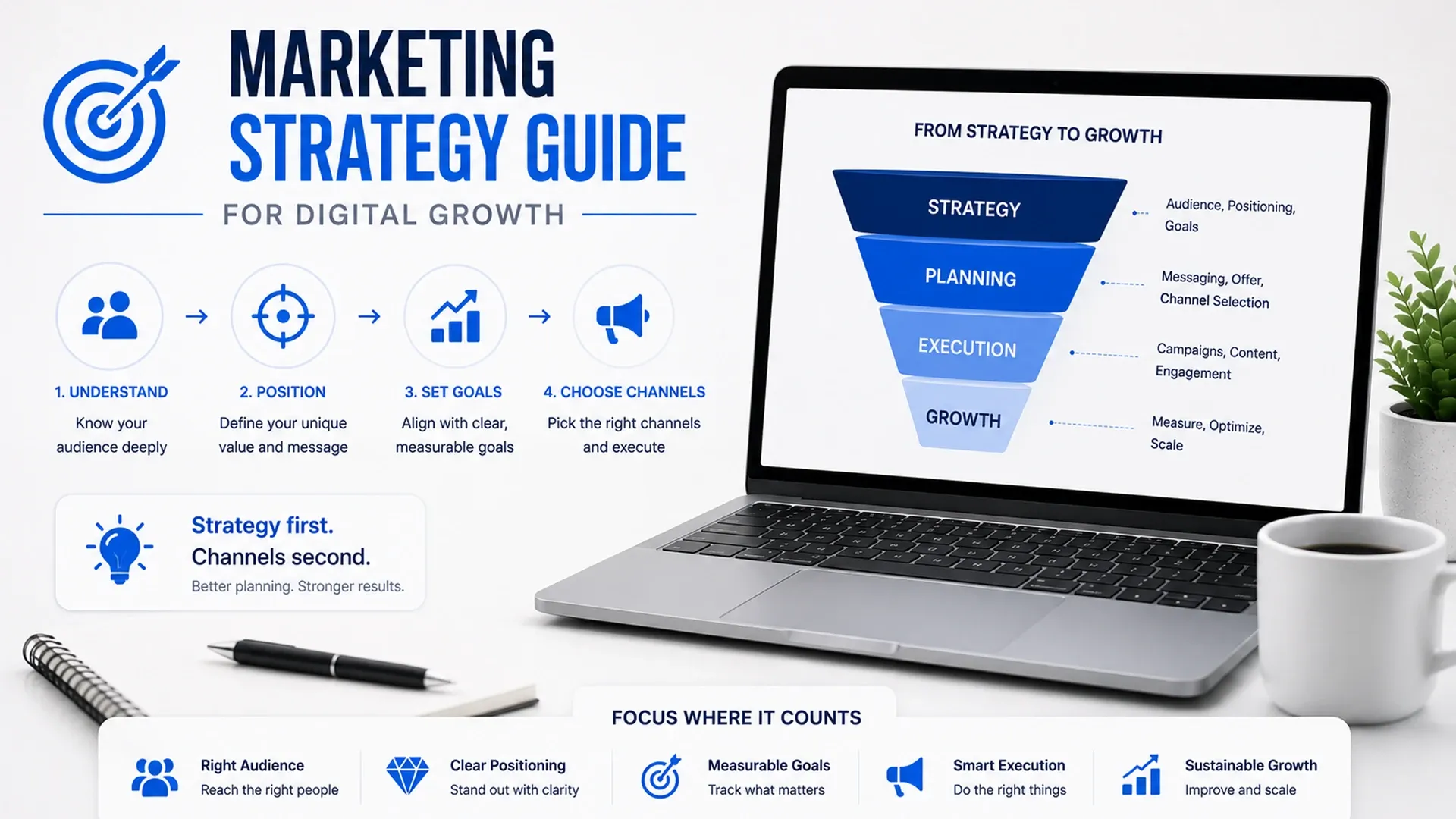
Plenty of businesses start with a channel instead of a plan - deciding to run ads, post daily on social, or send a newsletter before deciding what any of it is actually meant to achieve. A proper marketing strategy guide flips that order: channels and campaigns come after the harder questions about audience, positioning, and goals get answered first, not squeezed in afterward to justify a channel someone already committed to.
Starting With Who You're Actually Trying to Reach
Demographics alone rarely explain why someone buys - two people the same age and income can be in completely different stages of deciding whether they need what a business sells. Solid digital marketing strategy tips start by researching actual intent and behavior, not just building a persona around age brackets and job titles that could just as easily describe two people with nothing else in common.
- Real customer intent and search behavior, not just demographic assumptions
- Where the audience already spends attention, rather than guessing at trends
- What objections or hesitations show up most often before a purchase
- How buying decisions actually get made - alone, compared, or influenced by others
Much of that intent data is sitting in places businesses already have access to but rarely mine systematically - support tickets, sales call notes, and the actual search terms bringing traffic to the site all reveal more about real hesitation and motivation than another round of demographic surveys ever will.

Defining a Position Worth Defending
Audience research only pays off once it feeds into an actual position - a clear answer to why someone should choose this business over the three other options they're just as likely to find. Positioning isn't a tagline exercise; it's a specific claim about what the business does better, for whom, and why that gap matters enough for someone to act on it.
Turning Positioning Into a Plan
Once positioning is clear, a business growth marketing plan translates it into something concrete - which channels get budget, what each one is expected to deliver, and how success gets measured beyond vague impressions or likes, the kind of framework HubSpot's marketing planning guidance also emphasizes. Without that translation, positioning stays a slide in a deck instead of something that shapes actual spend, and a plan missing that step tends to default back to whatever channel got the most attention in last quarter's meeting.
Choosing and Sequencing Campaigns
Campaigns rarely succeed in isolation from each other, which is the whole point of a deliberate campaign planning strategy - a paid campaign driving traffic works better when there's content ready to support it and a way to capture the leads it generates, rather than each channel running independently on its own calendar.
A product launch is the clearest example of this in practice - the paid campaign driving initial traffic, the content answering the questions that traffic generates, and the lead capture mechanism turning interest into an actual conversation all need to be ready on the same day, not staggered across separate project timelines that were never coordinated with each other.
A strategy is the reason behind every campaign - without it, marketing is just a series of unconnected experiments.
Strategy isn't a document finished once and filed away either - it needs revisiting as campaigns produce real data, since actual customer behavior almost always reveals gaps a planning session couldn't have anticipated in advance.
Connecting Strategy to Execution Channels
Strategy is the layer above execution, not a replacement for it - the actual work still happens inside specific channels. Our guides to paid advertising and social media management cover much of that execution layer, while lead generation picks up once a campaign starts producing actual inquiries to follow up on, and none of those channels perform particularly well without the strategic groundwork covered above.