Get a Quote
Learn how lead generation works through landing pages, SEO, paid ads, content funnels, social campaigns, forms, and conversion strategy.
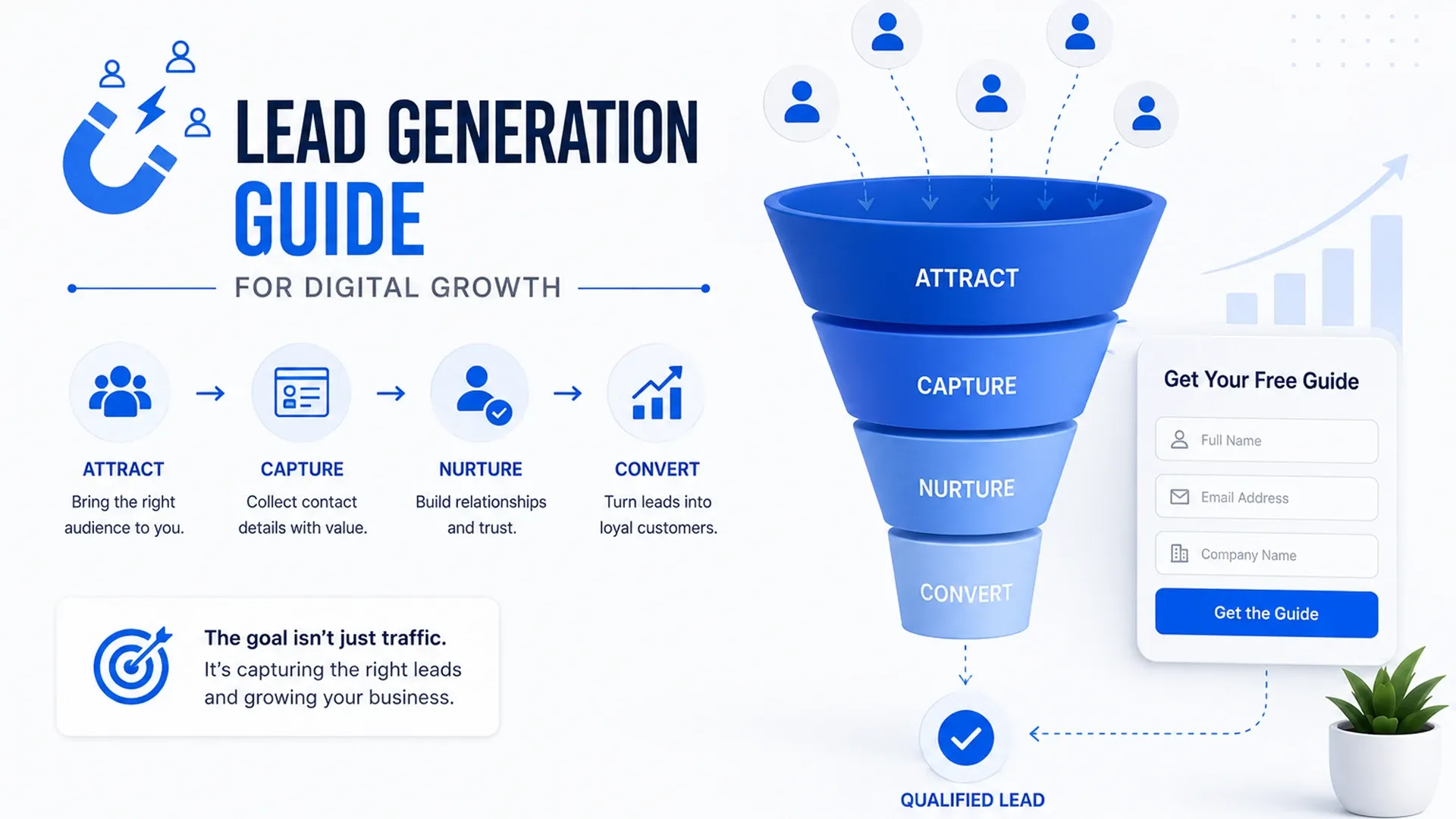
Traffic and leads get treated as the same thing far too often, but a visitor who reads an article and leaves is not the same as someone who hands over their contact details and asks to be followed up with. A practical lead generation guide treats that distinction as the entire point - the goal was never just attention, it was always a way to capture it and do something useful with it afterward.
Attracting the Right Kind of Attention
Different channels attract people at very different points in their decision, and useful digital lead generation tips start by matching the channel to that intent rather than running the same message everywhere regardless of where someone actually is in their decision. Someone searching for a specific solution is closer to ready than someone scrolling social media between unrelated posts.
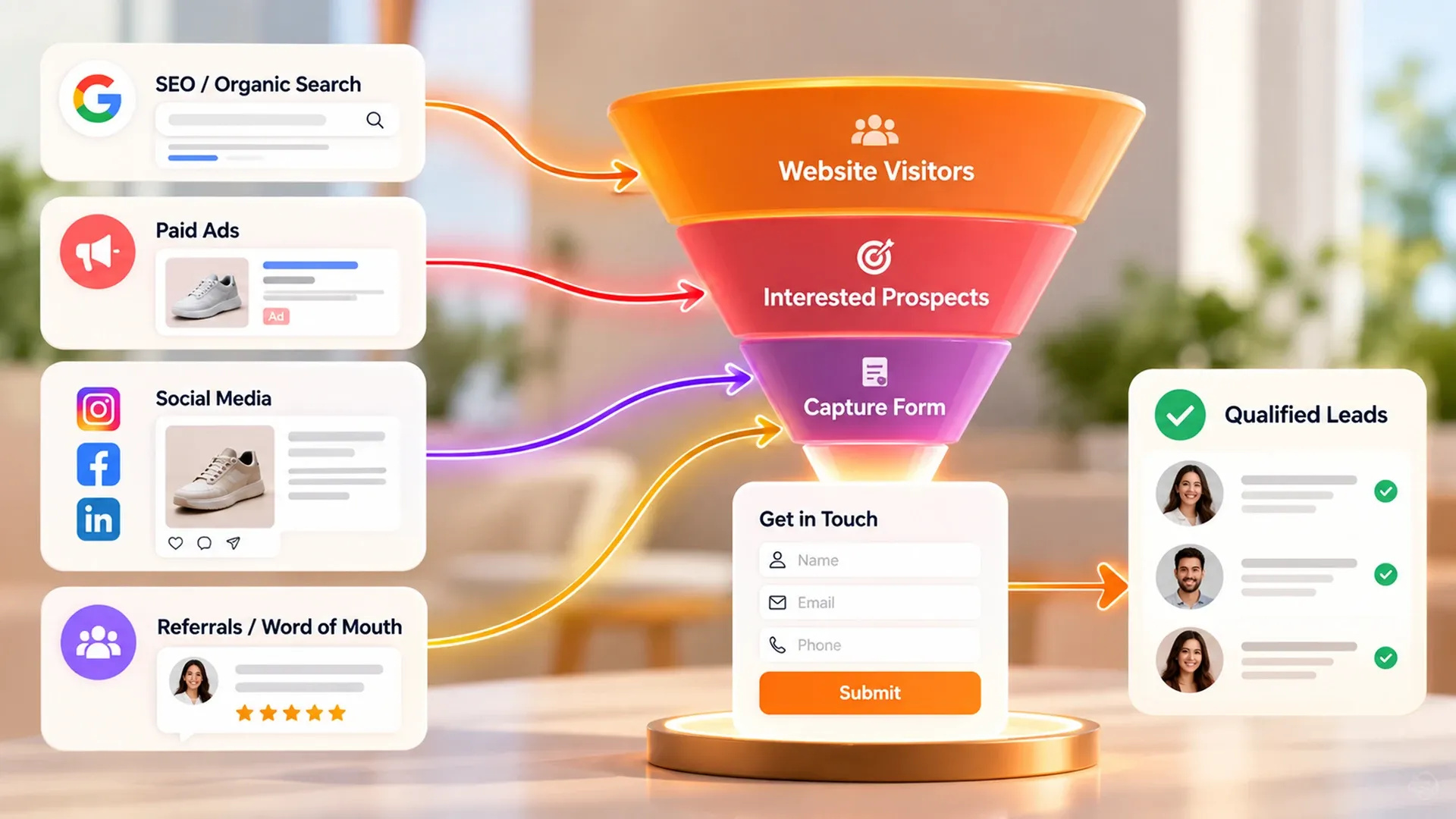
- SEO and organic search for people already looking for a solution
- Paid ads for reaching a defined audience on a specific timeline
- Social content for building familiarity before someone is ready to buy
- Referrals and word of mouth, still one of the highest-trust sources
Paid channels can produce leads almost immediately, while SEO builds more slowly but keeps producing long after a campaign budget runs out. The trade-off is speed against sustainability, and most lead generation programs eventually need a blend of both rather than betting everything on one.
Capturing Interest Before It Disappears
Attention that isn't captured quickly tends to just evaporate - a visitor closes the tab and rarely comes back on their own. That's where a focused landing page earns its place in the funnel, giving a visitor one clear, low-friction way to hand over their details instead of leaving them to hunt for a contact page buried three clicks deep in a navigation menu.
Every additional form field between a visitor's interest and a submitted lead is a small excuse to abandon the page, which is exactly why the highest-converting forms tend to ask for the bare minimum up front and save the deeper qualifying questions for a follow-up call.
Qualifying Leads So Sales Doesn't Chase Dead Ends
Volume alone is a hollow win if most of those leads were never going to buy anything. A genuine qualified lead generation strategy filters for fit early - through form questions, lead scoring, or simple follow-up criteria - so a sales team spends its time on the inquiries actually worth chasing, rather than working through a list where half the entries were never a realistic fit to begin with.
More leads isn't the real goal - more leads a sales team can actually close is.
Tracking Where Leads Actually Come From
None of the channel decisions above mean much without knowing which one actually produced a lead worth closing. Tagging every source - a specific ad, a specific landing page, a specific referral - turns next quarter's budget decision into something based on evidence instead of whoever argued most convincingly in the last planning meeting. Without that visibility, a channel that quietly produces the best customers can lose its budget to one that simply produces the most volume.
Building a Funnel That Doesn't Leak
A solid lead generation funnel guide treats capture as the beginning, not the finish line - a lead that goes three days without a follow-up cools off fast, and one that never hears from the business again might as well not have filled out the form. Nurturing that relationship is where our email marketing guide picks up, and the whole funnel sits underneath the direction set in our broader marketing strategy guide, which is ultimately what decides how much weight each channel above should actually carry.