
 Get a Quote
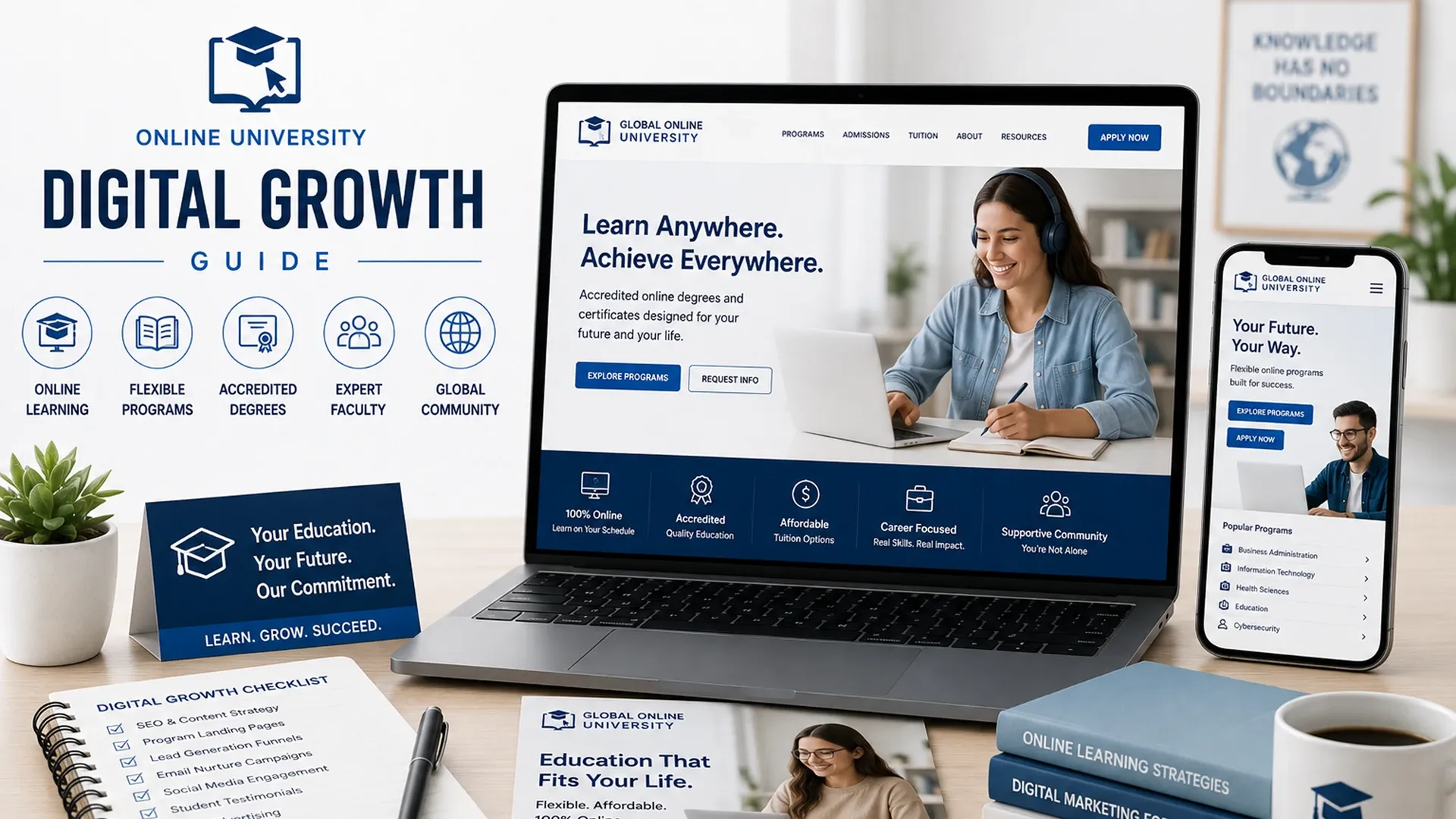
Learn how online universities grow with LMS platforms, student portals, admission funnels, SEO, content marketing, and digital systems.
Enrolling in an online university requires a different kind of trust than choosing a school with an actual campus — there's no building to walk through, no in-person tour to settle nerves, so the entire first impression rests on the platform itself. A genuine online university digital growth guide has to start there: for a fully remote institution, the website, the enrollment process, and the learning platform aren't supporting the product, they largely are the product a prospective student is evaluating.
Making the Learning Platform Part of the Pitch, Not Just the Backend
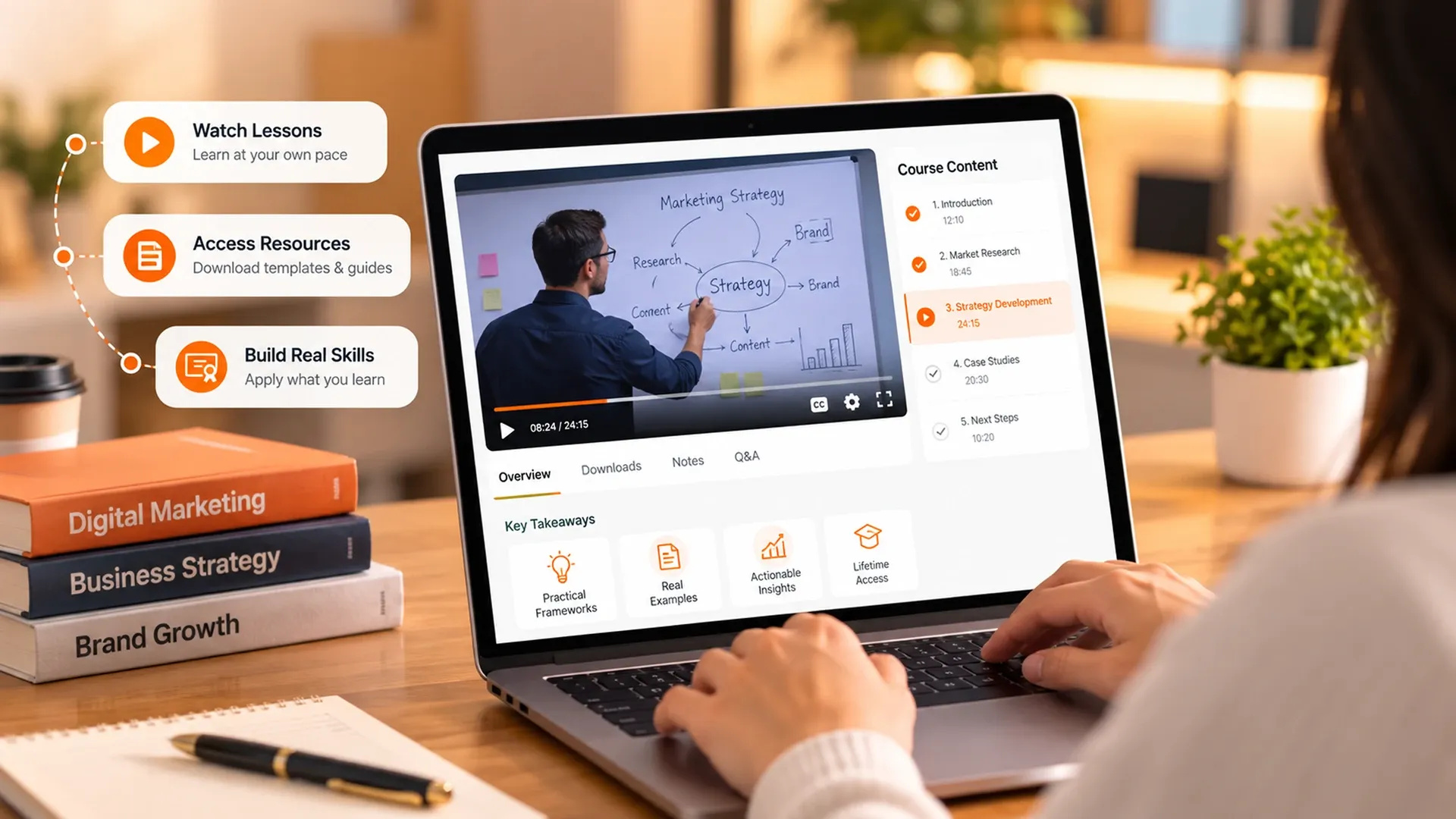
Prospective students increasingly want a preview of what daily coursework actually looks like before committing tuition to a program they'll never physically visit. A strong LMS strategy for online universities treats the platform as a selling point — offering a demo dashboard, sample lesson previews, or short walkthrough videos — rather than keeping it hidden until after enrollment, when a clunky or confusing interface can no longer be undone by marketing copy.
Proving Legitimacy Without a Campus to Point To
Skepticism toward online degrees hasn't disappeared, and prospective students often research accreditation carefully before trusting that a credential will actually hold weight with employers. Displaying recognition from a legitimate accrediting body, such as one recognized by the Council for Higher Education Accreditation, alongside specific graduate outcomes and faculty credentials, does more to overcome hesitation than any amount of polished marketing copy ever could on its own.
- Accreditation recognized by employers and other institutions
- Verified graduate outcomes and career placement data
- Faculty credentials and real teaching backgrounds
- Genuine student testimonials from recent, verifiable graduates
Guiding Students Through a Fully Digital Admission Journey
Digital marketing for online universities depends on an admission funnel that replaces every in-person touchpoint a traditional school relies on — the campus visit, the face-to-face advisor meeting, the physical orientation day — with an equally reassuring digital equivalent, often supported by automated enrollment workflows that keep applicants moving forward without waiting on manual follow-up.
- Capture initial interest through a clear, low-friction inquiry form
- Invite prospective students to a live or recorded virtual info session
- Walk applicants through document submission with real-time status updates
- Confirm enrollment with a guided orientation to the learning platform
Ranking for an Audience That Already Assumes Online-First
Good SEO for online universities benefits from an audience that's already comfortable researching and enrolling entirely online, which means organic search often carries more of the admissions funnel than it does for schools relying on local visibility. Content addressing program flexibility, transfer credit policies, and realistic time commitments captures students actively comparing online options rather than competing for attention against on-campus university programs.
Keeping Remote Students Engaged Long After Enrollment
Without hallway conversations or an in-person study group down the hall, remote students are more likely to disengage quietly, and a university that treats retention as an afterthought pays for it in dropout rates. Regular check-ins, responsive academic advising available outside traditional office hours, and a genuinely active online student community all help replace the informal support a campus naturally provides.
A remote student who feels forgotten between login sessions rarely files a complaint — they simply stop logging in.
Growing an online university comes down to making the learning platform itself part of the pitch, proving legitimacy without a physical campus, guiding students through a fully digital admission journey, ranking for an audience that already expects an online-first experience, and keeping remote students engaged well past enrollment day. Institutions that get all of this right build the kind of digital trust that convinces a prospective student who will likely never set foot on any campus at all.