Get a Quote
Learn how paid advertising, PPC, Google Ads, Meta Ads, targeting, creatives, landing pages, and optimization improve leads and sales.
Paid advertising can generate leads and sales faster than almost any other digital channel, but it can also burn through budget quickly when strategy, creative, and tracking aren't working together. Every paid campaign is really three connected systems — targeting the right audience, showing them something compelling, and giving them somewhere effective to land — and weakness in any one of them limits what the other two can achieve, regardless of how much is spent.
Choosing Between Google Ads and Meta Ads
A well-planned Google Ads strategy and Meta Ads best practices serve fundamentally different moments in a customer's journey, which makes the right platform choice dependent on intent, not just audience size:
Platform | Best For | Targeting Basis |
|---|---|---|
Google Ads | Capturing existing search demand | Keywords and search intent |
Meta Ads | Creating demand and brand awareness | Interests, behavior, and demographics |
Many businesses eventually use both — Google Ads to capture people already looking for a solution, Meta Ads to build awareness with people who don't know they need one yet, often working alongside organic social media management rather than replacing it.
Why Creative Testing Never Really Stops
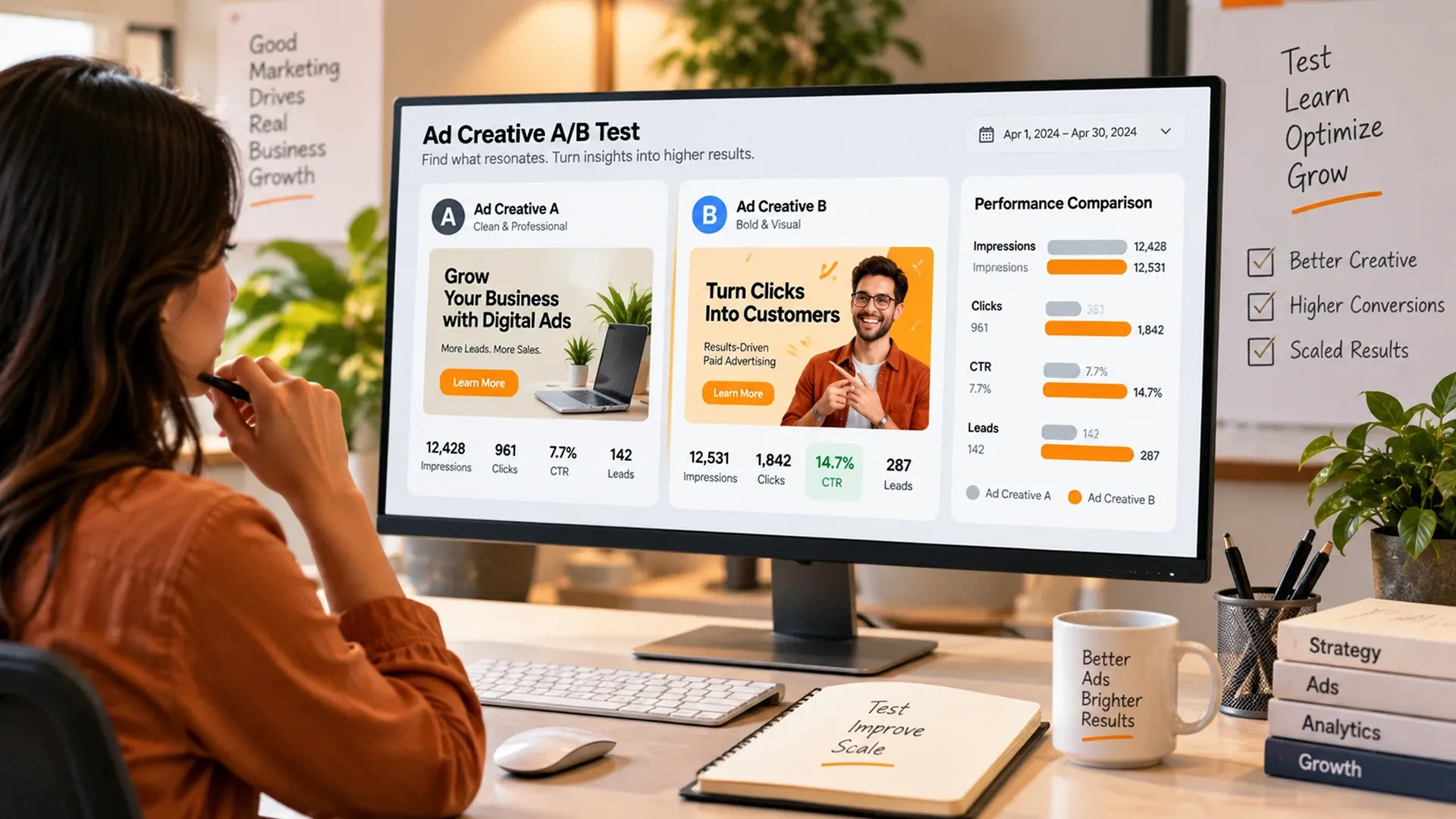
Even a well-targeted campaign underperforms if the ad itself doesn't capture attention or communicate value clearly. One of the most consistent PPC advertising tips is that the strongest hooks are often adapted from what's already resonating in organic content marketing. Consistent testing across a few variables tends to reveal the biggest performance gains:
- Headlines and hooks that stop the scroll or capture search intent
- Visuals, from static images to short-form video
- Offers and calls to action, tested against each other directly
- Ad formats, since what works on one platform rarely transfers directly
Landing Pages Decide What Happens After the Click
A great ad that sends traffic to a generic homepage wastes most of its potential.
Dedicated landing pages, built around the exact promise made in the ad, consistently convert better than sending paid traffic to a page designed for general browsing.
This is a factor platforms like Google Ads explicitly reward through Quality Score. The message from ad to page should feel continuous — the same offer, the same tone, the same next step — so visitors never have to guess whether they've landed in the right place.
Tracking What Actually Drives Revenue
Click and impression counts are easy to report but say very little about whether a campaign is actually profitable. Meaningful paid advertising tracking follows the customer past the click, connecting ad spend to real outcomes — leads, sales, or signups — using attribution models that trace parameters like utm_source and utm_campaign across the full path rather than stopping at surface-level engagement metrics. Without this connection, it's tempting to declare a campaign successful because it generated a lot of clicks, even if very few of those clicks ever turned into paying customers.
- Cost per acquisition, not just cost per click
- Conversion rate from landing page to completed action
- Return on ad spend, comparing revenue generated to budget spent
- Attribution across the full path, not just the last click before conversion
Budgeting for Testing, Not Just Immediate Results
Campaigns rarely perform at their best from day one — early spend is often best treated as a testing budget rather than a guaranteed return, since the first version of any targeting, creative, or landing page combination is a hypothesis, not a proven winner. Businesses that expect immediate, optimal performance from a brand-new campaign often pull the plug before the system has gathered enough data to actually optimize. Allocating a portion of the budget specifically for early testing, with realistic expectations about performance during that phase, sets campaigns up to improve meaningfully once real data starts coming in.
Paid advertising performs best when targeting, creative, landing pages, and tracking are treated as one connected system rather than separate tasks. Businesses that continuously test and refine each part, while budgeting realistically for that testing process, build campaigns that improve over time instead of plateauing after the initial setup.