Get a Quote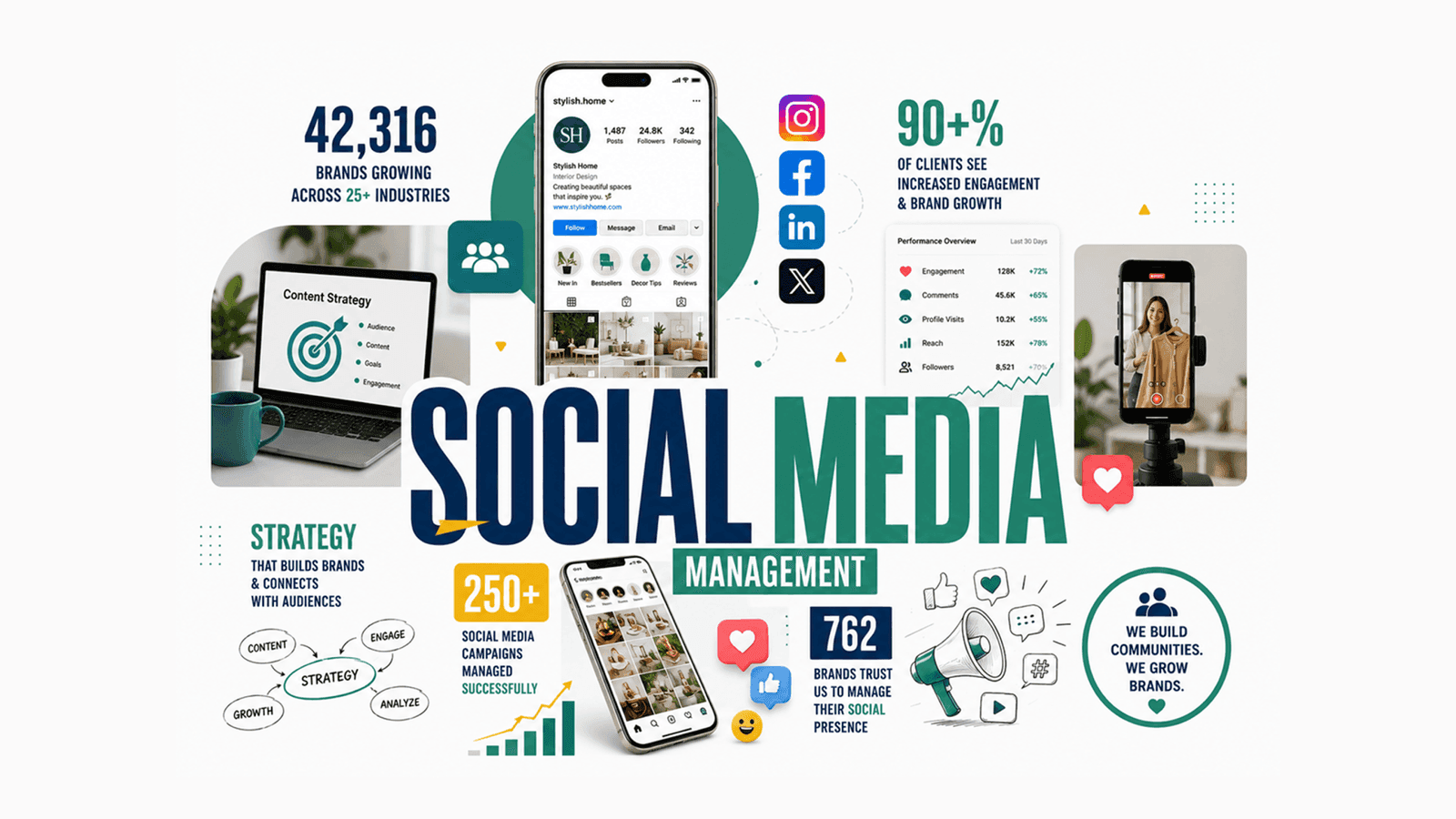
Learn how social media management improves content planning, brand consistency, engagement, community growth, visibility, and trust.
Social media management is often mistaken for simply posting regularly, but consistent posting without strategy rarely builds the visibility or trust businesses are actually looking for. Effective social media management treats each platform as a distinct audience with different expectations, plans content deliberately rather than reactively, and measures success by engagement and relationships, not just follower counts. Done well, it turns social platforms into a genuine channel for growth rather than a box that simply gets checked every week, and one that paid advertising can amplify rather than replace.
Matching Content to the Right Platform
The same piece of content rarely performs equally well everywhere, because different platforms serve different intents:
Platform | Typically Best For |
|---|---|
Visual storytelling and brand personality | |
Thought leadership and B2B credibility | |
TikTok | Short-form, discovery-driven content |
Trying to post identical content everywhere usually underperforms compared to adapting format and tone to how each platform's audience actually behaves. This doesn't mean creating entirely separate content from scratch for every channel — it usually means reshaping the same core idea into a format that fits how each platform is actually used.
What a Realistic Content Calendar Includes
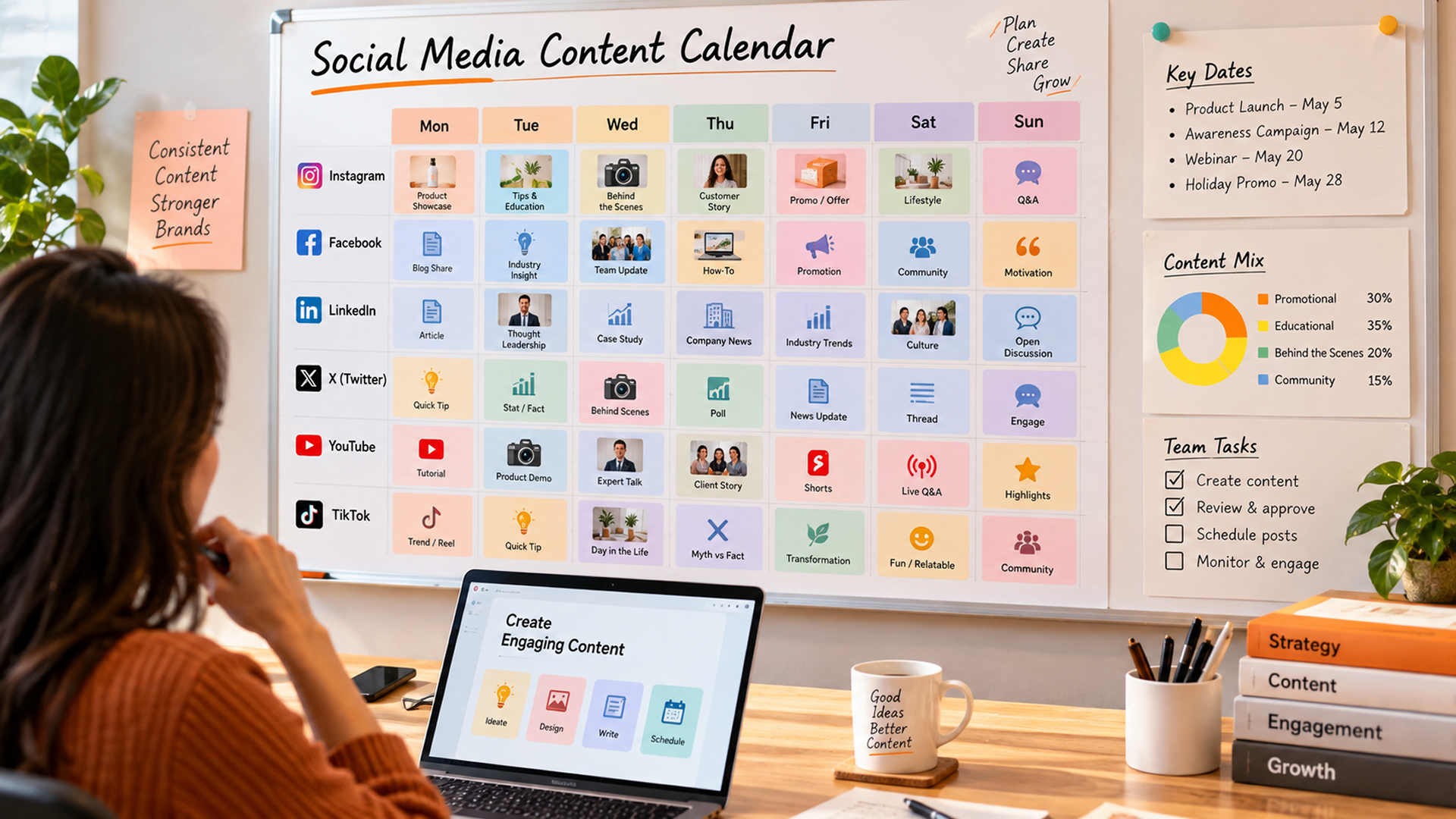
Good content planning for social media keeps posting consistent and aligned with broader business goals, rather than reactive and last-minute, and it gives a team enough lead time to actually produce quality content instead of scrambling the day something needs to go live. It works best as an extension of a wider content marketing plan rather than a standalone posting schedule. A well-built one typically includes:
- A mix of promotional, educational, and behind-the-scenes content
- Key dates and campaigns planned weeks in advance
- Clear ownership over who creates, approves, and posts content
- Room for timely, reactive posts alongside the planned schedule
Engagement Is a Two-Way Conversation
Posting content is only half of a solid brand engagement strategy — the other half is responding to it. Comments, messages, and mentions are opportunities to build genuine relationships with an audience, and ignoring them signals the opposite of what social platforms are meant to do. Businesses that respond consistently, acknowledge feedback, and participate in conversations around their content tend to build stronger, more loyal communities than those that treat social media purely as a broadcast channel.
Measuring What Actually Matters
Follower count is the easiest social media metric to track, and also one of the least useful on its own — a large following that never engages or converts contributes far less to a business than a smaller, genuinely engaged audience, a pattern that shows up consistently in independent social media benchmark data. More meaningful measurement looks at how people actually interact with content and whether that interaction eventually leads somewhere:
- Engagement rate relative to audience size, not raw likes or comments
- Reach and impressions among the specific audience a brand cares about
- Click-throughs to a website or landing page from social posts
- Conversions or inquiries that can be traced back to social activity
Staying Consistent Without Burning Out
One of the most overlooked social media marketing tips is pacing: many efforts start strong and fade within a few months, usually because the initial pace wasn't sustainable once the novelty wore off.
A realistic posting frequency that a team can maintain indefinitely produces better long-term results than an ambitious schedule that collapses after a busy quarter.
Batching content creation, reusing strong-performing ideas in new formats, and setting a cadence based on actual team capacity — rather than an arbitrary industry benchmark — keeps social media management sustainable rather than something that quietly stops the moment other priorities get busy.
Social media management works best as a deliberate system: content matched to each platform, a calendar that keeps output consistent, genuine engagement with the people responding to it, and measurement that looks past vanity metrics. Businesses that commit to all four, at a pace they can sustain, build visibility and trust that compound well beyond any single post. When it's time to amplify what's already working, our paid advertising guide covers that next step.