Get a Quote
Learn how link building, off-page SEO, internal linking, topical authority, brand mentions, and trust signals improve organic visibility.
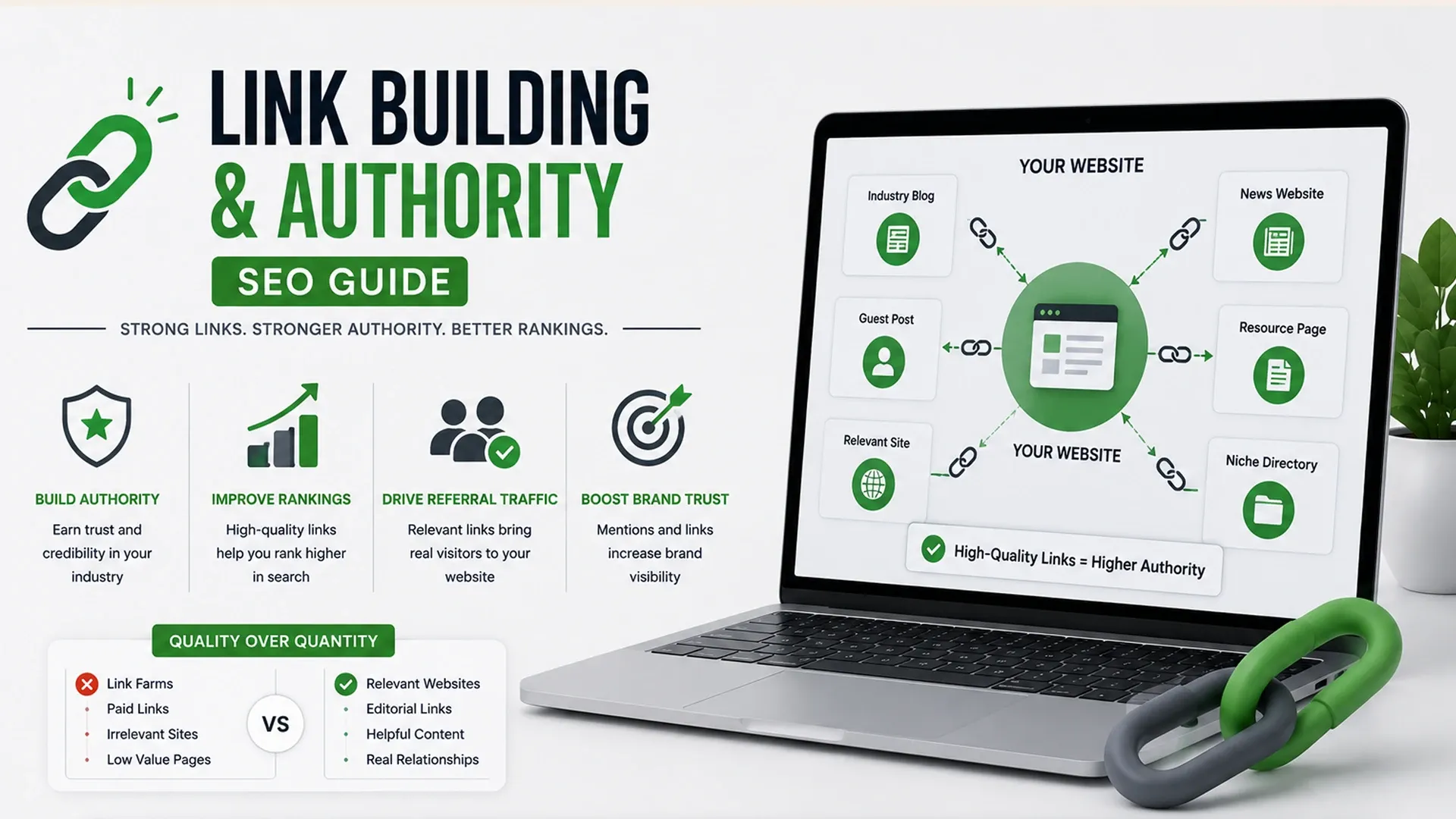
Link building has a bad reputation because so much of the industry's early history was link building done badly - paid placements, link farms, and volume-over-relevance thinking that search engines have spent years learning to discount. A modern link building guide starts somewhere more honest: links work as a ranking signal because they're difficult to fake convincingly, which is exactly why quality still matters more than quantity, no matter how many other tactics change around it.
What Makes a Backlink Actually Worth Earning
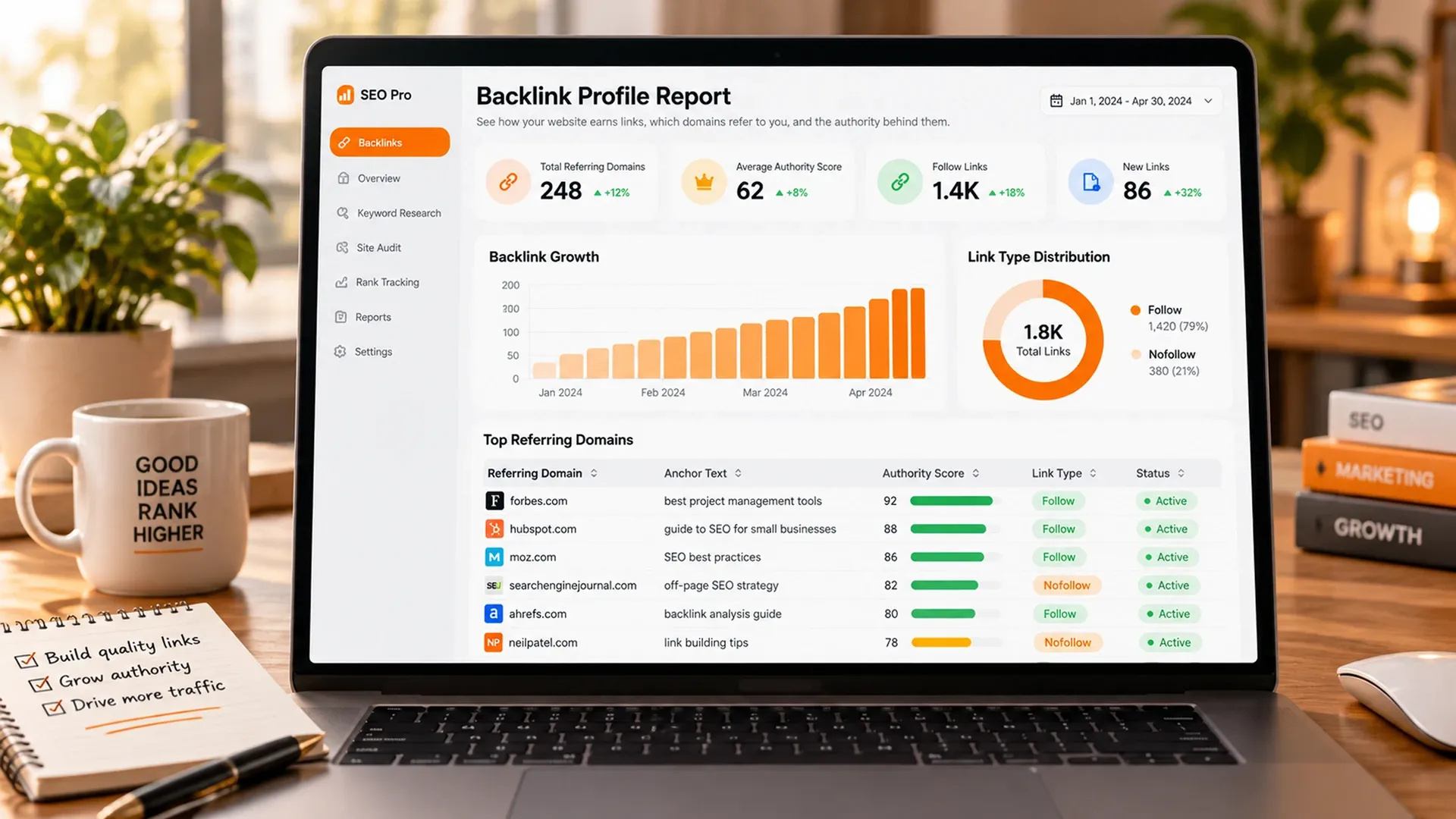
Not every link carries the same weight, and a sound off-page SEO strategy treats the relevance and authority of the linking site as more important than the raw count of links pointing back. A single mention from a respected, topically relevant source generally outweighs a dozen links from unrelated directories, even when a link technically carries a rel="nofollow" attribute that passes no direct ranking credit, since the traffic and brand exposure from a well-placed mention often matter on their own regardless of that technical attribute.
- Relevance - a link from a site that actually covers the same subject matter
- Authority - a linking site search engines already trust in that space
- Natural anchor text instead of the exact same keyword phrase every time
- Editorial placement, earned because the content deserved it, not paid for
Anchor text over-optimization is one of the more common ways businesses accidentally signal manipulation rather than genuine endorsement. A backlink profile where every single link uses the exact same commercial keyword phrase looks far more like a paid campaign than an organic pattern of citations, and search engines have gotten reasonably good at spotting the difference.
Building Topical Authority Through Connected Content
Links aren't the only signal that builds trust - topical authority SEO also comes from how thoroughly a site covers a subject and how well its own pages link to each other. A cluster of genuinely useful, interconnected pages on a topic tends to earn external links more naturally than a single isolated page ever could, which is where our on-page and content SEO guide picks up the thread.
Internal linking plays a supporting role here that's easy to underestimate - a well-placed link from an established, high-authority page to a newer one on the same site passes along some of that trust immediately, long before the newer page has had a chance to earn any external links of its own.
Earning Links Instead of Buying Them
Sustainable SEO authority building tends to come from being genuinely useful to someone else's audience - original research worth citing, expert commentary worth quoting, or resources thorough enough that other sites want to reference them instead of writing their own version. That's a slower process than buying placements, but it's also one that doesn't disappear the moment an algorithm update targets manipulative link schemes, unlike a rented placement that stops counting for anything the day the payment stops.
Search engines can't verify trust directly, so they infer it from who else is willing to vouch for you.
Digital PR, guest contributions to genuinely relevant publications, and being the source quoted in someone else's research all tend to outperform direct outreach asking for a link, since the request itself becomes secondary to whatever made the content worth citing in the first place.
Where Link Building Fits Into a Broader SEO Strategy
Link building rarely works as a standalone effort - it compounds on top of solid technical foundations and a clear sense of where a site's SEO actually stands. Our technical SEO guide and SEO audit and strategy guide are the pieces worth reading alongside this one before investing heavily in outreach, since a technically weak site with a strong backlink profile rarely converts that authority into rankings it can actually hold onto.