Get a Quote
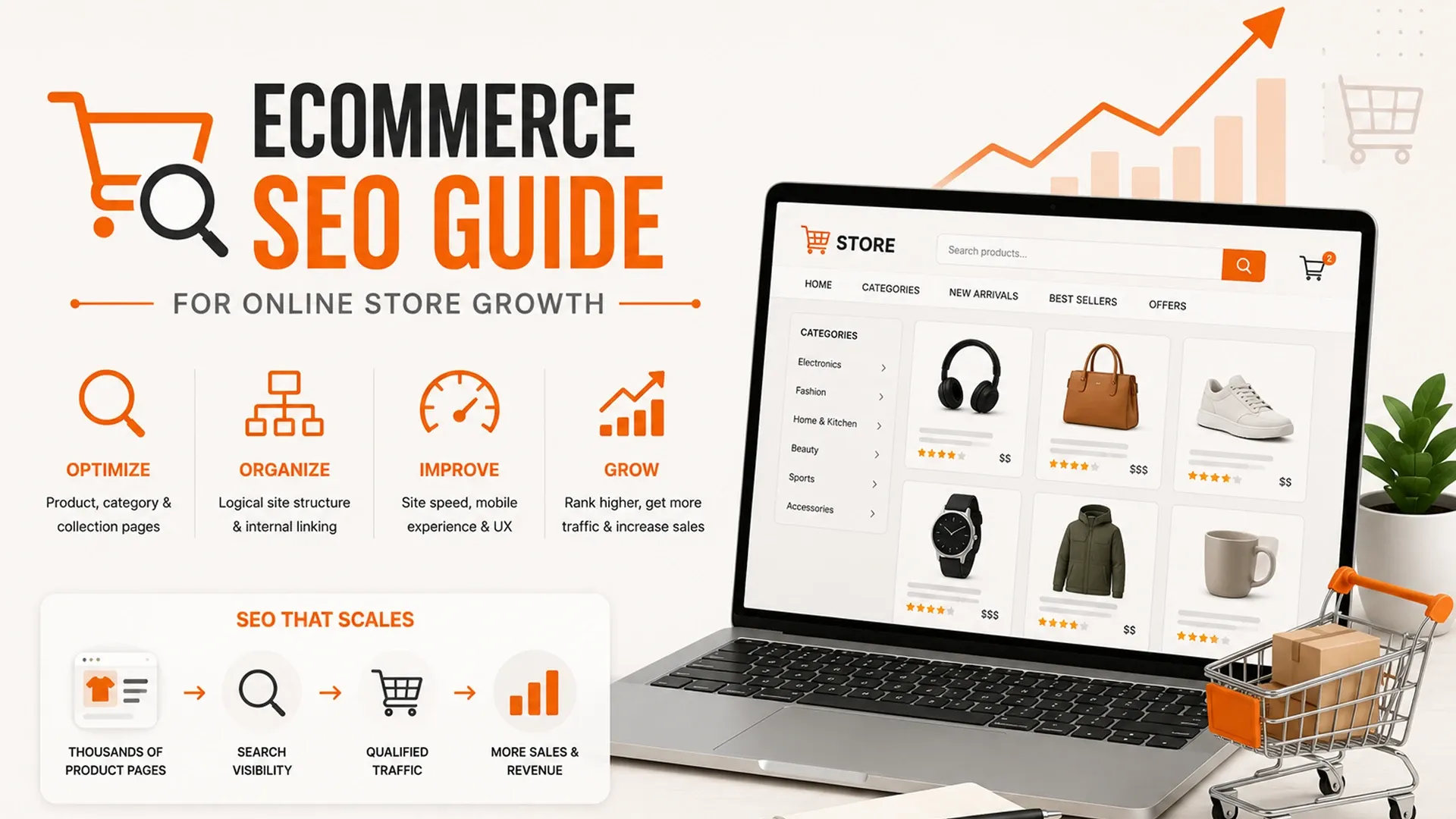
Learn ecommerce SEO strategies for product pages, category pages, technical SEO, internal linking, content, and online store visibility.
Ecommerce SEO carries a problem most content-driven sites don't face - thousands of product pages, competing not just against rival stores but against marketplaces and directories that outrank almost everyone by default. A focused ecommerce SEO guide treats that scale as the central challenge, since fixing one page rarely moves the needle across a catalog of several thousand the way it might on a five-page brochure site.
Making Product Pages Rank, Not Just Load
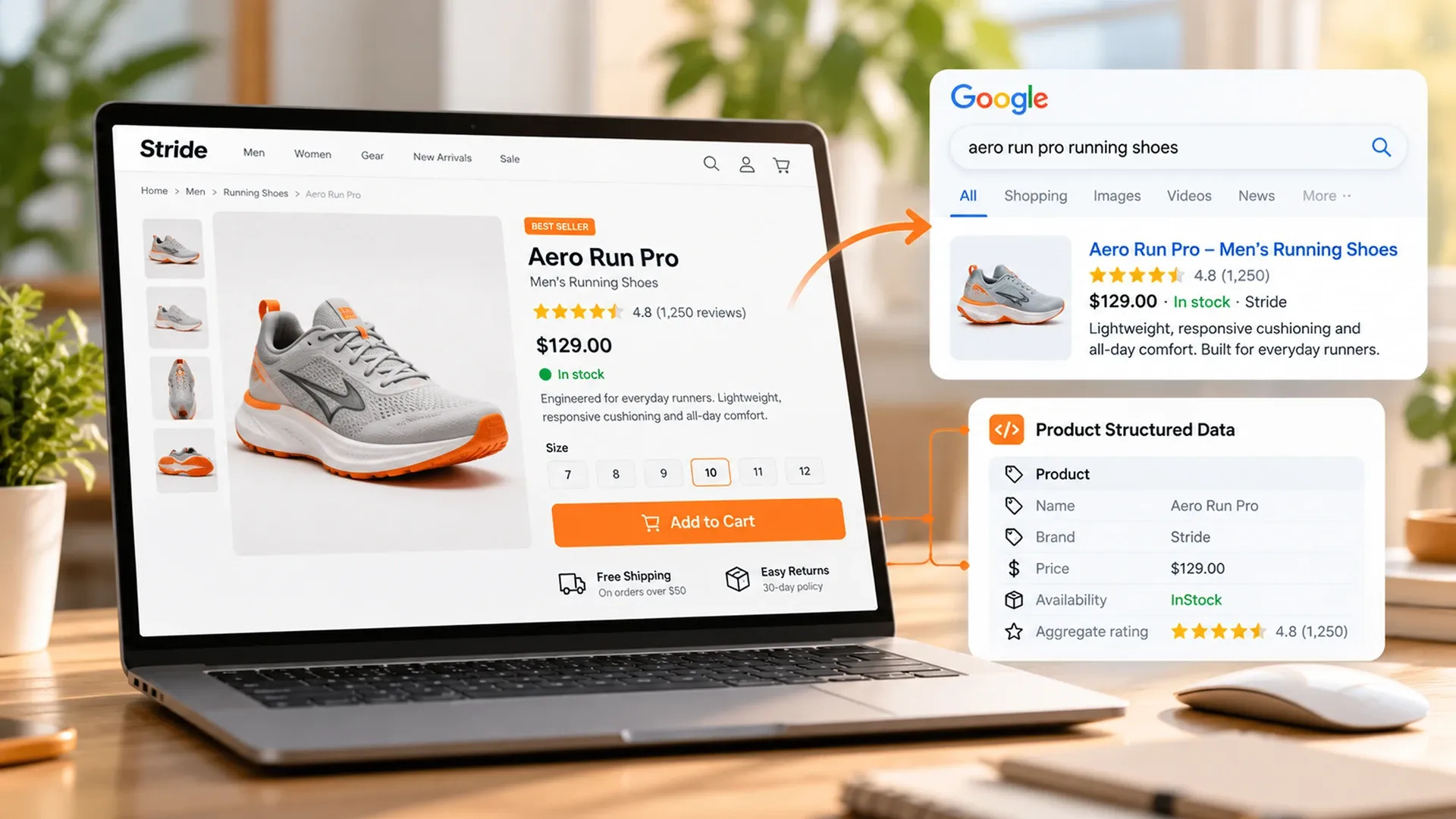
Manufacturer descriptions copied straight from a spec sheet are the fastest way to make a product page invisible, since dozens of competitors are running the exact same paragraph. Solid product page SEO tips start with rewriting that copy uniquely, adding structured data so search engines can display price and availability directly in results, and writing image alt text that actually describes the product instead of leaving it blank, a detail search engines and screen readers both depend on equally.
- Unique product descriptions instead of copied manufacturer text
- Structured data (schema markup) for price, availability, and reviews
- Descriptive image alt text for every product photo, not just the first
- Genuine customer reviews treated as page content, not a hidden tab
Reviews deserve particular attention here, since they're one of the few sources of genuinely unique text on an otherwise templated page. Two competitors selling the identical product from the same manufacturer will often have near-identical spec sheets, but their review sections almost never read the same.
Structuring Category Pages to Capture Broader Search Intent
Category pages often chase broader, higher-volume search terms than any single product ever could, but only if they're built with enough real content to earn that ranking. A working category page SEO strategy adds genuine introductory copy above the product grid and links out to relevant subcategories, rather than leaving the page as a bare grid of thumbnails with nothing for a search engine to read.
Pagination adds its own wrinkle once a category grows past a single page of results, since splitting a collection across ten thin pages can dilute the ranking signal a single, well-consolidated category page might otherwise have earned on its own.
Handling Technical Issues Unique to Stores
SEO for ecommerce websites runs into technical problems a typical business site never sees - filter combinations generating thousands of near-duplicate URLs, discontinued products returning dead links, and pagination that fragments a single category's authority across a dozen thin pages. A consistent rel="canonical" strategy and a clear policy for what happens to an out-of-stock product page keeps a large catalog from working against itself, and skipping either one tends to surface as a slow, mysterious decline in visibility that's much harder to diagnose after the fact than to prevent up front.
An ecommerce site can have flawless products and still lose the sale to a competitor who simply ranks first.
Buying guides and comparison content fill a gap product and category pages can't - they capture shoppers still deciding between options, well before a specific SKU has been chosen, and they tend to earn links and shares a standalone product page rarely attracts on its own.
Connecting Ecommerce SEO to the Rest of the Store
None of this replaces the groundwork covered in our technical SEO guide - it builds on top of it, applied to the specific scale and structure of a storefront. Businesses still shaping the store itself might find it worth pairing this with our ecommerce development guide, since page structure decisions made during the build directly affect how much SEO work is needed later, alongside the off-page side covered in our link building guide, because a store's SEO rarely improves from working on just one of these fronts while ignoring the others.