
 Get a Quote
Learn how sustainable fashion brands grow with ethical storytelling, ecommerce, SEO, content marketing, community building, and trust.
Sustainable fashion customers tend to be more skeptical, not less, than typical shoppers — many have been burned before by vague "eco-friendly" claims that turned out to mean very little, so they read labels, sourcing pages, and certifications more carefully than someone shopping on style alone. A genuine sustainable fashion growth guide starts from that skepticism and builds trust through specifics rather than good intentions stated in general terms.
Proving Sustainability Instead of Just Claiming It
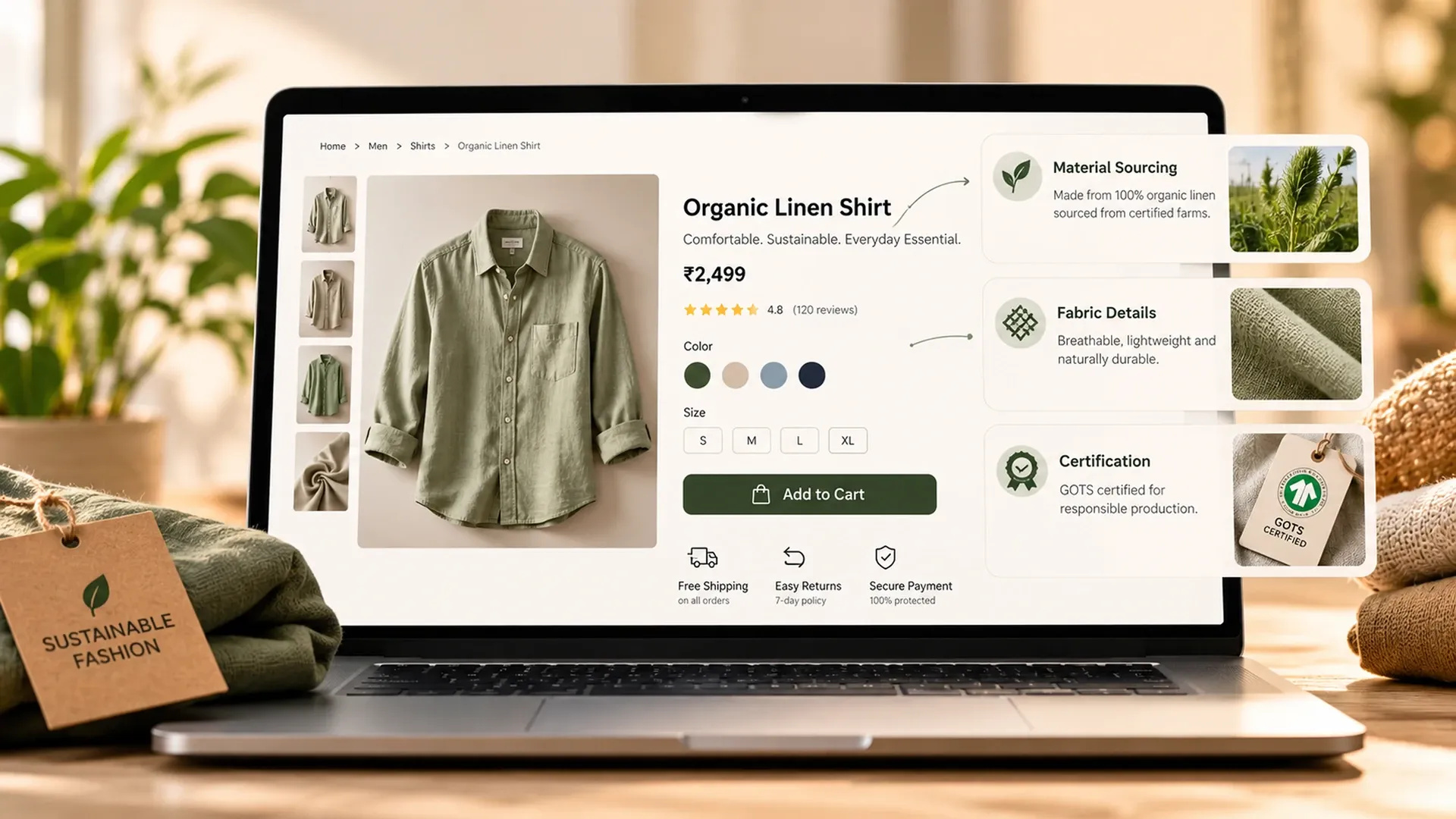
Vague language like "eco-conscious" or "responsibly made" no longer carries much weight on its own, especially as shoppers have grown wary of greenwashing across the industry. Recognized certifications, specific material sourcing details, and transparency about manufacturing conditions all do the convincing that a values statement alone can't, particularly when verified through bodies like GOTS.
- Recognized certifications such as GOTS or Fair Trade, clearly displayed
- Specific sourcing details for materials, not vague sustainability language
- Transparency about manufacturing locations and labor conditions
- Honest acknowledgment of where the brand is still improving
Justifying a Premium Price With Real Value, Not Guilt
Digital marketing for sustainable fashion works best when it sells genuine value — durability, quality materials, and ethical production — rather than leaning on guilt or moral pressure to justify a higher price point. Shoppers respond far better to a clear case for why a garment is worth the cost than to messaging that frames the alternative as irresponsible.
Approach | Vague Marketing | Verifiable Practice |
|---|---|---|
Sourcing claims | "Ethically sourced materials" | Named suppliers and specific certifications |
Environmental impact | "Eco-friendly production" | Published data on water and emissions savings |
Labor practices | Not mentioned | Documented factory audits and fair-wage commitments |
Building Ecommerce Experiences That Match the Brand's Values
Good sustainable fashion ecommerce tips extend the brand's values into the shopping experience itself — product pages that explain the story behind a specific garment, packaging that reflects the same principles as the product inside, and checkout flows free of the dark patterns that would undercut a brand built on trust.
Explaining What Happens After the Sale
Sustainability claims that stop at the point of purchase leave an obvious question unanswered: what happens to the garment at the end of its life? Brands that provide care instructions to extend garment lifespan, offer repair services, or run take-back and recycling programs demonstrate that sustainability is a genuine commitment rather than a one-time marketing angle attached to the initial sale. This kind of follow-through also gives a brand a natural reason to stay in touch with customers long after checkout — a care guide email, a repair reminder, or an invitation to a take-back program all reinforce the same values that motivated the purchase in the first place, while creating touchpoints a purely transactional retailer never gets to have.
Ranking in an Increasingly Crowded 'Sustainable' Search Space
As more brands adopt sustainability language, a solid ethical fashion SEO strategy increasingly depends on specificity to stand out — content about a particular material, certification, or supply chain practice ranks and converts better than generic sustainability messaging competing against dozens of similar claims.
Building Community Around Shared Values
Customers who choose a sustainable brand are often making a small identity statement, not just a purchase, which makes community-building — behind-the-scenes content, direct communication from founders, and genuine customer stories — a stronger growth lever than discount-driven promotions that dilute the brand's positioning.
A sustainable fashion brand doesn't sell guilt relief — it sells a garment its customer is proud to explain.
Growing a sustainable fashion brand comes down to proving sustainability with specifics instead of vague claims, justifying a premium price through genuine value, extending brand values into the ecommerce experience itself, standing out in an increasingly crowded search space, and building real community around shared values. Brands that get this right earn the kind of long-term loyalty that outlasts trend cycles affecting even fast-moving categories like footwear and party wear.