
 Get a Quote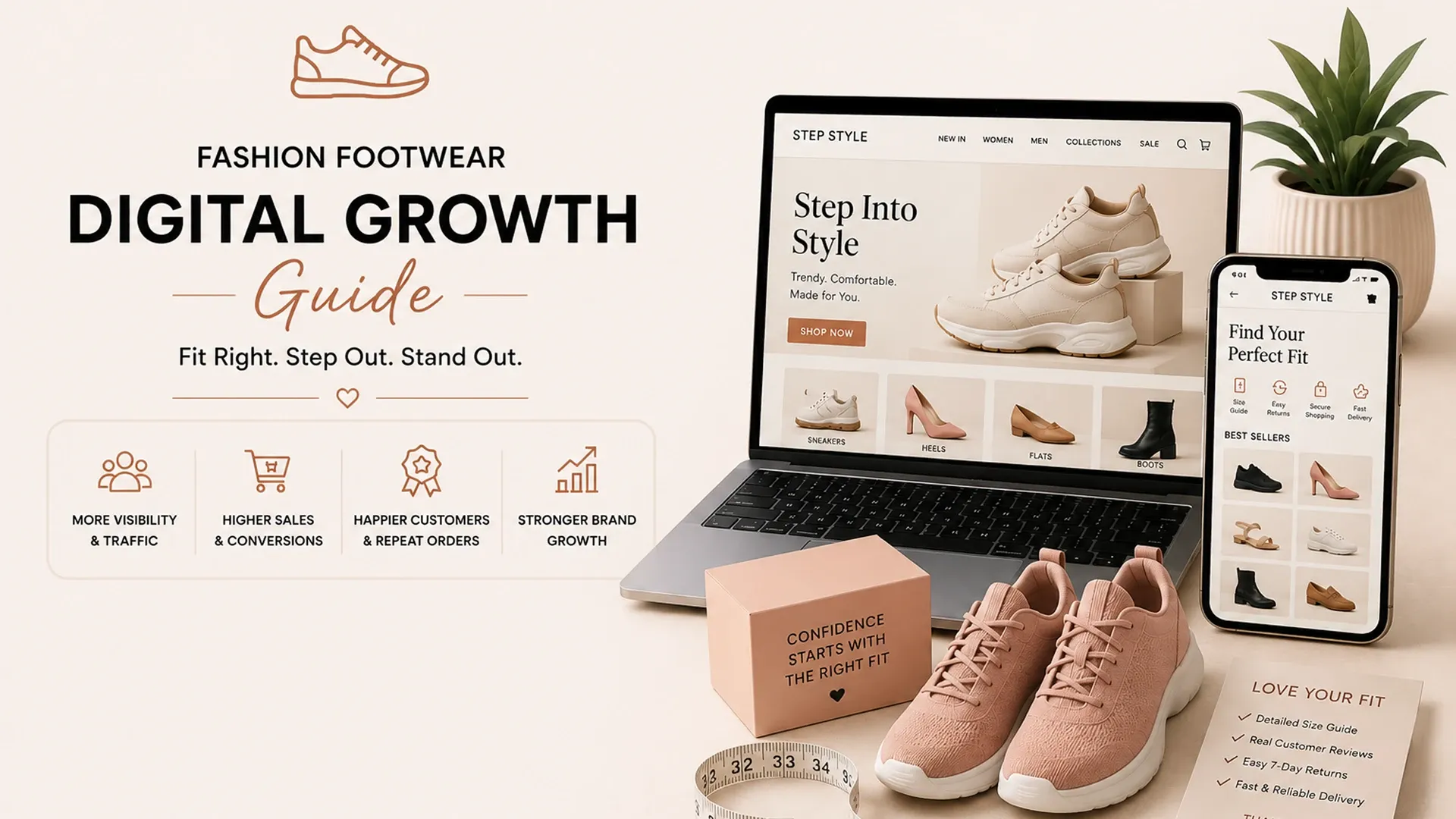
Learn how fashion footwear brands grow with ecommerce, product SEO, collection pages, paid ads, brand storytelling, and retention.
Buying shoes online carries a specific kind of hesitation that clothing doesn't always share — sizing varies not just between brands but often between different styles from the same brand, and a shopper who guesses wrong ends up dealing with a return instead of a new favorite pair. A strong fashion footwear growth guide has to address that hesitation directly, because it's usually the single biggest thing standing between a browsing visitor and a completed purchase.
Solving the Sizing Problem Before It Becomes a Return
Good footwear ecommerce tips start with sizing information detailed enough that a shopper doesn't have to guess — measurements in centimeters alongside standard sizes, notes on whether a style runs narrow or wide with the kind of precision tools like the Brannock Device established decades ago, and reviews that mention true-to-size fit all reduce the uncertainty that otherwise ends in an abandoned cart or a returned box.
- Detailed size charts with measurements, not just standard sizing
- Fit notes describing whether a specific style runs narrow or wide
- Verified reviews that mention true-to-size experience
- A clear, low-friction return and exchange policy stated upfront
Making Collection Pages Do More Than Just List SKUs
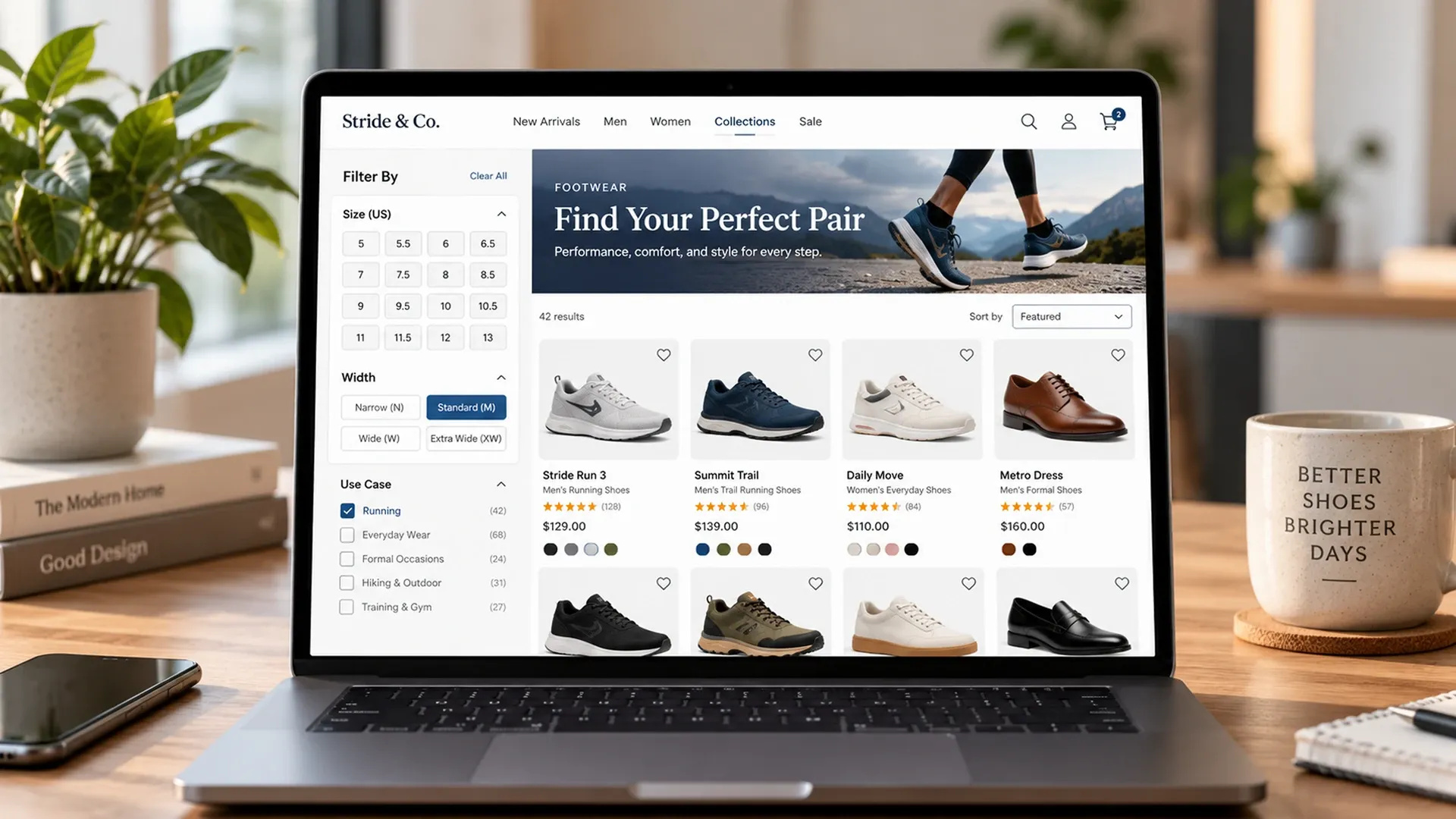
A collection page that's simply a grid of thumbnails leaves shoppers to do all the filtering work themselves. Structuring collections around use case — running, everyday wear, formal occasions — alongside genuine filtering by size, color, and width helps shoppers reach a product they'll actually keep far faster than scrolling through an undifferentiated catalog.
Highlighting Comfort and Construction, Not Just Style
Style sells the first click, but comfort and construction quality are what actually drive repeat purchases and genuine brand loyalty in footwear. Product pages that mention materials, cushioning, and durability alongside styling photos give shoppers a more complete picture of what they're paying for, especially for categories like everyday or athletic footwear where comfort ultimately matters as much as appearance.
Ranking for Both Style and Functional Searches
SEO for footwear brands has to account for two very different kinds of searches — style-driven terms like a specific silhouette or color, and functional ones like arch support or a specific activity. Product pages and content written to satisfy both capture shoppers earlier in their research than competitors optimizing for style alone.
Turning Paid Campaigns Into Efficient Discovery, Not Just Reach
Digital marketing for footwear brands benefits from campaigns built around specific collections and use cases rather than broad brand awareness, since a shopper already searching for a specific type of shoe converts at a meaningfully higher rate than one seeing a generic brand ad. Retargeting shoppers with the exact style they viewed, rather than a random product, keeps campaigns efficient instead of just visible.
A footwear ad that shows the wrong use case earns a click and a bounce — the right one earns a completed order.
Reducing Returns Without Reducing Confidence to Buy
Aggressive return policies discourage the very purchases a brand is trying to drive, but returns still carry a real cost, which means the better lever is reducing the reasons a return happens in the first place. Accurate sizing data, honest photography, and clear fit guidance address the return problem upstream instead of just processing it after the fact, and the same principle carries over well into sustainable footwear and apparel lines built to last longer than a single season.
Growing a footwear brand online comes down to solving the sizing problem before it becomes a return, making collection pages genuinely useful rather than just a product grid, ranking for both style and functional searches, running paid campaigns built around real discovery, and addressing returns at the root cause instead of just processing them. Brands that get all of this right convert far more browsing traffic into shoppers confident enough to buy — including for party wear and occasion footwear where fit confidence matters even more.