Get a Quote
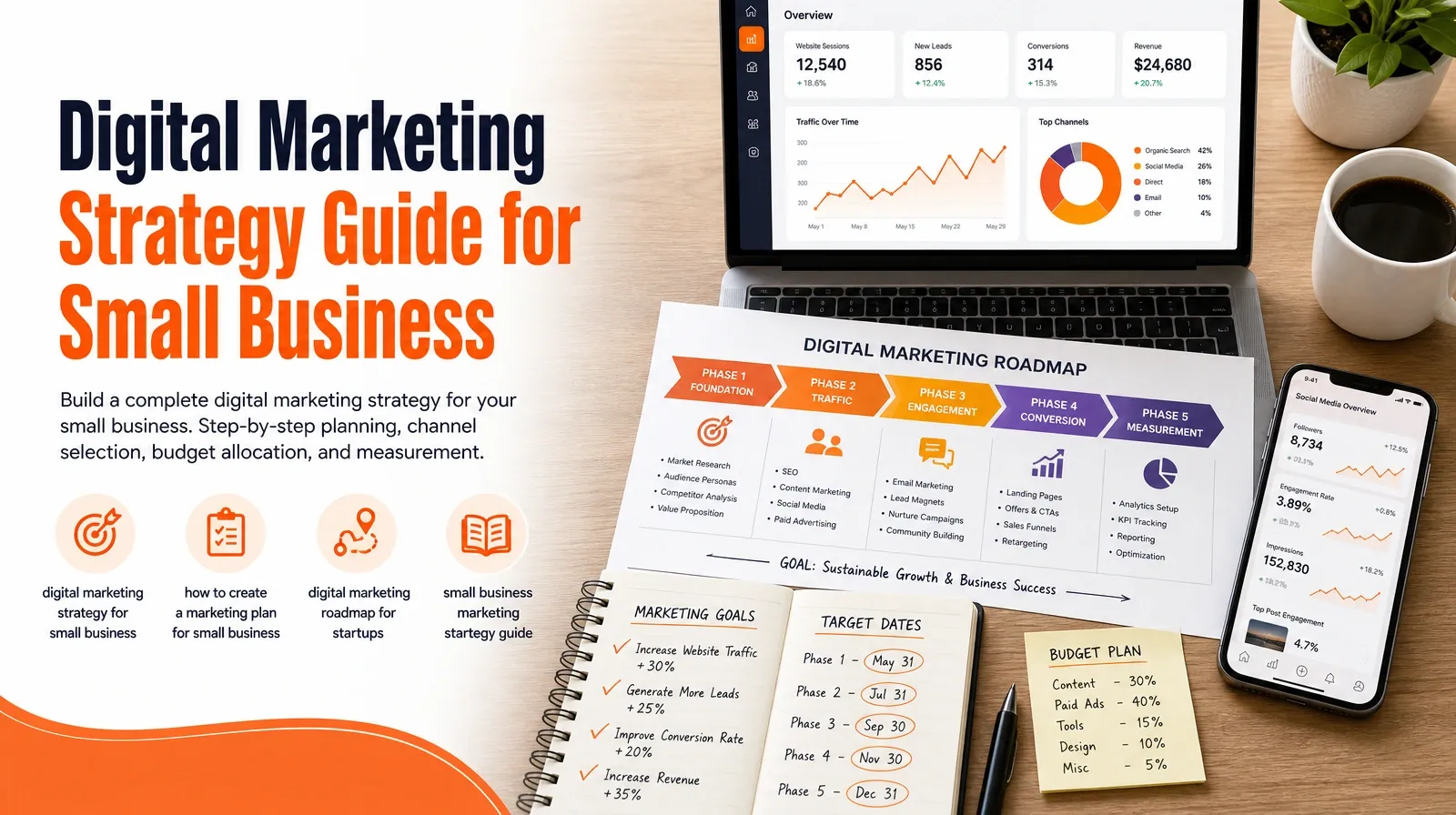
Build a winning digital marketing strategy with clear goals, smart budgets, and measurable results.
Every small business owner knows the feeling: limited budget, limited time, and unlimited competition. But here's the truth — you don't need a Fortune 500 marketing budget to compete effectively online. What you need is a digital marketing strategy for small business that's clear, focused, and executable. This guide walks you through the exact steps to build a marketing roadmap that drives real results, from defining your core objectives to measuring what actually works.
Step 1: Define Your Business Goals and Marketing Objectives
Before spending a dollar on ads or posting a single social update, get crystal clear on what success looks like. Are you trying to generate leads? Drive foot traffic to a physical location? Increase online sales by 30% this quarter? Your digital marketing roadmap for startups and established businesses alike must start with specific, measurable goals tied directly to business outcomes — not vanity metrics like follower counts.
Write down 2-3 primary objectives with concrete numbers and deadlines. For example: generate 50 qualified leads per month within 90 days, or increase website conversion rate from 1.5% to 3% by year-end. These goals will inform every channel decision, budget allocation, and creative approach that follows.
Step 2: Know Your Audience Inside and Out
Generic marketing burns money fast. The difference between campaigns that convert and campaigns that drain budgets comes down to audience clarity. Build detailed profiles of your ideal customers — their demographics, pain points, online behavior, and the specific problems your product or service solves for them.
- Interview existing customers to understand how they found you and why they bought
- Analyze website analytics to identify which pages and content resonate most
- Research competitor audiences and gaps in their messaging
- Create 2-3 specific buyer personas with realistic details, not abstract archetypes
This research phase isn't busywork — it determines which platforms you'll use, what messages you'll test, and where you'll invest your budget. A B2B software company targeting CFOs will execute a completely different strategy than a local bakery targeting busy parents.
Step 3: Choose Your Channels Strategically
Here's where most small businesses make expensive mistakes: they try to be everywhere at once. Instead, select 2-4 channels where your specific audience actually spends time and where you can realistically maintain quality. For some businesses, that's Paid Advertising and email. For others, it's organic social and local SEO.

Match your channel selection to both audience behavior and your internal capacity. Running successful social media requires daily attention. Search ads demand constant optimization. Content marketing needs consistent creation. Choose battles you can win with available resources, then execute them well rather than spreading efforts thin across every possible platform.
Step 4: Set a Realistic Budget and Allocate Resources
The most effective small business marketing strategies aren't the most expensive — they're the most focused.
Budget reality: most small businesses should allocate 7-12% of revenue to marketing, but actual percentages vary wildly by industry, growth stage, and competition level. More important than the total number is how to create a marketing plan for small business that distributes dollars based on expected ROI and strategic priorities.
Split your budget into three buckets: proven channels that already generate ROI (60-70%), experimental tactics to test new opportunities (20-30%), and tools or resources that amplify efficiency (10-20%). This approach balances stability with innovation while protecting you from bet-the-farm gambles on unproven tactics.
Step 5: Create Your Content and Campaign Calendar
Strategy without execution is just planning theater. Build a realistic 90-day calendar that maps specific campaigns, content pieces, ad launches, and promotional pushes to your strategic goals. This calendar creates accountability and ensures your team isn't scrambling to figure out what to post at 4pm on Friday.
Include key dates relevant to your business — product launches, seasonal peaks, industry events — and plan campaign themes around them. A tax preparation service needs Q1 campaigns ready by November. A retail business needs holiday strategies locked by September. Advance planning lets you create better creative, negotiate better rates, and avoid the premium costs of last-minute execution.
Step 6: Implement Tracking and Measurement Systems
You cannot improve what you don't measure. Before launching any campaign, set up proper tracking — analytics platforms, conversion pixels, call tracking, CRM integration, whatever infrastructure you need to connect marketing activities to actual business outcomes. Too many small businesses run campaigns blind, then wonder why their marketing feels like throwing money into a void.
Define your key performance indicators based on the goals you set in Step 1. If the goal is lead generation, track cost per lead, lead quality score, and lead-to-customer conversion rate. If it's sales, track revenue per campaign, customer acquisition cost, and return on ad spend. Review these metrics weekly for the first month, then establish a sustainable reporting rhythm that keeps you informed without creating analysis paralysis. For guidance on optimizing specific paid channels, see our Paid Advertising Guide for leads and sales.
Building Your Marketing Foundation
The most successful small business marketing strategy guide isn't about following a rigid playbook — it's about building a flexible framework that evolves with real performance data. Start with these six steps, commit to consistent execution for at least 90 days, and then optimize based on what the numbers tell you. Small businesses win by being focused, agile, and relentlessly practical about what actually moves the needle. Ready to build a digital marketing strategy for small business that drives measurable growth? Get a Quote and let's map your specific roadmap.