Get a Quote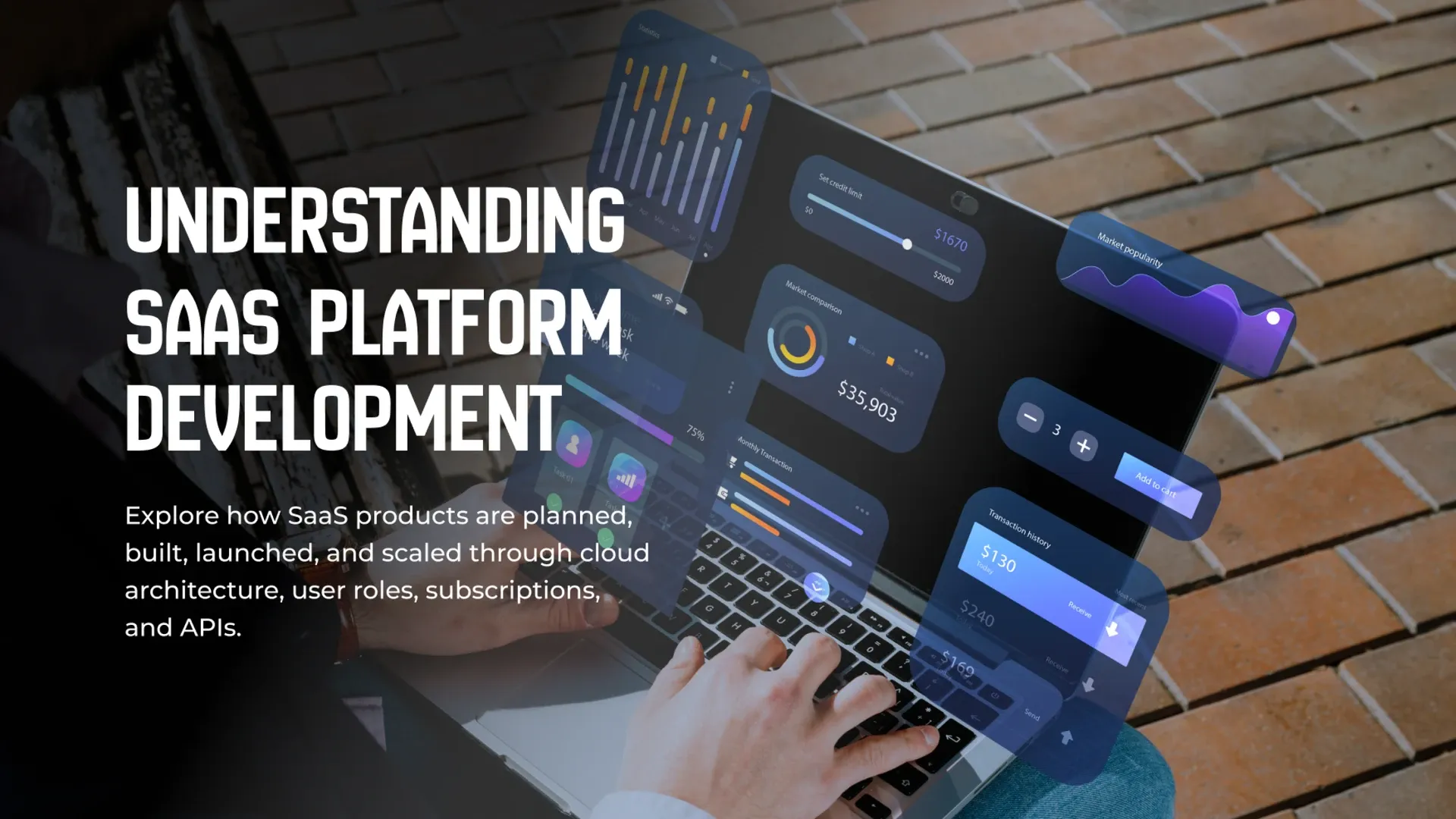
Learn how SaaS platform development supports MVPs, cloud software, subscriptions, multi-tenant architecture, APIs, and scalable growth.
A SaaS platform is never really 'finished' — it's a product that has to keep working as users, features, and expectations grow. Unlike a one-off website or internal tool, SaaS software is built to serve many customers simultaneously, each with their own data, permissions, and usage patterns. Getting the foundation right early — from architecture to billing — determines whether a SaaS product can scale into a real business or gets stuck rebuilding core systems every time it grows.
Starting Lean with an MVP
Most successful SaaS products don't launch with every feature imagined on day one. They launch with a SaaS MVP — a minimum viable, focused version that solves one problem well enough for real users to pay for it. This approach reduces wasted development time and, more importantly, replaces guesswork with actual user feedback before larger investments are made.
- Solve one core problem extremely well before adding anything else
- Launch to real users, not just internal stakeholders
- Treat early feedback as direction, not just validation
- Resist the urge to build every requested feature immediately
Multi-Tenant Architecture at a Glance
Most SaaS platforms serve many customers from a single, shared codebase and infrastructure through what's known as multi-tenant SaaS architecture. This is different from building a separate instance for every customer, and the choice has real consequences for cost, maintenance, and how quickly new features can reach every user.
Aspect | Single-Tenant | Multi-Tenant |
|---|---|---|
Infrastructure Cost | Higher, one instance per customer | Lower, shared infrastructure |
Customization | Easier to customize per customer | Requires configurable, shared features |
Updates | Deployed individually | Deployed once for all customers |
Multi-tenancy is what allows most SaaS businesses to serve thousands of customers without thousands of separate deployments to maintain.
Turning Usage Into Recurring Revenue
Subscription billing is the financial engine behind SaaS, and it needs to integrate cleanly with the rest of the platform — granting or revoking access automatically as payments succeed, fail, or subscriptions change. Most billing providers communicate these changes through webhooks — small JSON payloads carrying an event type — sent directly to the backend:
{
  "event": "subscription.updated",
  "customerId": "cus_18492",
  "plan": "pro-monthly",
  "status": "active"
}
Handling these events reliably — updating access instantly when a subscription changes — is what keeps billing, product access, and customer experience in sync without manual intervention.
Keeping the Platform Reliable as It Scales
As a SaaS product gains real customers, reliability becomes as important as new features — a few hours of downtime can affect every customer at once, unlike a single-tenant product where issues stay isolated to one client. Monitoring, alerting, and a clear incident response process need to be in place well before an outage happens, not built reactively after the first serious one. Principles like the Twelve-Factor App methodology capture much of this discipline well. Teams that treat reliability as an ongoing discipline, rather than a one-time setup task, avoid the kind of trust-damaging incidents that are far harder to recover from than to prevent.
- Uptime monitoring that alerts the team before customers notice a problem
- Automated backups that are tested regularly, not just configured once
- Clear on-call ownership so incidents get addressed quickly
- A public status page that keeps customers informed during outages
Deciding What to Build vs What to Buy
Not every part of a SaaS platform needs to be built from scratch. Payments, authentication, email delivery, and customer support tooling are all well-solved problems with mature third-party providers behind them. Building these internally rarely creates a meaningful competitive advantage, but it does consume engineering time that could go toward the features that actually differentiate the product. Some SaaS teams extend this same build-vs-buy thinking to AI integration, embedding automation or copilot-style features rather than building them from scratch. The businesses that scale fastest tend to be deliberate about this trade-off, reserving in-house development for the parts of the platform that are genuinely core to what makes it valuable, and integrating proven external services for everything else.
Building a SaaS platform means designing for growth from the start: a lean MVP to prove the idea, multi-tenant architecture to scale efficiently, reliable infrastructure that earns customer trust, and subscription systems that turn usage into predictable revenue. Businesses that get these fundamentals right build products capable of scaling from a handful of early users to a sustainable, recurring-revenue business. For the infrastructure layer underneath all of this, our backend development guide covers APIs and scalability in more depth.