
 Get a Quote
Learn how residential housing projects grow with property websites, local SEO, lead generation, landing pages, CRM workflows, and campaigns.
Buying a home is one of the largest financial commitments most families ever make, and today that decision starts almost entirely online — comparing builders, layouts, locations, and price points across multiple projects before ever visiting a single site office. A strong digital marketing for residential housing strategy treats that early research phase as seriously as the actual sales process, because for many buyers, it effectively is the sales process until they're ready to visit.
Presenting a Housing Project the Way Families Actually Evaluate It
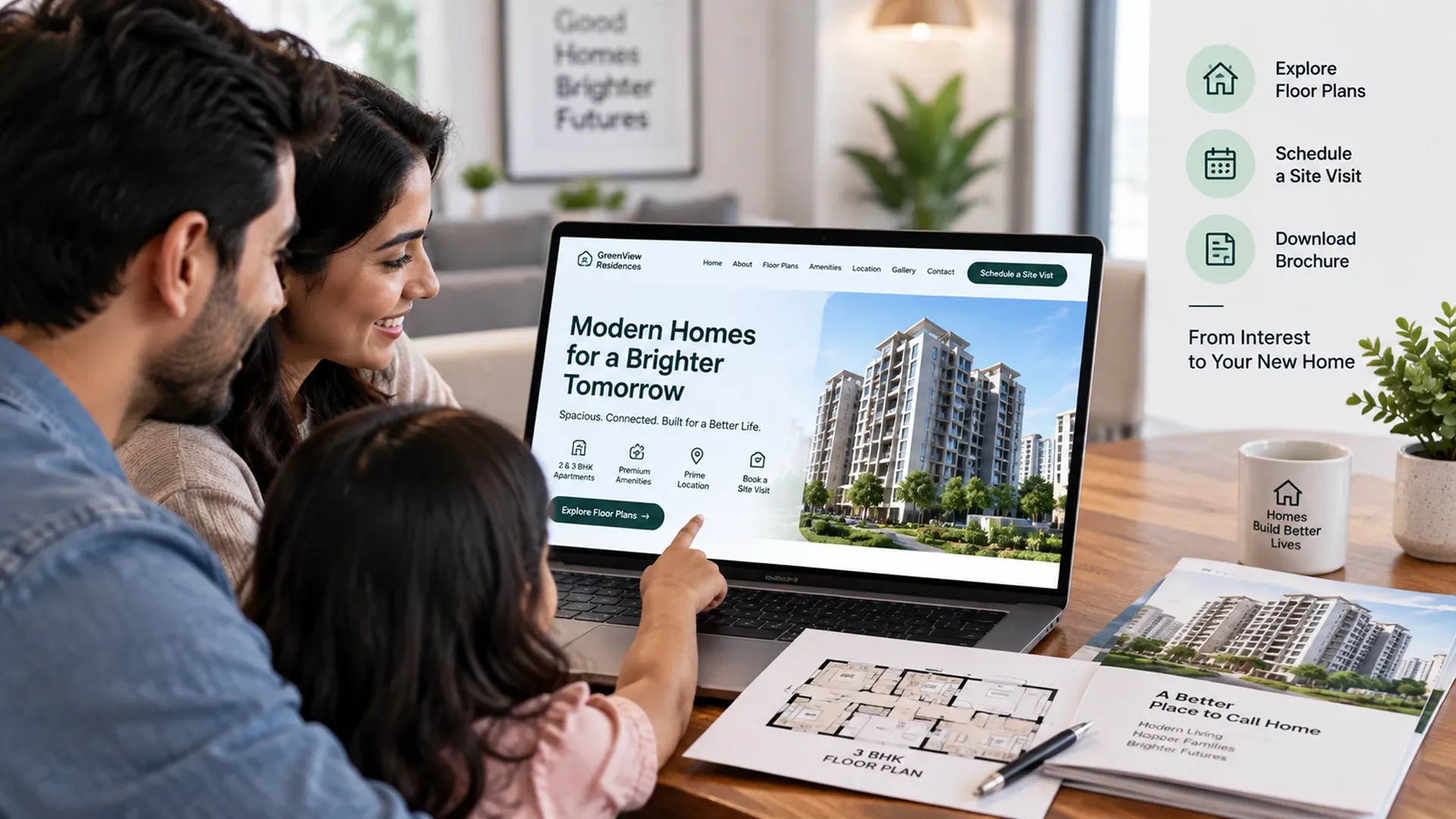
A housing project's website often has to do the work of an entire sales office — showing unit types, floor plans, pricing tiers, and amenities clearly enough that a family can genuinely narrow down their options before ever speaking with a sales representative. Vague brochure copy and a single gallery of exterior photos rarely answer the specific questions a serious buyer actually has, especially once total cost of ownership extends well beyond the sticker price.
Buyer Question | Generic Project Page | Structured Project Page |
|---|---|---|
Which unit fits our budget | One price range for the whole project | Pricing broken down by unit type and size |
What does the layout look like | A handful of exterior photos | Interactive floor plans for each configuration |
What's nearby | Not mentioned | Dedicated neighborhood and amenity information |
Making Local Search Work for Location-Driven Buyers
Home buyers overwhelmingly search with a specific area or neighborhood in mind, which is why residential real estate SEO tips put location-specific content near the top of the priority list. Ranking for that intent captures buyers who have already narrowed their search to a particular part of town, rather than competing broadly against every housing project in the wider city.
- Neighborhood pages covering schools, commute times, and local amenities
- Location-specific landing pages for projects in more than one area
- Structured data that helps listings appear correctly in map searches
- Regularly updated content as new phases or unit types launch
Generating Leads That Are Ready to Visit the Site
Effective housing project lead generation filters for genuine intent rather than chasing raw form submissions, since a sales team following up on thirty unqualified leads closes fewer deals than one working ten serious inquiries. Landing pages built around a specific project, gated brochures, and clear calls to schedule an actual site visit consistently outperform a single generic contact form.
Keeping Buyers Informed on Construction Progress
Homebuyers committing to a project still under construction naturally worry about delays, and silence during the build phase only amplifies that anxiety. Regular progress updates — photos of ongoing construction, milestone announcements, and honest communication about any timeline changes — reassure buyers that their investment is moving forward as promised. Developers who default to silence between the signed agreement and the handover date leave buyers to fill that gap with speculation, which rarely works in the developer's favor once handover dates eventually shift.
Supporting the Sales Team With CRM and Follow-Up
A promising lead that goes unanswered for a week has usually moved on to a competing project by the time anyone follows up. A CRM built for real estate sales that tracks which unit types and price ranges a buyer is interested in, and reminds the team when to follow up, keeps a long consideration period from quietly going cold.
A housing project's website doesn't need to close the sale — it just needs to earn a scheduled site visit.
Positioning Projects Alongside the Features Buyers Now Expect
Modern buyers increasingly compare more than layout and price — many now expect smart home features like app-based security and energy monitoring as standard, not a premium add-on, which means a project's digital presentation needs to clearly communicate what's actually included in every unit before assumptions work against the sale.
Growing a residential housing project comes down to presenting it the way families actually evaluate a home, winning the local searches location-driven buyers run, generating leads that are genuinely ready to visit, supporting the sales team with real follow-up systems, and being upfront about the features buyers now expect as standard. Developers managing mixed-use communities alongside commercial leasing space benefit from applying this same structured, buyer-first approach across every part of the project.