
 Get a Quote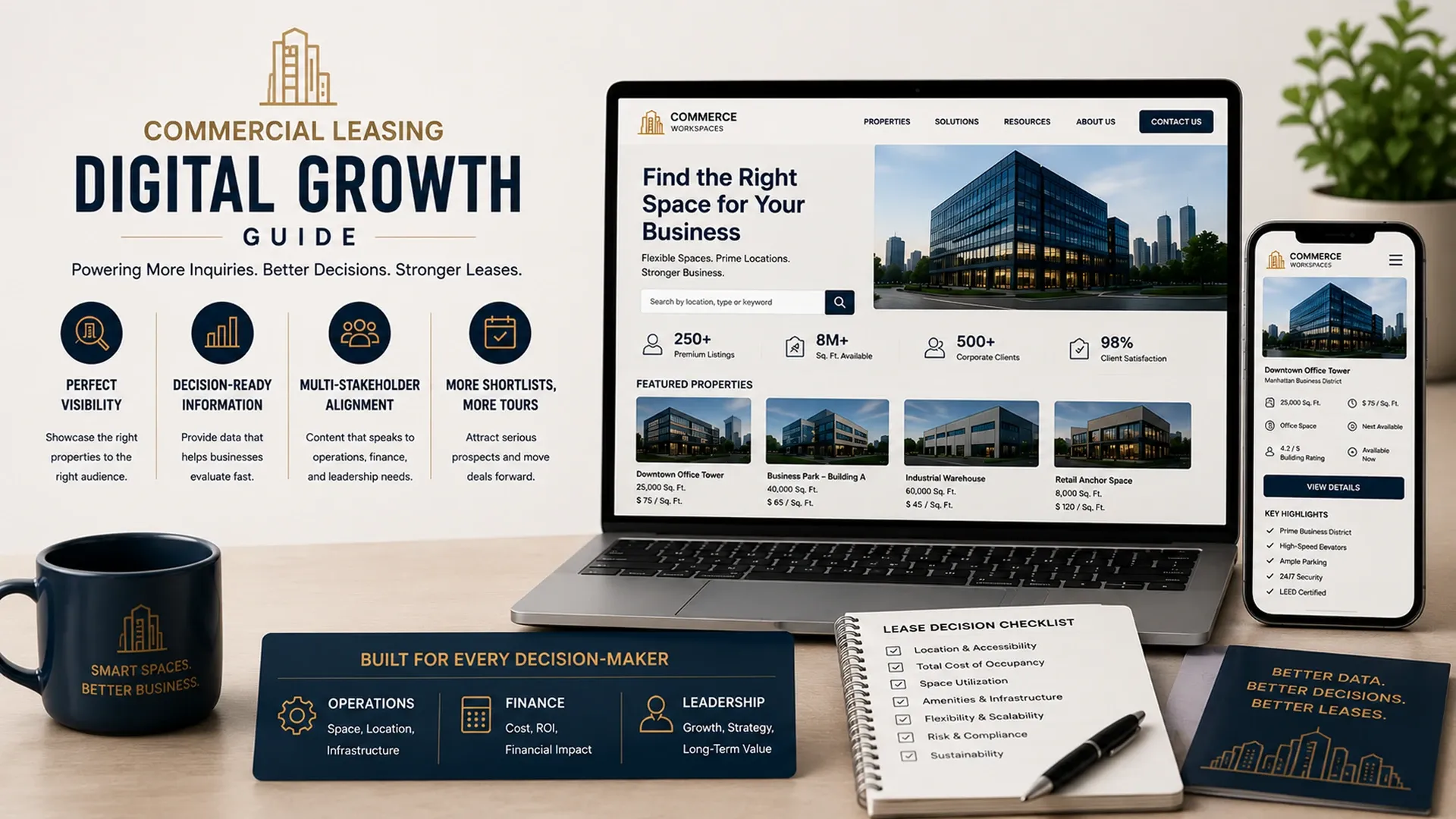
Learn how commercial leasing grows with listing websites, B2B lead generation, property SEO, CRM workflows, inquiry systems, and campaigns.
Commercial leasing decisions rarely rest with one person — a lease often has to satisfy an operations lead, a finance team, and sometimes company leadership, all reviewing the same handful of listings before a single tour gets scheduled. A practical digital marketing for commercial leasing approach recognizes this from the start: the goal isn't to create desire the way residential marketing does, it's to supply exactly the data a business decision-maker needs to move a listing to the shortlist.
Presenting Listings With the Data Tenants Actually Need
Business tenants evaluate space on concrete specifics — square footage, zoning, parking capacity, lease terms, and build-out allowances — not lifestyle photography. Listings that lead with this information, rather than burying it in a downloadable PDF, save a prospective tenant's team the back-and-forth that otherwise delays a shortlist decision by days or weeks.
Tenant Requirement | Generic Listing | Structured Listing |
|---|---|---|
Space suitability | A single square footage number | Full floor plan with configurable layouts |
Lease terms | "Contact for pricing" | Clear rate ranges and typical lease length |
Location fit | One address and a map pin | Zoning details, parking, and transit access |
Generating Leads From Businesses, Not Individual Browsers
Good commercial leasing lead generation looks different from residential campaigns aimed at individual buyers — inquiries come from businesses evaluating a real operational need, often triggered by a lease expiring or a team outgrowing its current space. Landing pages and campaigns built around that specific trigger tend to capture serious inquiries more reliably than broad awareness advertising ever does.
- Landing pages segmented by space type — office, retail, or industrial
- Gated data sheets that filter for genuine business interest
- Clear next steps for scheduling a walkthrough with a leasing agent
- Retargeting content addressing common lease-term questions
Ranking for Highly Specific B2B Searches
SEO for commercial leasing benefits from targeting precise, often unglamorous search terms — specific square footage ranges, zoning classifications, or neighborhood business districts — rather than broad real estate keywords. Building authority through data-rich content, similar to the standards maintained by organizations like SIOR, positions a listing site as a genuine resource rather than another directory competing purely on ad spend.
Managing a Longer, Multi-Stakeholder Sales Cycle With CRM
Because commercial leases involve multiple decision-makers and often a multi-month consideration period, losing track of who has seen which listing and what objections came up in a previous call can quietly stall a deal that was otherwise close to signing. A CRM built for this kind of sales cycle keeps every stakeholder's history in one place instead of scattered across separate inboxes.
A commercial lease rarely closes in one conversation — it closes because nothing got lost between the five conversations it actually took.
Retaining Tenants Through Lease Renewals and Expansions
Acquiring a new tenant costs meaningfully more than renewing an existing one, yet many leasing teams focus almost entirely on filling vacancies while treating renewal conversations as an afterthought handled reactively close to the lease expiration date. Proactively reaching out well before a lease ends, tracking a tenant's growth or space needs over time, and making it simple to explore expansion within the same property all increase renewal rates. A CRM that surfaces upcoming lease expirations automatically prevents a profitable, satisfied tenant from being lost simply because nobody started the renewal conversation early enough.
Standing Out When Every Listing Looks the Same on Paper
Once square footage and pricing are in a similar range, the deciding factor often comes down to how clearly a space was presented — genuine photography, a walkthrough video, or an interactive tour that lets a decision-maker evaluate a space remotely before committing time to an in-person visit.

Growing a commercial leasing portfolio comes down to presenting listings with the specific data tenants actually need, generating leads tied to a real operational trigger, ranking for precise B2B searches, managing a longer sales cycle without losing track of any stakeholder, and standing out with genuine presentation once listings start to look alike on paper. Landlords managing mixed residential and commercial portfolios apply many of the same structured, data-first principles that work for residential housing developments.