IM Digital replaced Profile House's repetitive, flat product pages with an intent-mapped structure, unique metadata, and technical content built for architects, dealers and fabricators.
Project Name
Profile House
Category
Search Engine Optimization
Services
On-Page & Content SEO
Project Overview
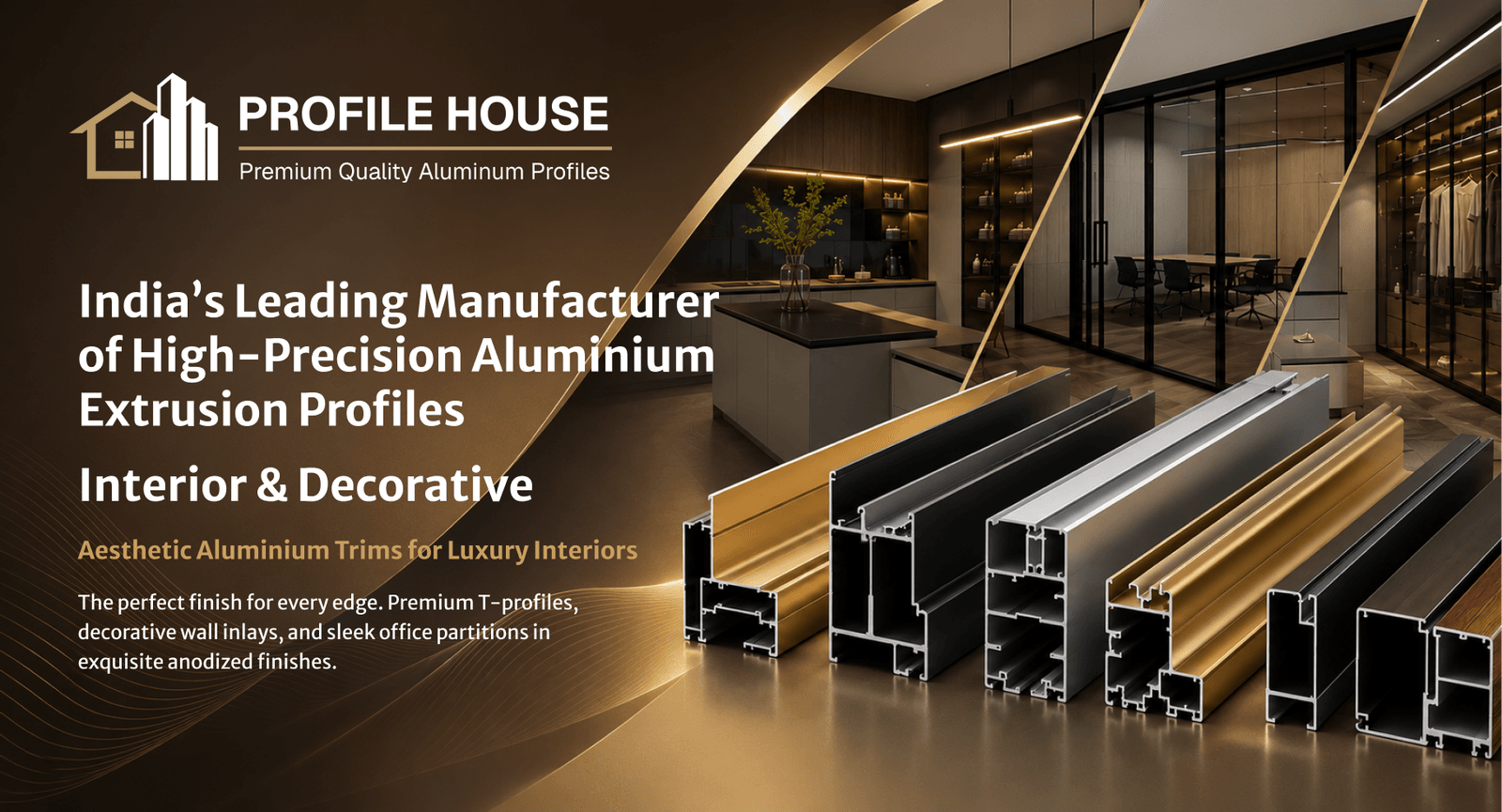
Profile House, a B2B aluminium profile manufacturer and supplier, came to IM Digital with a website built from repetitive, flat product pages that competed against each other in search rather than against outside competitors. IM Digital ran a full on-page and content SEO overhaul: mapping one clear search theme to every indexable page, rewriting metadata and introductions across the catalogue, standardising product-page content, and building a topical-authority content plan around real buyer and technical questions. The result was a catalogue where category pages, product pages, and supporting articles each carried a defined, distinct purpose in search.
Project Summary
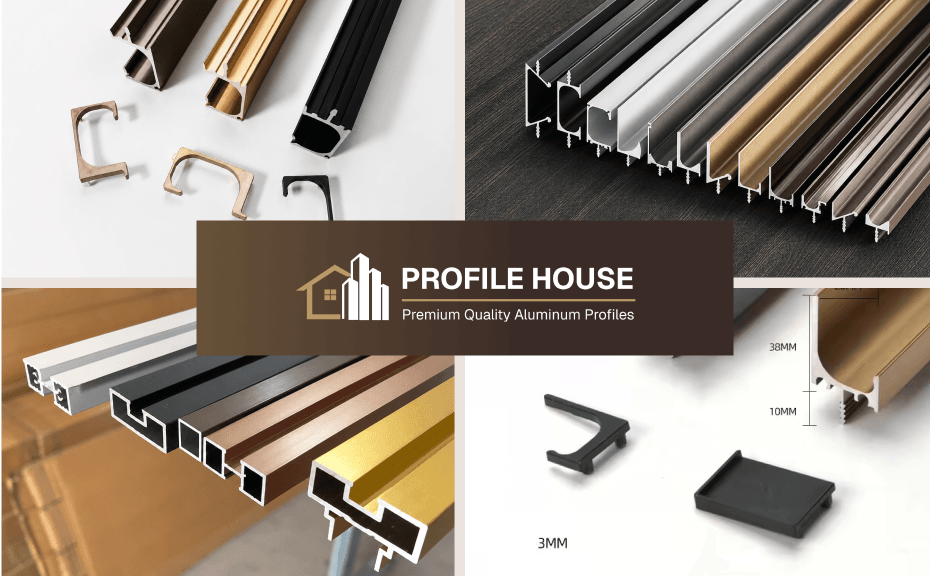
A full on-page and content SEO programme for Profile House, resolving keyword overlap across category and product pages with unique metadata, page content, and topical authority articles.
Profile House wanted its profile catalogue, from kitchen shutter systems to solar mounting sections, to rank on the specific terms buyers search: category names, product names, technical specifications, and supplier-intent phrases. Near-identical page content meant many pages chased the same broad terms without a clear position, and the team lacked rules for deciding when a new page was warranted.
Every indexable page was assigned one primary search theme, separating category discovery, product discovery, supplier intent, technical validation, application research, and comparison queries.
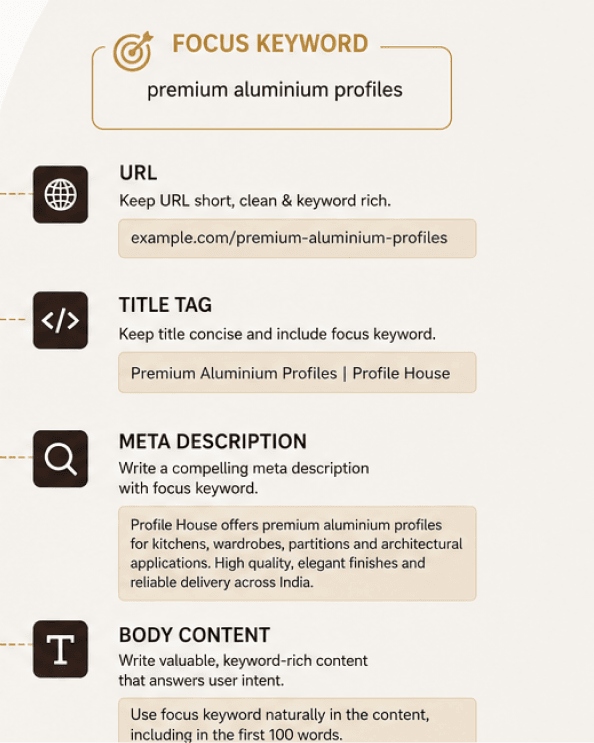
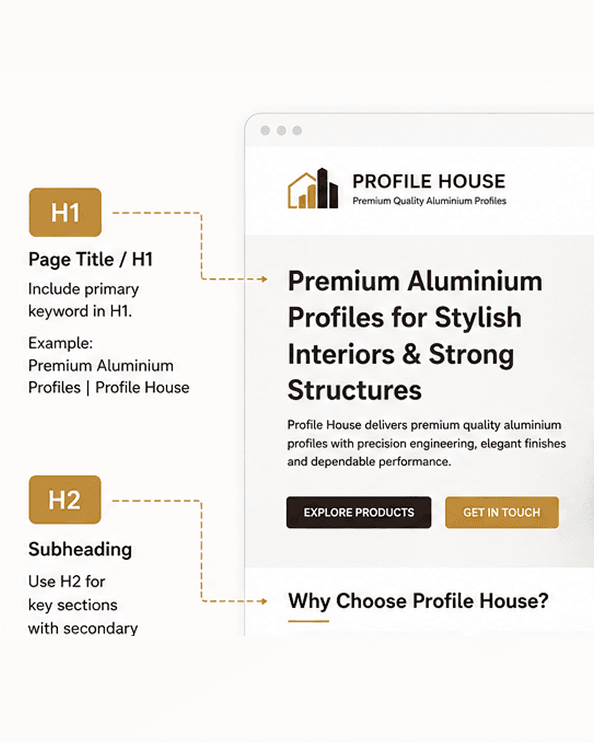
Unique meta titles, meta descriptions, H1s, and intro paragraphs were written for over 40 pages: the homepage, products hub, categories, sub-categories, products, services, and company pages.
A consistent content template was rolled out across the catalogue, covering applications, specifications, finishes, evidence-based benefits, related profiles, and unique FAQs for every product page.
An engineering and product content plan was built to answer selection, comparison, and technical questions, supporting product pages with articles that establish depth around the catalogue.
Service Delivered
IM Digital delivered keyword strategy, page-level content, unique metadata, and topical authority content across Profile House's category, product, service, and company pages sitewide.
Service Showcase
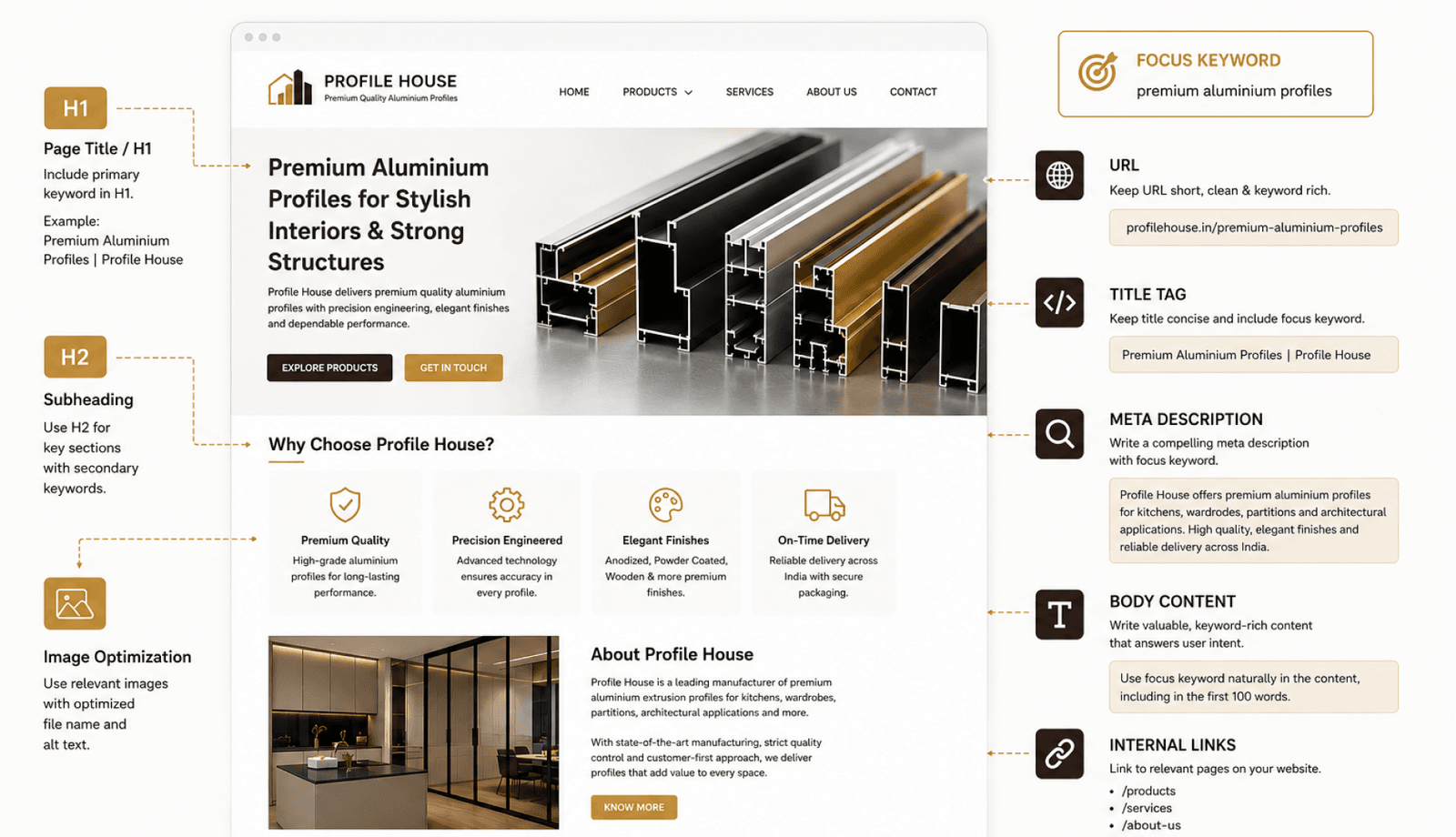
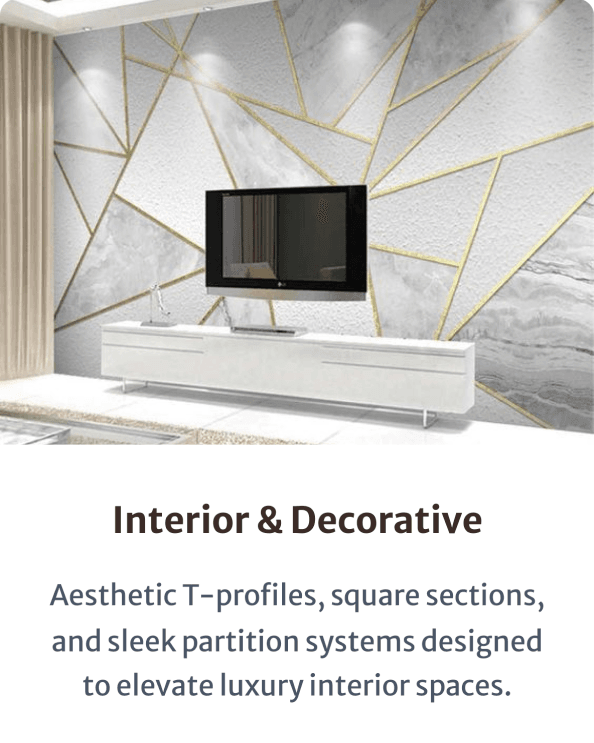
Category hubs, product pages, service pages, and articles were each rebuilt around one clear search theme, removing the overlap that had put pages in direct competition with each other.
Whether you need scalable software development, AI integration, SEO optimization, or complete digital transformation, our team is ready to help your business grow globally.
Business Challenge
Profile House's old website presented its aluminium profiles through pages that read almost identically: similar introductions, similar generic claims, and similar FAQs repeated regardless of the specific product. Category and product pages often targeted the same broad terms, so search engines had no reliable signal for which page should rank, and pages cannibalised each other's visibility. Buyers searching for a specific product or a supplier-level term could not easily find a page written for that intent, technical buyers found specification content thin, and no content addressed common comparison questions, while the team had no governance rules for new pages.
Category and product pages often targeted the same broad keywords, leaving search engines unable to determine which page should rank and causing pages to compete against each other.
Introductions, claims, and FAQs were repeated across the catalogue with minimal variation, giving buyers and search engines little reason to treat any single page as the authoritative answer.
Buyers researching dimensions, alloy grade, weight, CAD drawings, and compatible glass thickness found specification content incomplete, undermining pages meant to serve technical validation intent.
No content addressed common buyer comparison questions such as C-Gola versus J-Gola or anodized versus powder-coated finishes, leaving research-stage buyers without an on-site answer.
The client's team had no shared rules for when a new page or article was genuinely warranted, risking a slow return to duplicate pages built around minor finish or length variations.
Strategic Approach
IM Digital defined a search-intent framework assigning one primary theme to every page type: category discovery to hub pages, product discovery to product pages, supplier intent to commercial pages, technical validation to specification content, application research to industry pages and articles, and comparison questions to linked articles. Unique metadata, H1s, and intro paragraphs were written for over 40 pages, keeping keywords natural. A consistent product-page template followed, covering applications, specifications, finishes, evidence-based benefits, and unique FAQs. A topical-authority content plan and keyword governance rules were handed to the client's team.
Category discovery, product discovery, supplier intent, technical validation, application research, and comparison queries were each mapped to a distinct page type, giving every page one clear job in search.
Meta titles, meta descriptions, H1s, and intro paragraphs were written individually for the homepage, products hub, category and sub-category pages, product pages, services, industries, and company pages.
A repeatable template covering applications, specifications, finishes actually offered, evidence-based benefits, related profiles, and 4 to 8 unique FAQs was applied consistently across the entire catalogue.
Engineering and product guides were planned around selection, comparison, and technical reading questions, from profile selection for kitchen shutters to reading a profile drawing and weight chart correctly.
Rules were set for one primary theme per page, treating product synonyms as secondary terms, avoiding pages for minor variations without genuine demand, and validating keywords before copy is finally published.
Result
Resolving keyword overlap and rebuilding page content gave Profile House's catalogue distinct organic visibility across category, product, and technical search terms within months.
+68%
Organic Traffic
+140%
Ranking Keywords
+45%
Organic Enquiries
-22%
Bounce Rate
Whether you need scalable software development, AI integration, SEO optimization, or complete digital transformation, our team is ready to help your business grow globally.
Explore more software, AI, SEO, and digital marketing projects where we've helped brands achieve real, measurable growth.
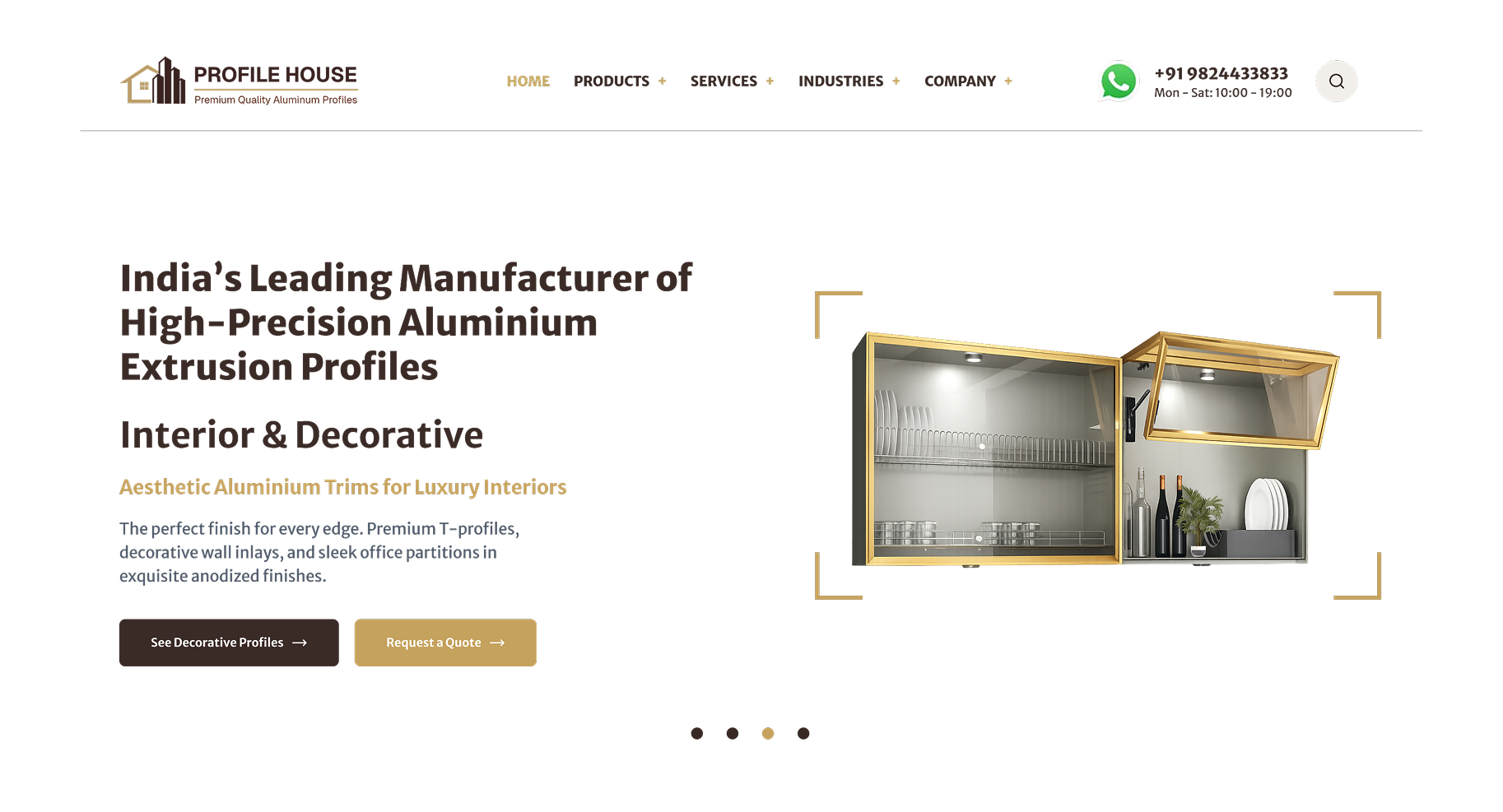
IM Digital rebuilt Profile House's flat product listing into a structured, CMS-driven B2B website with category hierarchy, technical product pages, and intent-based enquiry forms for buyers.
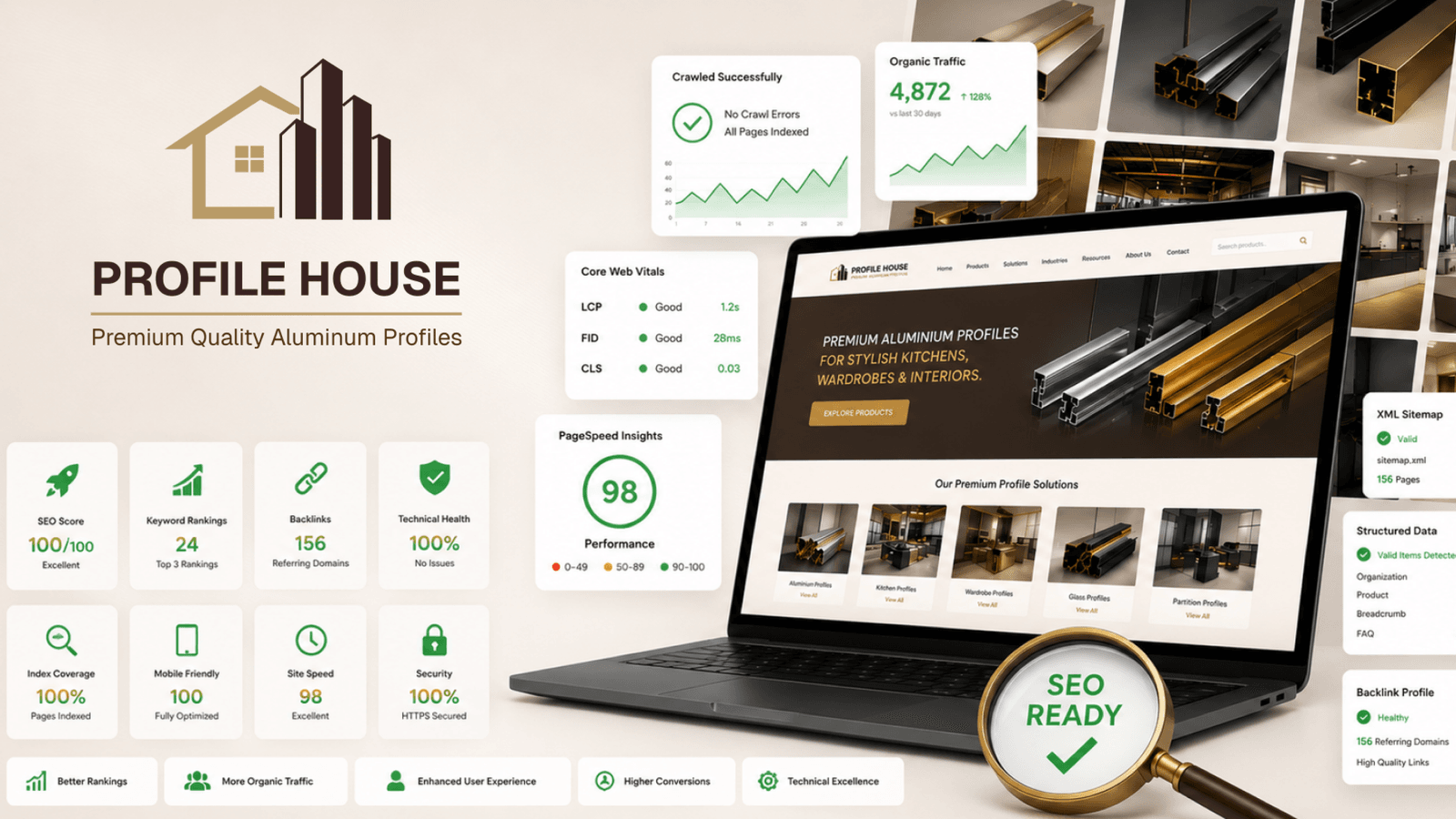
Search Engine Optimization
Search Engine Optimization
How IM Digital rebuilt Profile House's URL architecture, internal linking, redirects, and structured data, turning a flat, unstructured product listing into a fully crawlable B2B platform.
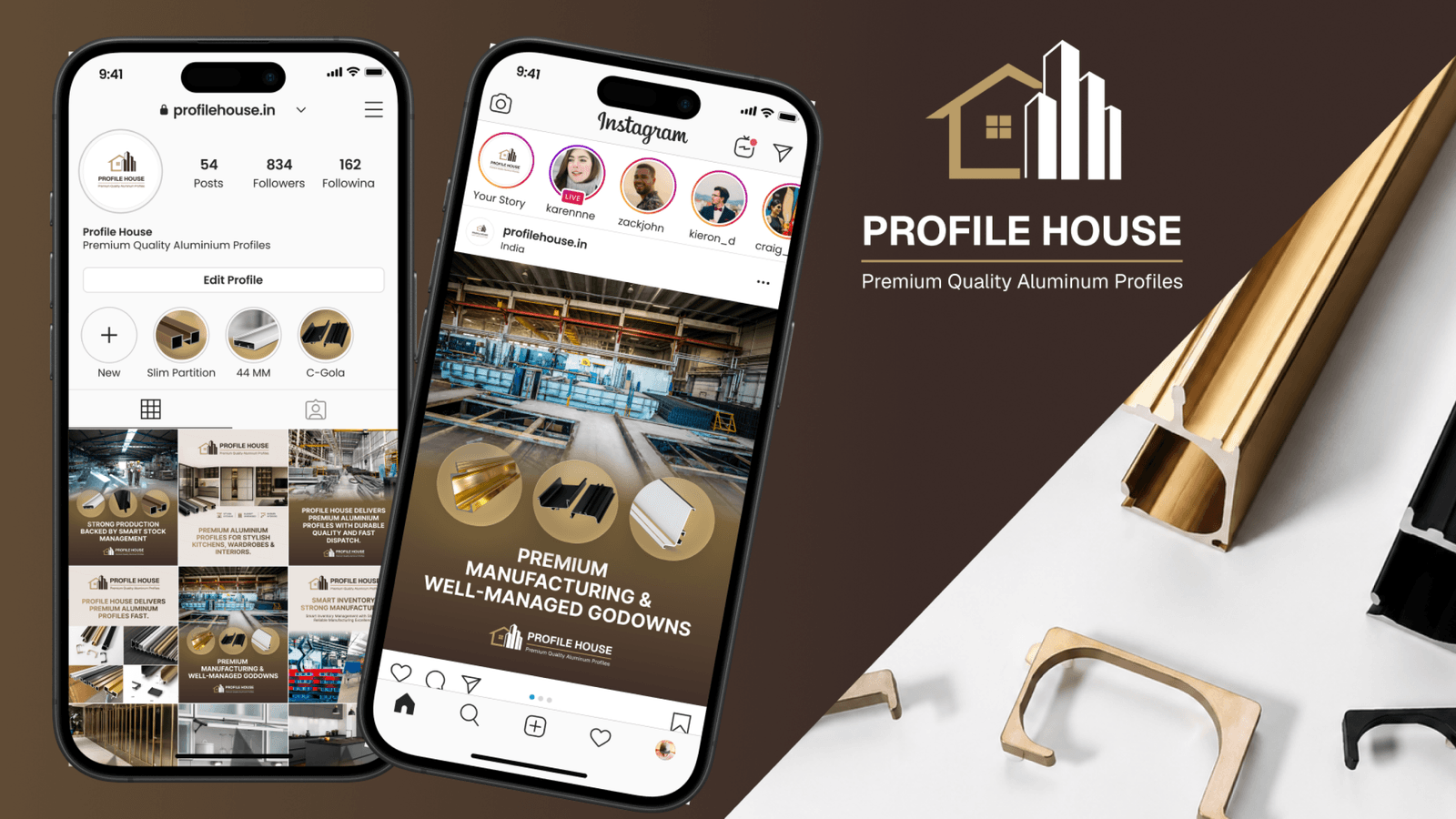
See how IM Digital built a channel-specific social media strategy for Profile House, an aluminium profile manufacturer, converting technical content into qualified architect, dealer and OEM enquiries.
Browse our complete portfolio of digital work across every industry we serve.
Explore All WorkOn-page and content SEO for a manufacturing catalogue assigns one clear search theme to every page instead of letting near-identical pages compete against each other. Profile House's overhaul rewrote metadata across 40+ pages and applied a consistent product template covering applications, specifications, and unique FAQs. See On-Page & Content SEO for manufacturers.
Keyword cannibalization hurts rankings because search engines have no reliable signal for which of two similar pages should rank, so both underperform. Profile House's category and product pages once targeted the same broad terms until each page was mapped to a distinct intent, category discovery, product discovery, or technical validation, helping ranking keywords grow 140%.
Most industrial buyers researching a purchase want a direct comparison guide before committing to one profile system over another. Profile House's catalogue previously had no content answering questions like C-Gola versus J-Gola or anodized versus powder-coated finishes, so adding topical guides gave research-stage buyers an on-site answer instead of a competitor's page.
Yes, replacing repetitive introductions and thin specifications with unique, structured content gives search engines and buyers a reason to trust a specific page. Organic traffic grew 68% and organic enquiries rose 45% for Profile House once every category, product, and service page carried distinct metadata built around real buyer questions.
Getting started means auditing your pages for repeated themes and assigning each one a single, distinct search intent before rewriting any copy. IM Digital ran this exact audit for Profile House before building its content template and topical authority plan. Contact our team to review your catalogue.

 Get a Quote