How IM Digital rebuilt Profile House's URL architecture, internal linking, redirects, and structured data, turning a flat, unstructured product listing into a fully crawlable B2B platform.
Project Name
Profile House
Category
Search Engine Optimization
Services
Technical SEO
Project Overview
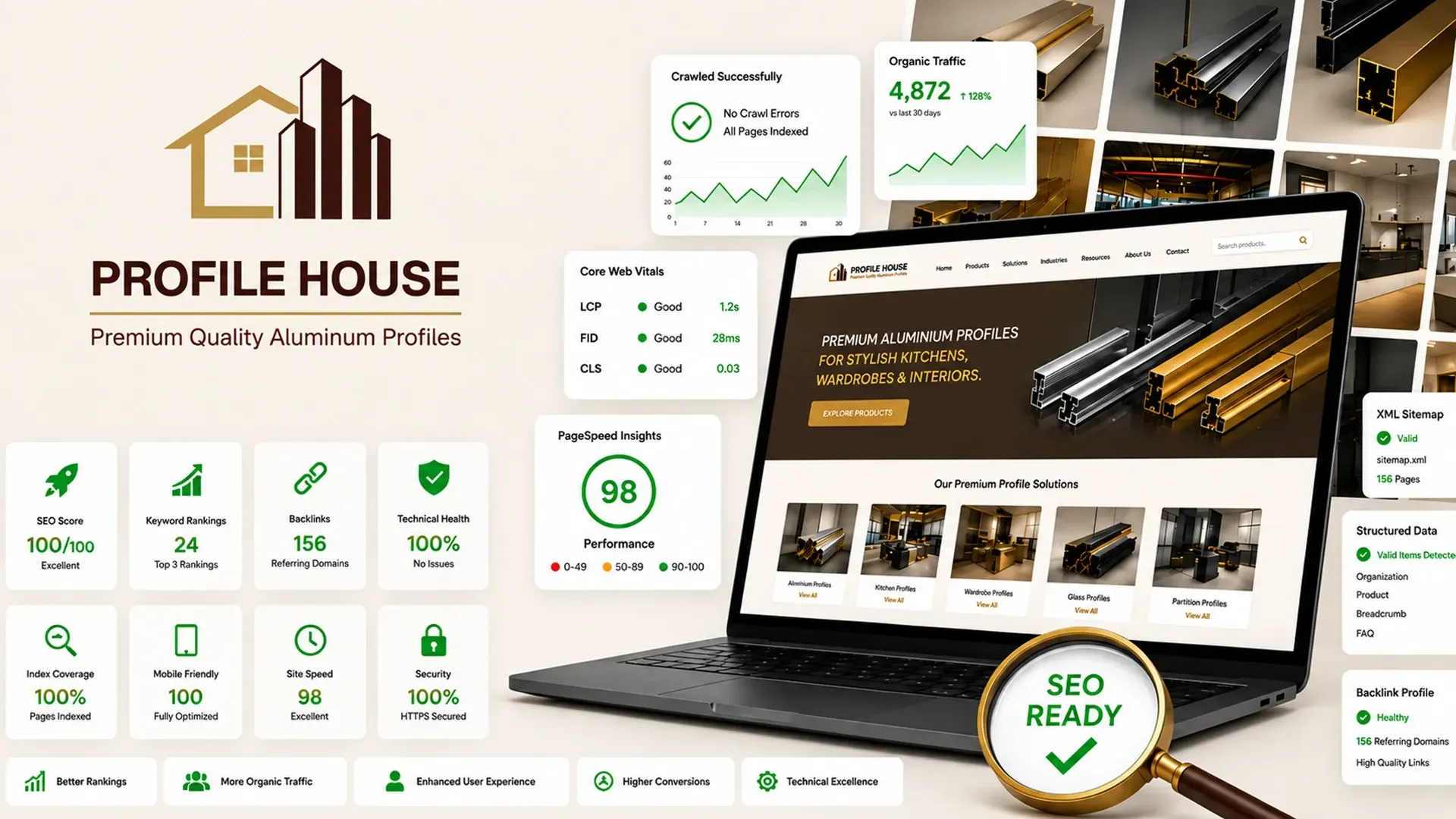
Profile House, a B2B aluminium profile manufacturer and supplier, was migrating from a flat, unstructured product listing to a structured B2B platform serving architects, dealers, fabricators, and OEMs. IM Digital built the technical SEO foundation underneath that migration: a corrected, hierarchical URL architecture, a complete sitemap connecting every category, sub-category, and product page, internal linking rules that eliminate orphan pages, a redirect plan mapping existing URLs to their closest new destinations, and structured data matched to actual page types. A technical QA checklist was applied across every page before launch to confirm the structure held together end to end.

Project Summary
IM Digital restructured Profile House's URLs, internal linking, redirects, and structured data so the new B2B platform launched fully crawlable, indexable, and free of orphan pages.
Profile House needed its new B2B platform to replace a flat product listing without losing search visibility built up on existing URLs. The goal: every product nested under its category and sub-category, every page reachable through navigation and the sitemap, existing URLs redirected to their closest new equivalents with no chains, and structured data applied only where content supported it.
IM Digital mapped every product, category, and sub-category into a lowercase, hyphenated URL structure, nesting each product under its correct category instead of the prior flat listing.
Every existing URL was mapped to its closest new destination as a single permanent redirect, preserving well-performing existing URLs where possible and avoiding redirect chains across the migration.
Breadcrumbs, category-to-product links, related-product links, and service and industry cross-links were enforced site-wide, so every indexable page carried at least one contextual internal link.
Organization, BreadcrumbList, Product, FAQPage, Article, and WebSite schema were applied to matching page types, then every page ran through a technical QA checklist before launch.
Service Delivered
IM Digital delivered the URL architecture, sitemap, internal linking rules, redirect plan, and structured data underneath Profile House's migration to a fully navigable B2B platform.
Service Showcase
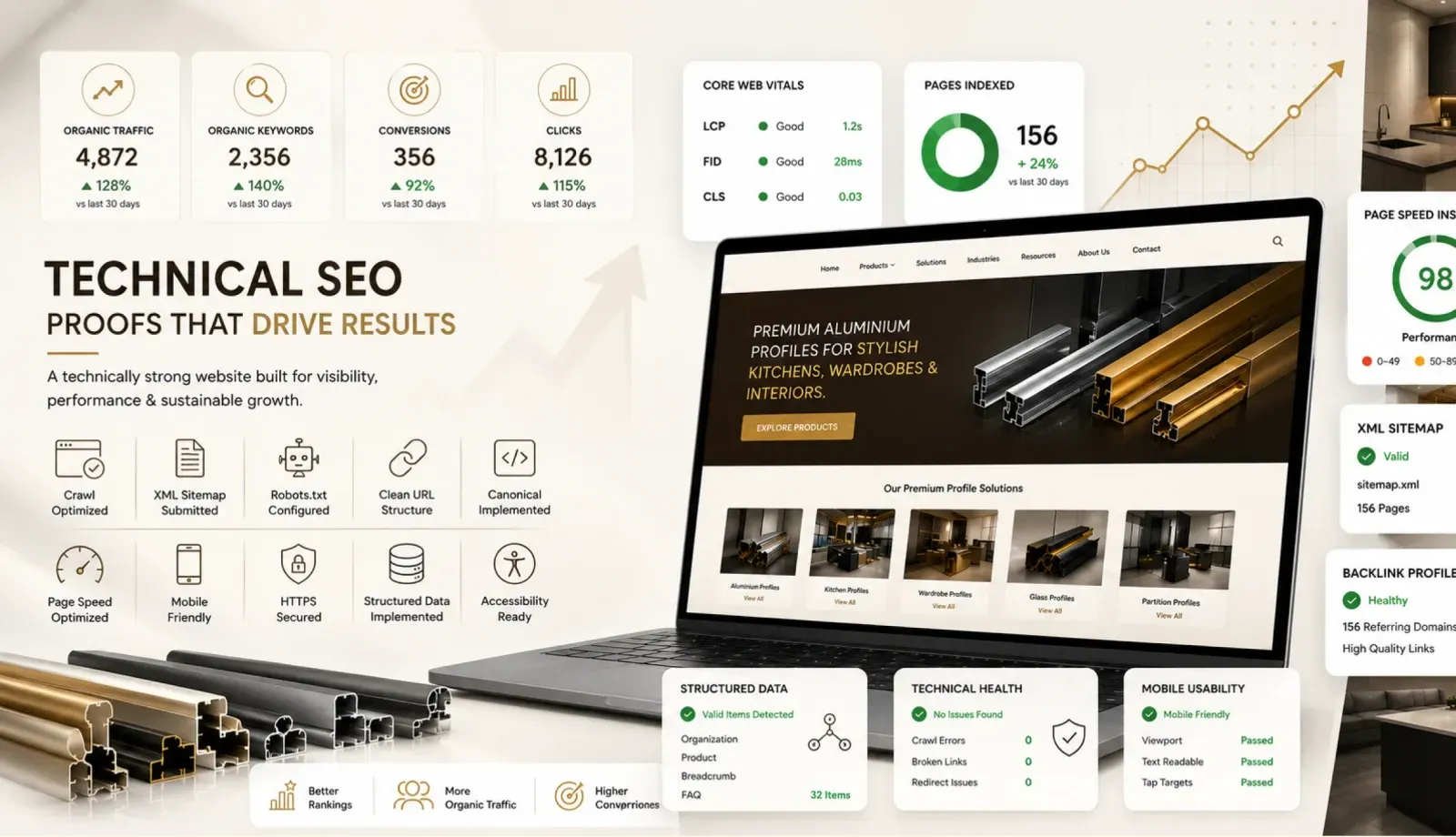
Every product now nests under its category and sub-category in a readable URL, reachable through navigation, breadcrumbs, and the sitemap, with no orphan pages left behind after migration.
Whether you need scalable software development, AI integration, SEO optimization, or complete digital transformation, our team is ready to help your business grow globally.
Business Challenge
Profile House's existing site listed aluminium profile products with no clear category hierarchy, so pages did not nest logically under a category or sub-category, and there was no consistent breadcrumb or navigation path back to related products. As the business moved to a structured B2B platform, that flat structure created real migration risk: existing URLs had no obvious new equivalent, internal links were inconsistent, some pages had no incoming links at all, and there was no structured data describing the organization, products, or category hierarchy. Left unaddressed, the migration itself threatened to break existing search visibility rather than improve it.

Products, categories, services, and company pages all sat inside one unstructured listing with no consistent hierarchy, making it unclear where any given product or page actually belonged.
Sub-categories were not reflected in the URL path, so related products were not grouped together and the category and sub-category structure was invisible to both users and crawlers.
Some product pages had no consistent incoming internal link from any category, sub-category, or related-product page, leaving them dependent on the sitemap alone for discovery by crawlers.
Moving to new URLs without a mapped redirect plan risked breaking every existing indexed page at once, with no guarantee that well-performing URLs would carry their visibility forward.
The existing site carried no structured data at all, so search engines had no explicit signal describing the organization, breadcrumb hierarchy, or product details behind each page.
Strategic Approach
IM Digital's approach treated URL architecture, internal linking, redirects, and structured data as one connected system rather than separate fixes. Every product, category, and sub-category was mapped into a lowercase, hyphenated path mirroring how Profile House's customers browse by application, so the hierarchy covered four product categories, ten sub-categories, twenty-five product pages, three service pages, five industry pages, and company pages. Internal linking rules were enforced across that structure so no page depended on the sitemap alone, existing URLs were mapped into a redirect plan with no chains, and structured data was layered on only where page content supported it.
Every product was placed under its correct category and sub-category in a lowercase, hyphenated path, replacing the flat listing with a structure that mirrors exactly how customers browse by application and need.
A complete sitemap connected four product categories, ten sub-categories, roughly twenty-five product pages, three service pages, five industry pages, and company pages through category navigation and breadcrumbs.
Breadcrumbs up to category and sub-category, sub-category links to every child product, related-product links, and service and industry cross-links were enforced so no indexable page was left without an incoming link.
Every existing URL was mapped to its closest new equivalent as one permanent redirect with no chains, preserving well-performing existing URLs and updating navigation, canonicals, and sitemaps to final destinations.
Organization and WebSite schema were applied site-wide, BreadcrumbList across the category hierarchy, Product schema where product data was complete, and FAQPage only where visible FAQ content met eligibility requirements.
Every page was checked for correct status codes, canonicals, robots directives, matching breadcrumbs and structured data, sitemap inclusion, working links, compressed images, and single-fire analytics before launch.
Result
The migration launched with every product, category, service, and industry page reachable through navigation, breadcrumbs, and the sitemap, with legacy URLs redirected to their new equivalents.
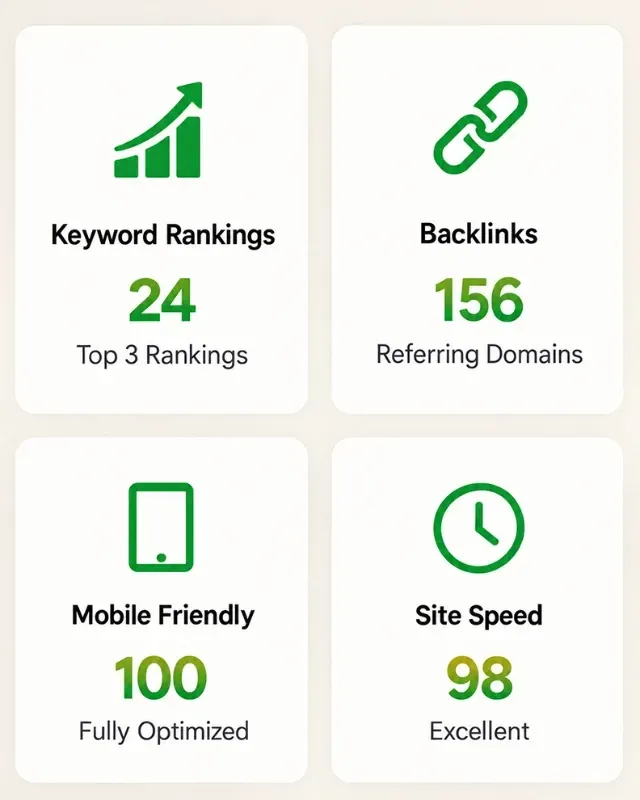
45+
Indexed Pages
0
Orphan Pages
60+
Redirects Mapped
90%
Crawl Error Reduction
Whether you need scalable software development, AI integration, SEO optimization, or complete digital transformation, our team is ready to help your business grow globally.
Explore more software, AI, SEO, and digital marketing projects where we've helped brands achieve real, measurable growth.
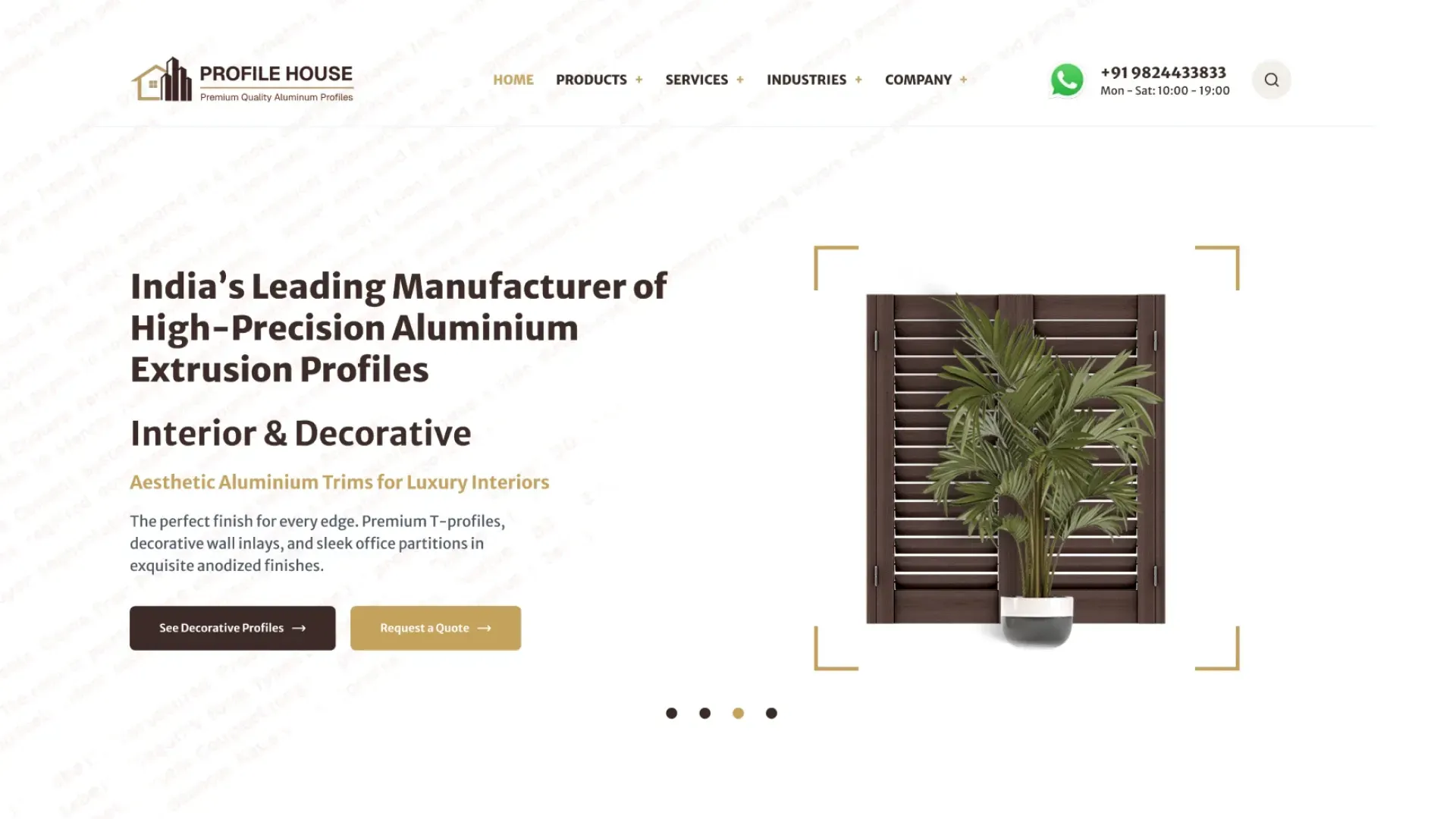
IM Digital rebuilt Profile House's flat product listing into a structured, CMS-driven B2B website with category hierarchy, technical product pages, and intent-based enquiry forms for buyers.
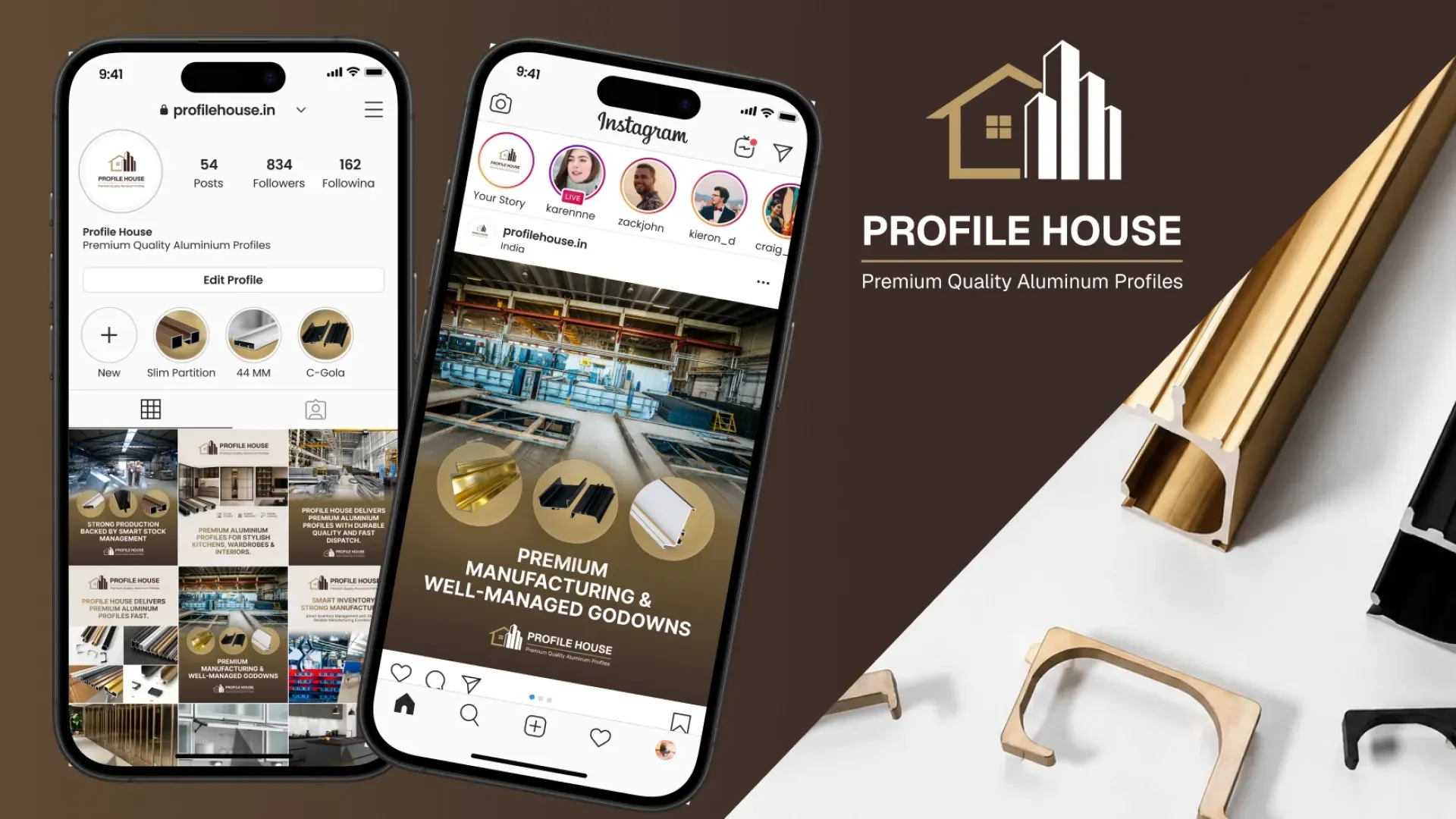
See how IM Digital built a channel-specific social media strategy for Profile House, an aluminium profile manufacturer, converting technical content into qualified architect, dealer and OEM enquiries.

Search Engine Optimization
Search Engine Optimization
IM Digital replaced Profile House's repetitive, flat product pages with an intent-mapped structure, unique metadata, and technical content built for architects, dealers and fabricators.
Browse our complete portfolio of digital work across every industry we serve.
Explore Our WorkTechnical SEO for a site migration covers the URL architecture, redirects, internal linking, and structured data that keep search visibility intact when a platform changes. Profile House's migration mapped every product into a hierarchical URL structure, redirected legacy pages with no chains, and layered schema matched to each page type. Explore Technical SEO for platform migrations.
A hierarchical URL structure nests every product under its correct category and sub-category, so both crawlers and buyers understand where an item belongs. Profile House's four categories, ten sub-categories, and roughly 25 product pages now follow this pattern, replacing a flat listing that gave search engines no signal about how products related to each other.
Orphan pages hurt crawlability because a page with no incoming internal link depends entirely on the sitemap for discovery, a weaker signal to search engines. Profile House launched its new platform with zero orphan pages after enforcing breadcrumbs, category-to-product links, and cross-links between every service, industry, and product page sitewide.
Yes, mapping every existing URL to its closest new destination as a single permanent redirect preserves the visibility a page already earned. Profile House's relaunch mapped 60+ redirects with no chains, cutting crawl errors 90% and letting well-performing legacy URLs carry their search equity into the new B2B platform structure.
Getting started means mapping your full URL structure and matching every existing page to its new equivalent before a single redirect goes live. IM Digital ran this process for Profile House alongside a pre-launch QA checklist covering every page. Contact our team to plan your migration.

 Get a Quote