IM Digital built KVM Generator a custom inventory management system that tracks every rental generator individually by ID, capacity, and ownership, replacing guesswork with a verified stock record.
Project Name
KVM Generator
Category
Custom Software
Services
Inventory Management System
Project Overview
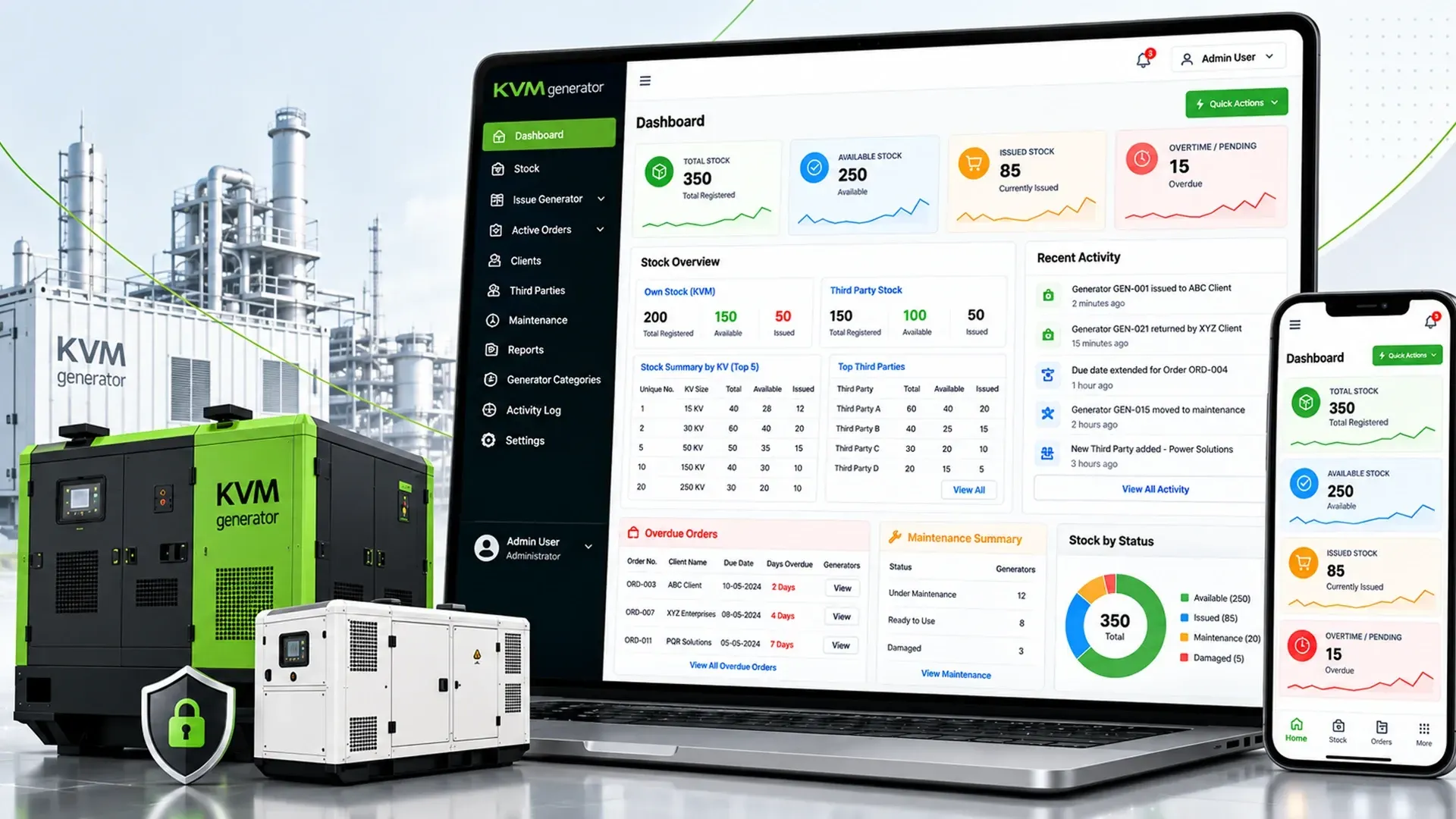
KVM Generator rents out generators from 15 KVA to 1000 KVA, running roughly 150 owned units alongside third-party units brought in temporarily to cover demand. Before IM Digital stepped in, stock was tracked only as a quantity, so staff could not confirm which physical generator was issued, returned, or damaged. IM Digital designed and built a custom inventory management system on Next.js and Payload CMS 3 that registers every generator as its own asset record, with a unique ID, KVA category, ownership type, condition, and operational status, so available stock is always calculated, not guessed.
Project Summary
IM Digital replaced KVM Generator's quantity-based stock tracking with a per-unit inventory system, giving every generator its own identity, live status, and traceable history from registration.
KVM Generator needed to know exactly which generators it owned, which were out on rent, and which third-party units genuinely remained part of its stock. Editable quantity fields were error-prone, and third-party units often stayed listed as available after being returned to their owners. The goal was a system where available stock reflects the true state of every unit, split by KVA, ownership, and status.
IM Digital mapped how KVM Generator tracked stock, uncovering the gaps between quantity-only records and the reality of owned versus third-party generators moving in and out of service daily.
The team designed a per-unit asset model in Payload CMS 3, defining generator categories, ownership types, condition fields, and the statuses each physical unit could move through.
As its own dedicated build phase, the inventory module shipped with generator registration, third-party ownership tracking, status management, and an immutable movement ledger for every unit.
Stock, KVA, owner, and maintenance reports were connected directly to live generator records, giving staff accurate counts instantly, without any manually maintained quantity figure to trust.
Service Delivered
IM Digital delivered a Next.js and Payload CMS 3 inventory management system purpose-built for a generator rental fleet, covering asset registration, ownership, and status tracking.
Service Showcase
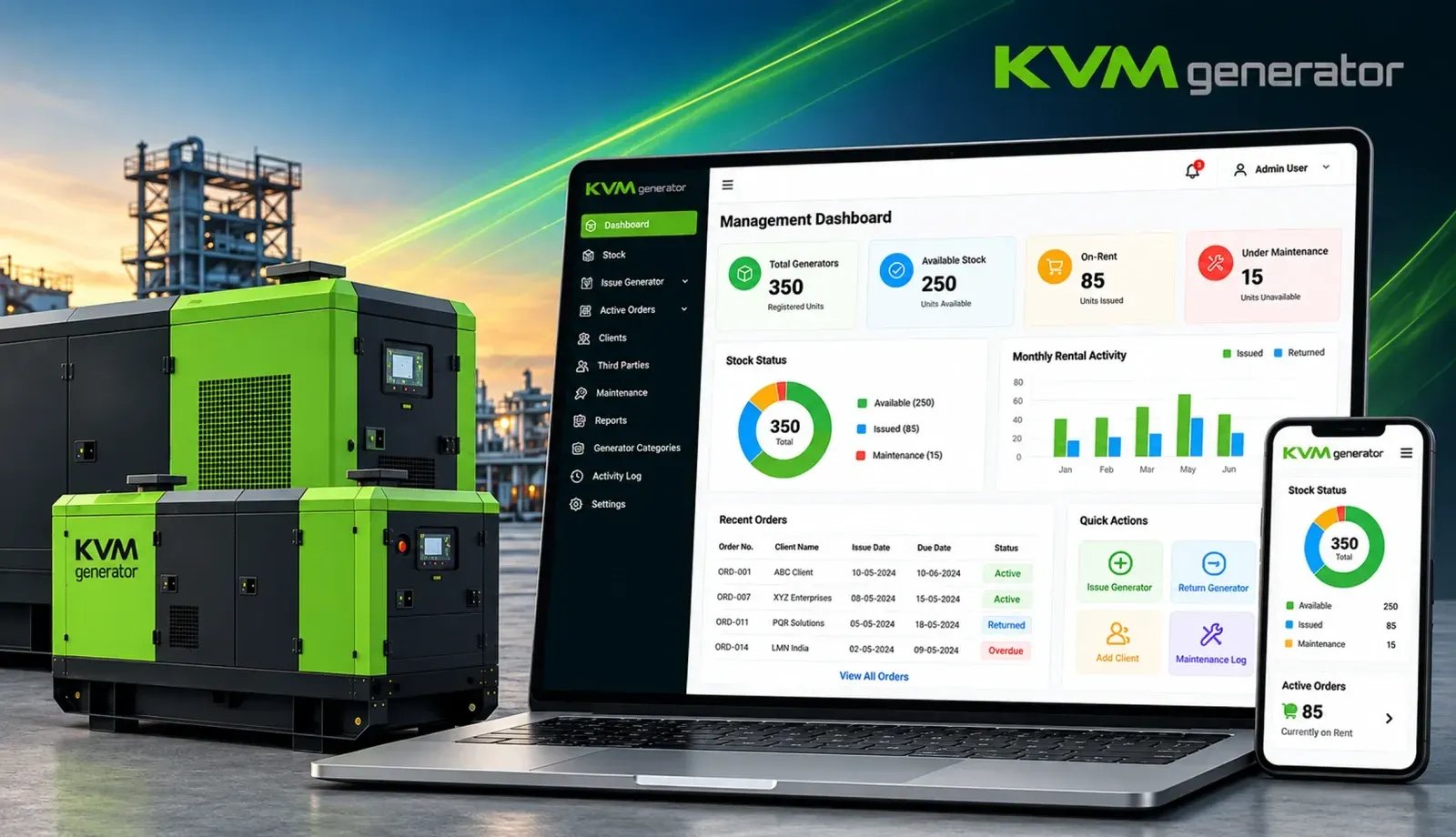
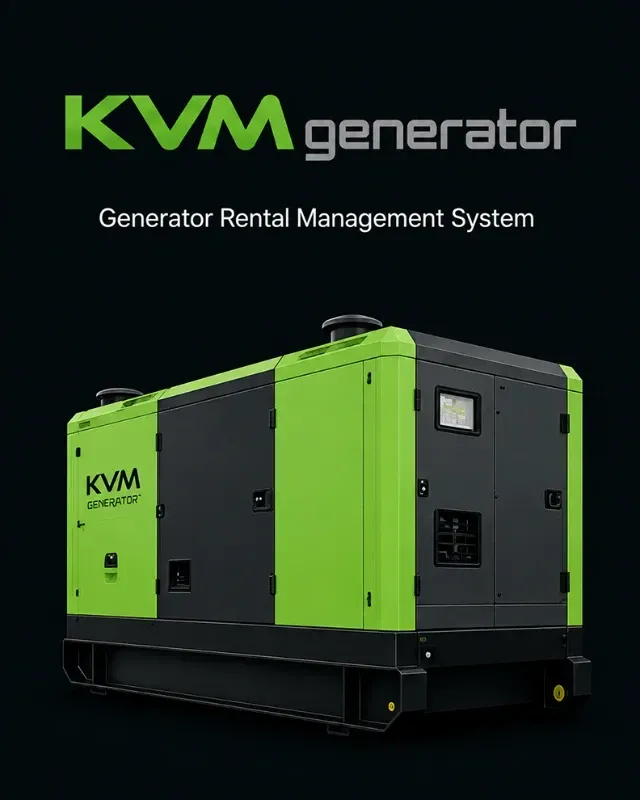
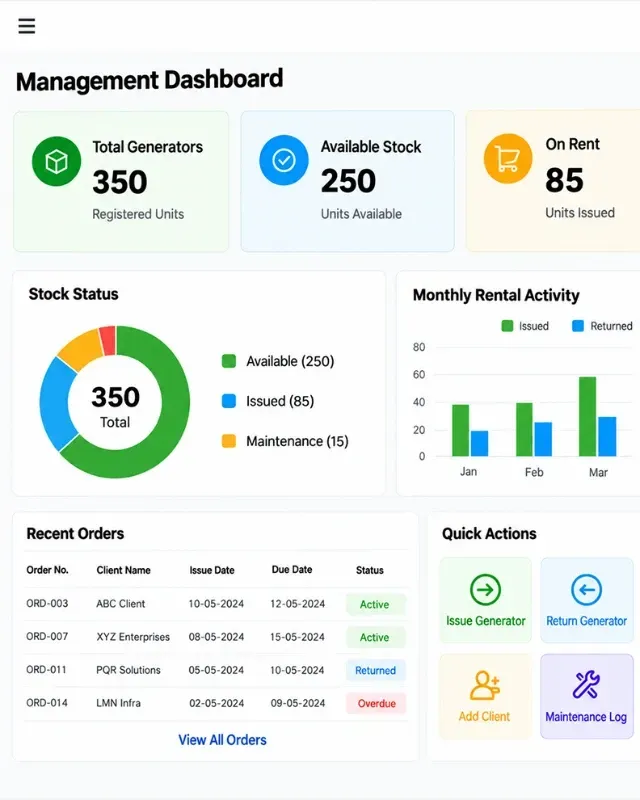
Every generator KVM Generator owns or temporarily borrows now exists as its own record, with a status that reflects reality and a history that cannot be edited away or quietly overwritten.
Whether you need scalable software development, AI integration, SEO optimization, or complete digital transformation, our team is ready to help your business grow globally.
Business Challenge
KVM Generator's stock was recorded as a single available-quantity number per category, so staff had no way to confirm exactly which physical generator had been issued, returned, or damaged. Editing that number directly was routine and routinely wrong, with small mistakes compounding across a fleet of roughly 150 owned units plus third-party generators brought in to meet demand. Third-party units were the harder problem: once returned to their external owner, they sometimes stayed listed as available stock, silently overstating capacity and eroding accountability for equipment KVM Generator did not own. There was no reliable way to see stock split by owner, KVA, and status at a glance.
Stock existed only as a quantity per KVA category, so there was no record identifying which specific physical generator was in the yard, out on rent, or under repair right at that moment.
Staff adjusted an available-quantity number directly whenever a generator moved, and a single missed or mistaken edit threw off the count for an entire category of rental stock overnight.
Third-party units sometimes remained listed as active stock even after being returned to their external owner, overstating available capacity and breaking accountability entirely over time.
Management could not see stock broken down by owner, KVA size, and status at a glance, making basic questions about fleet capacity slow to answer with any real day-to-day confidence.
Without per-unit records, there was no history showing when a generator was registered, issued, returned, or sent for maintenance, so past events stayed genuinely impossible to trace.
Strategic Approach
IM Digital's approach started from one principle: a rental fleet should be tracked as individual physical assets, not a single editable number. Every generator, owned or third-party, was modeled as its own record with a unique Generator ID, KVA category, ownership type, condition, and status such as available, issued, overtime, maintenance, damaged, removed, or inactive. Available stock became a calculation, derived automatically from unit status and active order items, rather than a field anyone could edit directly. Third-party units got a formal register and unregister process so ownership history survives even after a unit leaves.
Every physical generator, owned or third-party, was registered with a unique Generator ID, KVA category, ownership type, and condition, replacing quantity totals with individual, traceable identity for every unit in the fleet.
Available stock is derived from each generator's live status and its active order items rather than a manually edited figure, removing the single biggest source of stock error in the previous, quantity-only system.
A register and unregister process governs third-party units, keeping full ownership history and marking removed units inactive rather than deleting them from the record entirely once they leave the fleet for good.
Every registration, issue, return, maintenance, and removal event is logged per unit in a ledger that cannot be altered, creating a complete, permanent lifecycle trail for each generator across the fleet.
Generators marked damaged or service-required are automatically held in a maintenance status until formally cleared by staff, preventing compromised units from ever being issued out to a client by mistake.
Result
By replacing quantity totals with per-unit asset records, KVM Generator gained a stock system that reflects reality and reports it instantly, broken down by unit, KVA size, and owner.
+95%
Stock Accuracy
-90%
Untraceable Units
-80%
Stock Lookup Time
-100%
Ownership Disputes
Whether you need scalable software development, AI integration, SEO optimization, or complete digital transformation, our team is ready to help your business grow globally.
Explore more software, AI, SEO, and digital marketing projects where we've helped brands achieve real, measurable growth.

IM Digital rebuilt Profile House's flat product listing into a structured, CMS-driven B2B website with category hierarchy, technical product pages, and intent-based enquiry forms for buyers.

Search Engine Optimization
Search Engine Optimization
How IM Digital rebuilt Profile House's URL architecture, internal linking, redirects, and structured data, turning a flat, unstructured product listing into a fully crawlable B2B platform.

See how IM Digital built a channel-specific social media strategy for Profile House, an aluminium profile manufacturer, converting technical content into qualified architect, dealer and OEM enquiries.
Browse our complete portfolio of digital work across every industry we serve.
Explore Our WorkPer-unit inventory management tracks every physical asset as its own record instead of a single editable quantity number. KVM Generator's system registers each generator with a unique ID, KVA category, ownership type, condition, and status, so available stock is calculated from real unit data rather than a figure staff update by hand. Explore Inventory Management System development.
Third-party asset tracking uses a formal register and unregister process so a borrowed unit's ownership history survives even after it leaves the fleet. KVM Generator eliminated ownership disputes entirely once third-party generators could no longer stay listed as available stock after being returned to their external owner, a gap that previously overstated capacity.
Quantity-only tracking fails because a single number cannot say which physical unit is available, issued, or damaged, only how many should exist in theory. KVM Generator's staff could not confirm individual generator status until stock became a calculated result of live unit status and active orders, closing the gap between recorded and real inventory across roughly 150 owned units.
Stock accuracy rose 95% for KVM Generator after replacing editable quantity fields with per-unit asset records carrying a live status for every generator. Untraceable units dropped 90% and stock lookup time fell 80%, since every registration, issue, return, and maintenance event now logs against one identifiable unit instead of a shared category total.
Getting started means deciding what makes each asset unique, whether that's a serial number, capacity, or ownership type, before designing the records around it. IM Digital began KVM Generator's build by modeling generators as individual assets with statuses like available, issued, and maintenance. Contact our team to scope your own system.

 Get a Quote