
 Get a Quote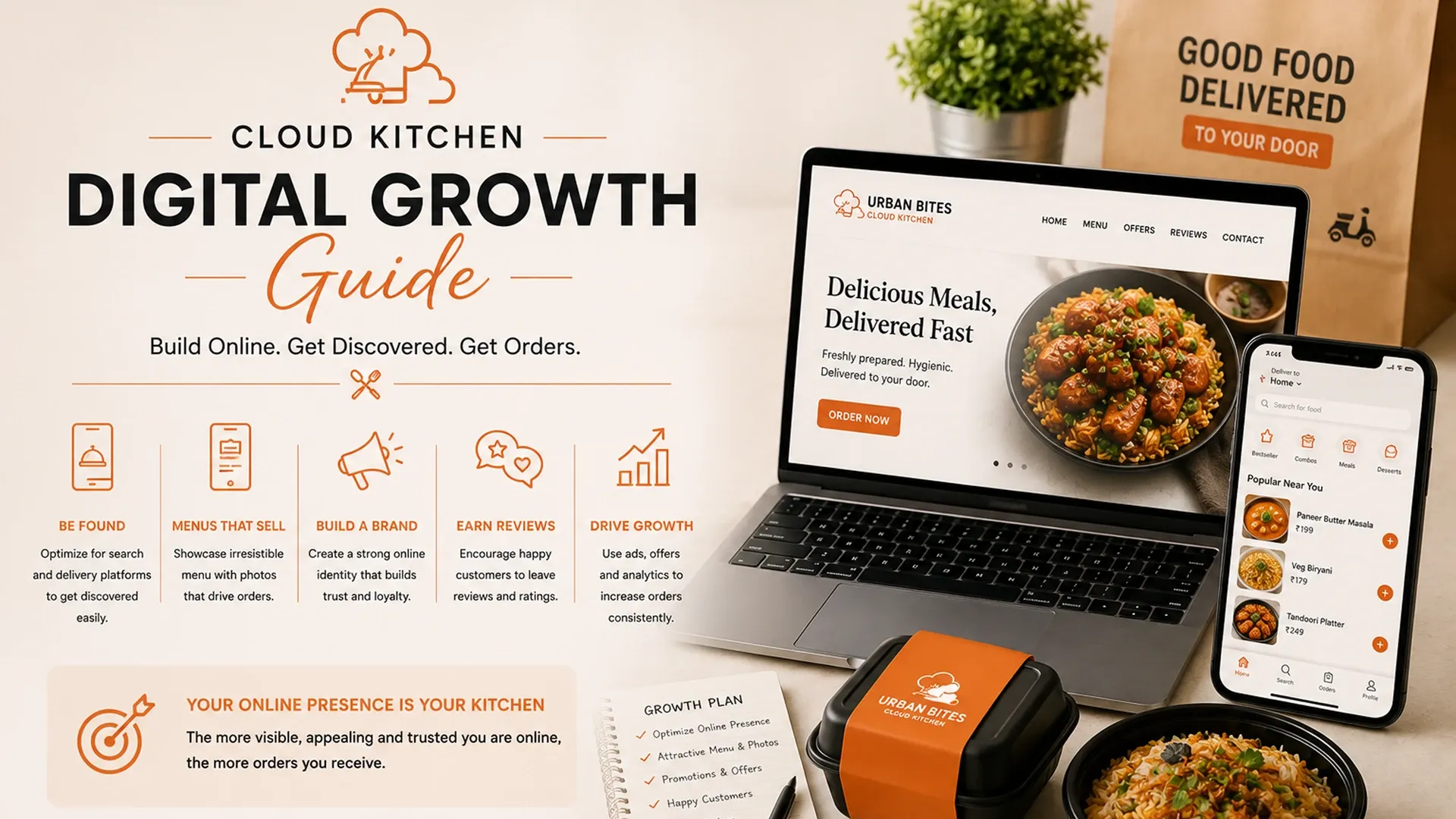
Cloud kitchens grow when food discovery turns into repeat orders. Learn how to scale online with ordering systems, local SEO, and food delivery campaigns.
A cloud kitchen has no storefront, no walk-in traffic, and no passerby who might discover it by chance — every single customer arrives through a screen, which makes digital presence not just important but the entire business. A solid cloud kitchen digital marketing guide starts from that reality: if the kitchen isn't visible and appealing online, it functionally doesn't exist to a hungry customer scrolling through delivery options.
Winning Visibility Inside Delivery Platforms
Good cloud kitchen online ordering tips start with treating delivery app listings as seriously as a storefront — photography quality, response time, and review management directly affect how prominently a kitchen appears in a platform's search results and recommendations.
Ordering Channel | Delivery Platform Only | Direct + Platform Mix |
|---|---|---|
Commission fees | 15-30% per order | Lower average cost per order |
Customer data | Owned by the platform | Owned by the kitchen |
Repeat customer contact | Limited to in-app promotions | Direct email, SMS, and loyalty offers |
Making Direct Ordering Worth Switching To
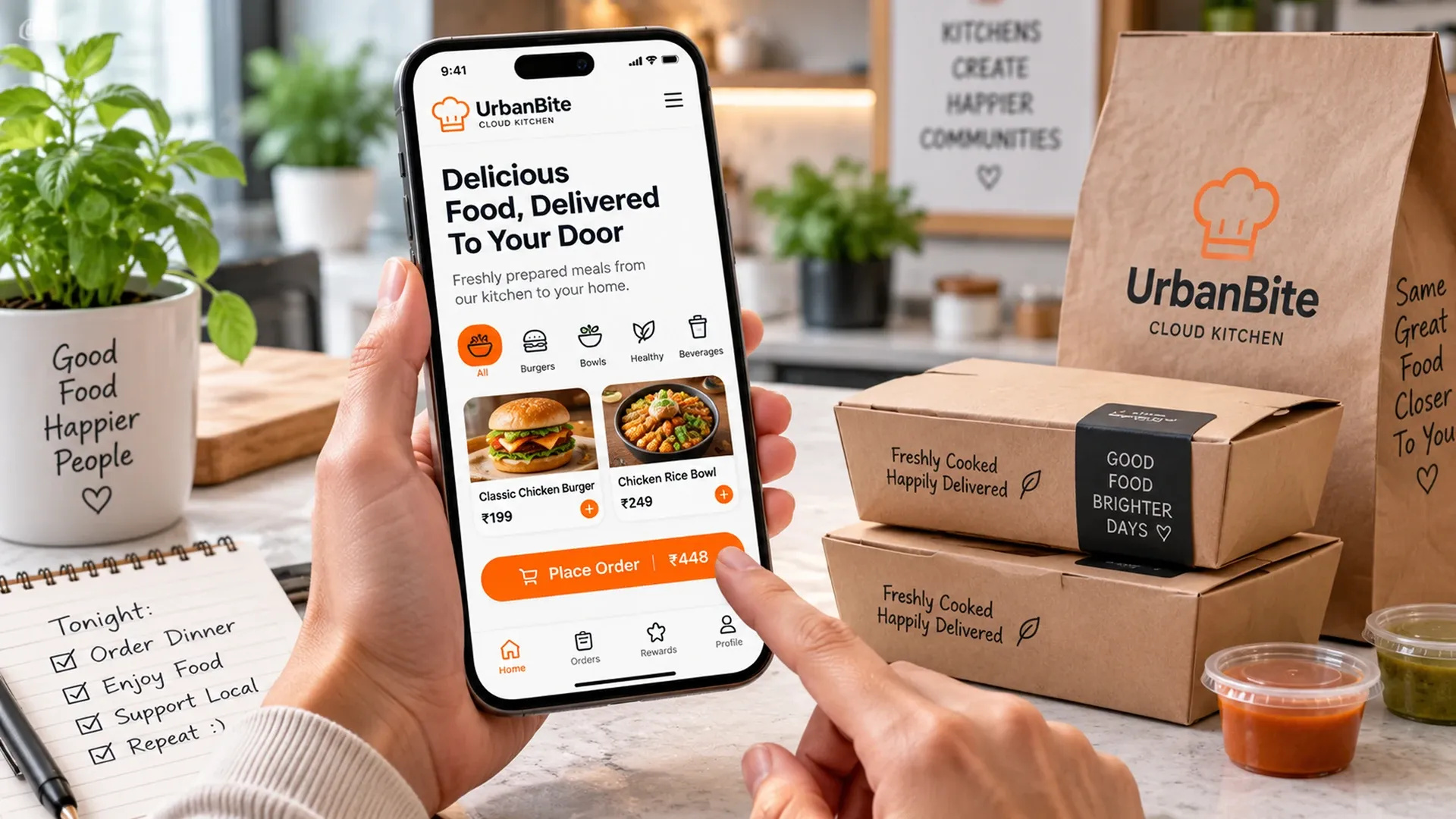
Digital marketing for cloud kitchens increasingly focuses on migrating loyal customers toward direct ordering channels, where commission fees don't quietly erode margins on every single order. A genuine incentive — a modest discount, a loyalty point, or simply a faster checkout — gives customers a real reason to order directly instead of defaulting back to a delivery app out of habit.
Optimizing Menus for How Delivery Apps Actually Rank Listings
Delivery platforms rank listings partly on factors a kitchen can actively influence — photo quality, description clarity, preparation time accuracy, and how often items are marked unavailable. Treating the menu as a living, optimized asset rather than a static PDF uploaded once at launch meaningfully affects how often a kitchen actually gets seen.
- High-quality photos for every menu item, not just the top sellers
- Accurate preparation times that keep delivery estimates realistic
- Regularly updated availability to avoid being buried for stale listings
- Descriptions that highlight what makes a dish worth ordering again
Managing Reviews Across Multiple Delivery Platforms
A cloud kitchen operating on several delivery platforms simultaneously ends up with reviews scattered across each one, and a bad experience left unanswered on a lesser-used platform can quietly damage a reputation just as much as one on the most popular app. Responding to reviews consistently across every platform, not just the primary one, signals genuine attentiveness and gives an unhappy customer an outlet before they simply stop ordering without explanation. Tracking review trends across platforms also surfaces recurring problems — a consistently late delivery time or an item that regularly arrives cold — that might otherwise stay hidden if a kitchen only monitors the single platform generating the most volume.
Winning Local Search Despite Having No Storefront
Even without a physical location customers visit, local SEO for cloud kitchens still matters — a business profile, consistent service-area information, and reviews collected outside delivery apps all help a kitchen appear in general local searches, not just inside a single platform's ecosystem.
Running Multiple Virtual Brands From One Kitchen
Many cloud kitchens operate several virtual brands from the same physical space, each targeting a different cuisine or audience, which multiplies the digital surface area that needs consistent management — separate listings, separate reviews, and separate customer relationships all built from shared kitchen infrastructure.
A cloud kitchen's brand lives entirely on a screen, which means the app listing isn't marketing for the business — it is the business.
Growing a cloud kitchen comes down to winning visibility inside delivery platforms, making direct ordering genuinely worth switching to, optimizing menus for how those platforms actually rank listings, winning local search despite having no storefront, and managing multiple virtual brands without losing consistency across any of them. Kitchens that get this right build the same kind of digital-only trust that increasingly matters for food product brands and catering services selling without a physical retail presence of their own.