
 Get a Quote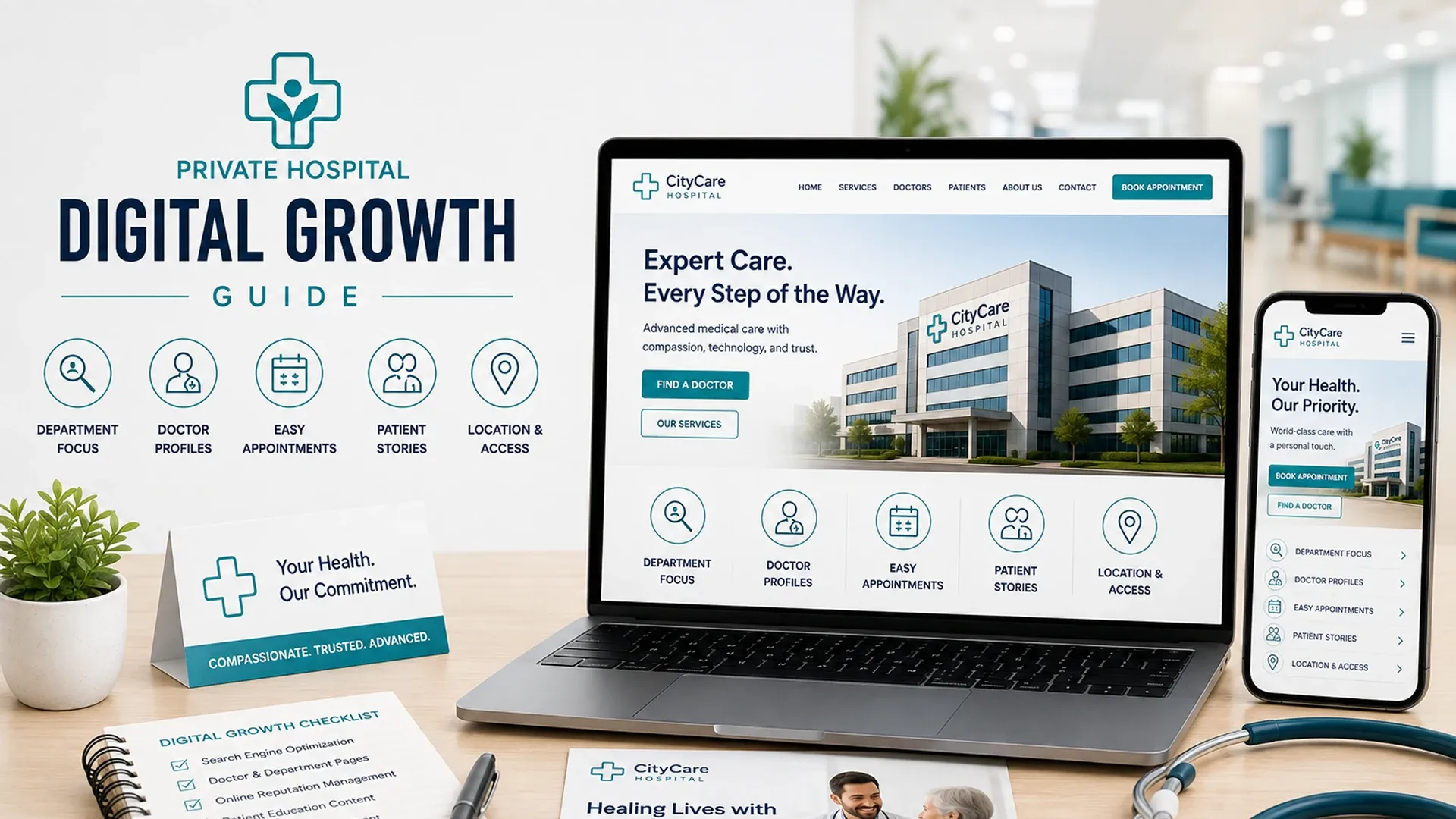
Learn how private hospitals grow with patient-focused websites, appointment systems, healthcare SEO, department pages, and trust content.
Choosing a hospital is rarely a single decision — patients are actually choosing a department, often a specific doctor, and only then the institution behind them, which makes hospital websites some of the most complex trust-building tools in healthcare marketing. A solid private hospital digital marketing guide has to account for that complexity instead of treating the hospital as one undifferentiated brand competing on reputation alone.
Organizing Departments So Patients Find the Right One Fast
Good hospital website development tips start with navigation, because a patient searching for cardiology care shouldn't have to wade through a dozen unrelated departments to find it. Clear, separate pages for each specialty — explaining conditions treated, available doctors, and what a first visit involves — turn an intimidating institution into something a worried patient can actually navigate on their own.
Patient Need | Generic Hospital Site | Department-Structured Site |
|---|---|---|
Finding the right specialty | One long list of services | Dedicated pages per department |
Choosing a doctor | Names buried in a directory PDF | Searchable doctor profiles with specialties |
Booking an appointment | A single general contact form | Department-specific booking flows |
Making Doctor Profiles Do Real Work
Many patients choose a hospital because of a specific doctor's reputation, credentials, or bedside manner described in a review, which means a thin doctor directory listing just a name and title is a missed opportunity. Detailed profiles — specialties, education, patient reviews, and even short introductory videos — help patients feel like they're choosing a person, not just checking a box on an insurance list.
Turning Appointment Booking Into a True Multi-Department System
Digital marketing for private hospitals depends on booking systems that route each request to the correct department automatically instead of funneling every inquiry through one general front desk queue, where urgent requests can quietly get lost among routine ones. A system built around departments, not a single shared inbox, keeps patients moving toward the right specialist.
- Department-specific booking flows instead of one generic form
- Automatic routing based on the specialty a patient selects
- Clear information about insurance networks accepted per department
- Confirmation and reminder messages sent through text or email
Ranking for Both Broad and Highly Specific Searches
Good healthcare SEO for hospitals has to perform at two levels at once — broad searches like "hospital near me" and highly specific ones built around a named procedure or condition. Department pages optimized for that specific intent, backed by recognized credentials such as Joint Commission accreditation, capture patients at both ends of that search funnel rather than losing specialty searches to smaller, more targeted competitors.
Making Emergency and Urgent Information Impossible to Miss
Not every hospital visit is planned days in advance — some patients or their families are searching in genuine urgency, needing to know immediately whether an emergency department exists, what its hours are, and how to get there quickly. Burying this information several clicks deep, behind the same navigation used for routine appointment bookings, wastes precious time for exactly the visitors who can least afford to spend it. A clearly marked emergency contact number, address, and department hours displayed prominently on every page removes that friction at the moment it matters most, and it's a small design decision that can meaningfully affect patient outcomes rather than just marketing metrics.
Building Trust at Institutional Scale
A hospital carries more institutional weight than a single clinic, but that scale can also make it feel impersonal if reviews, outcomes, and credentials aren't presented clearly for each department individually rather than buried inside one aggregate hospital rating that says very little about any specific concern.
A five-star hospital rating means little to a patient trying to evaluate one specific surgeon in one specific department.
Growing patient volume for a private hospital comes down to organizing departments so patients find the right one quickly, making doctor profiles genuinely useful, building booking systems that route requests correctly, ranking for both broad and specialty searches, and presenting trust department by department rather than as one generic score. Hospitals that get this right make the same kind of digital-first impression that keeps private clinics and health coaches competitive in a much more personal, single-provider market.