
 Get a Quote
Learn how EdTech platforms grow with LMS systems, student engagement, SEO, digital marketing, automation, and scalable learning technology.
EdTech platforms compete in a market where learners have more options than ever, and the businesses that grow fastest tend to be the ones that make learning feel effortless rather than complicated. Building an online learning platform is only the starting point — real growth comes from getting students to actually finish courses, from being discoverable to people searching for the right program, and from operations that don't collapse the moment enrollment numbers climb.
Choosing the Right LMS Foundation
One of the earliest decisions in any LMS development for online learning project is whether to build a learning management system from scratch or adopt an existing LMS framework and customize it. This decision shapes development timelines, ongoing maintenance, and how quickly new features can reach students.
Approach | Speed to Launch | Customization | Best For |
|---|---|---|---|
Custom-built LMS | Slower | Full control | Platforms with a unique learning model |
Existing LMS framework | Faster | Limited by the framework | Most standard course delivery needs |
Most platforms are better served starting with an established framework and reserving custom SaaS platform development for the features that genuinely differentiate their learning experience, rather than rebuilding functionality that mature frameworks already handle well, many of which follow open standards like SCORM for content packaging.
Keeping Students Engaged Beyond Enrollment
Enrollment is only the first milestone — platforms that don't actively support students after signup see completion rates drop sharply. A handful of features consistently improve follow-through:
- Progress dashboards that show students exactly where they stand
- Automated reminders for upcoming deadlines or inactive accounts
- Clear next-step prompts after completing a lesson or module
- Certificates or milestones that make progress feel tangible
None of these require complex AI or gamification to work — they simply keep the learning path visible and remove the guesswork of what a student should do next.
Automating Onboarding and Administrative Work
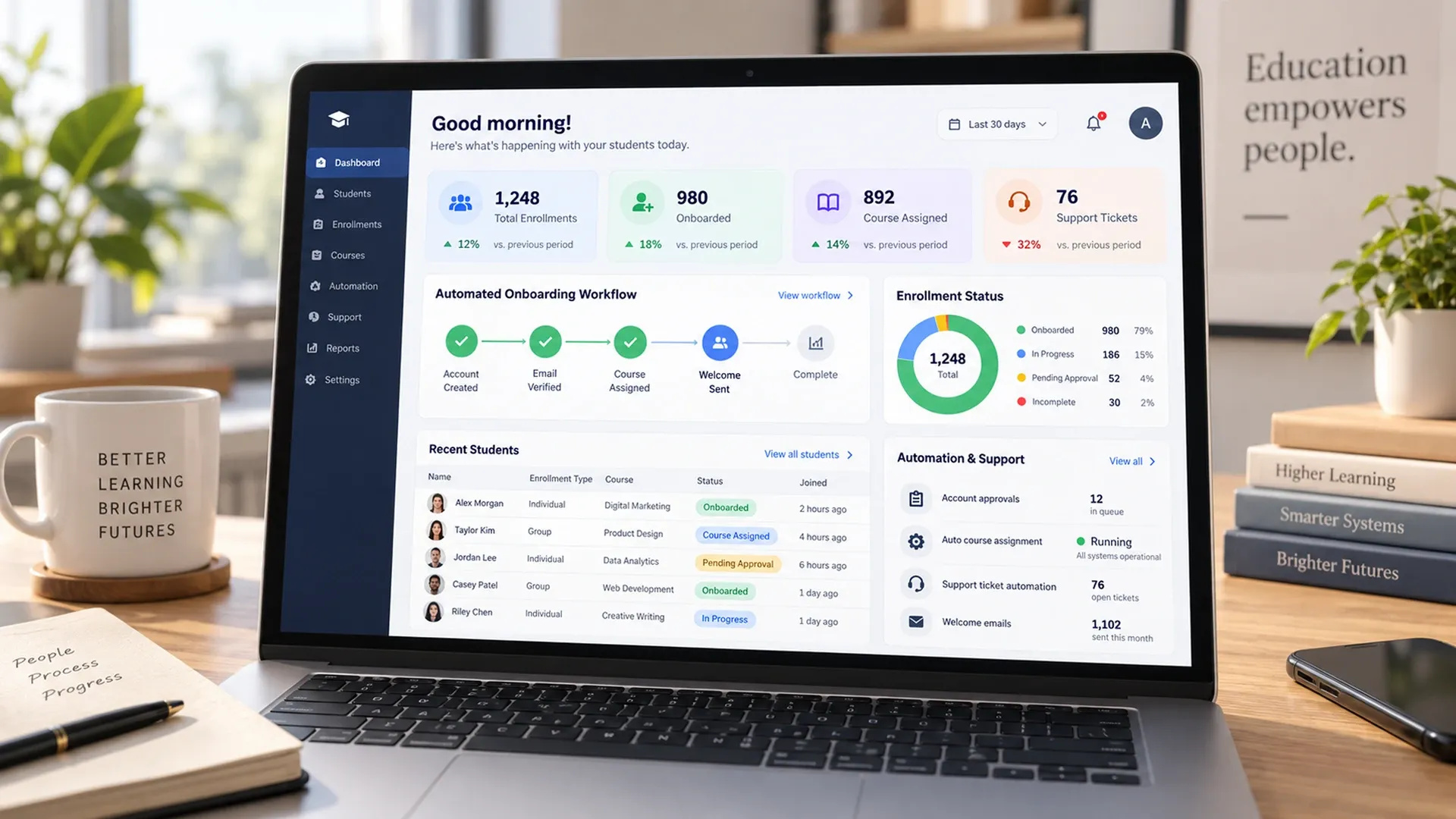
As an EdTech platform scales past its first few hundred students, manual onboarding — approving accounts, assigning courses, answering the same setup questions — becomes a genuine bottleneck rather than a minor inconvenience. Automating account provisioning, course assignment based on enrollment type, and common support responses frees staff to focus on actual teaching quality and student outcomes rather than repetitive administrative tasks. Platforms that automate this early avoid having to rebuild these workflows later under the pressure of a sudden enrollment spike, when there's far less room to redesign processes carefully.
Earning Visibility in a Crowded Search Landscape
Prospective students increasingly research courses the same way they research any other purchase — searching for comparisons, reviews, and specific outcomes before committing, which is exactly where solid education technology SEO tips pay off. EdTech platforms that invest in genuine content marketing around the subjects they teach, optimized for the specific questions learners are asking, build organic visibility that paid acquisition alone can't replicate. This content also does double duty: it demonstrates teaching quality to a prospective student before they've paid for anything, which paid ads and generic landing pages rarely accomplish on their own.
Pricing Models That Match How People Learn
The right pricing model depends heavily on what kind of learning a platform actually delivers, and getting this wrong tends to either scare off prospective students or leave revenue on the table. A single, focused course often sells better as a one-time purchase, since a subscription implies ongoing content that isn't there. Platforms with a continuously growing library, on the other hand, tend to perform better with a subscription model that gives students a reason to stay enrolled long after finishing their first course.
- One-time purchase for a single, self-contained course
- Subscription access for platforms with an expanding content library
- Cohort-based pricing for live, instructor-led programs
- Free introductory content that leads into a paid, deeper program
Effective digital marketing for EdTech platforms means getting the underlying LMS right, keeping students genuinely engaged after they enroll, automating the operational work that would otherwise scale linearly with every new student, earning visibility through content that demonstrates real teaching value, and pricing in a way that matches how the platform actually delivers learning. Platforms that address all five tend to grow more sustainably than those chasing enrollment numbers through paid acquisition alone.