
 Get a Quote
Learn how commercial properties grow with real estate SEO, B2B lead generation, property websites, CRM workflows, and digital marketing.
Commercial real estate digital marketing operates by different rules than residential — buyers and tenants are evaluating an investment or a business decision, not a home, and the digital experience needs to speak directly to that mindset. A property portal built with consumer real estate conventions in mind often fails to give commercial prospects the specific financial and logistical details they actually need to move forward.
Why Commercial Real Estate Marketing Looks Different From Residential
Where a residential buyer might respond to emotional appeals about lifestyle, a commercial prospect — an investor, a business owner scouting locations, a tenant comparing spaces — is evaluating hard numbers: square footage, zoning, lease terms, foot traffic data, or proximity to transportation and suppliers. Marketing that leads with polished lifestyle imagery instead of this practical information tends to underperform with commercial audiences, who are often making decisions on behalf of a business rather than themselves personally, and need concrete data to justify that decision internally to colleagues or investors.
Structuring a Property Portal for Serious Inquiries
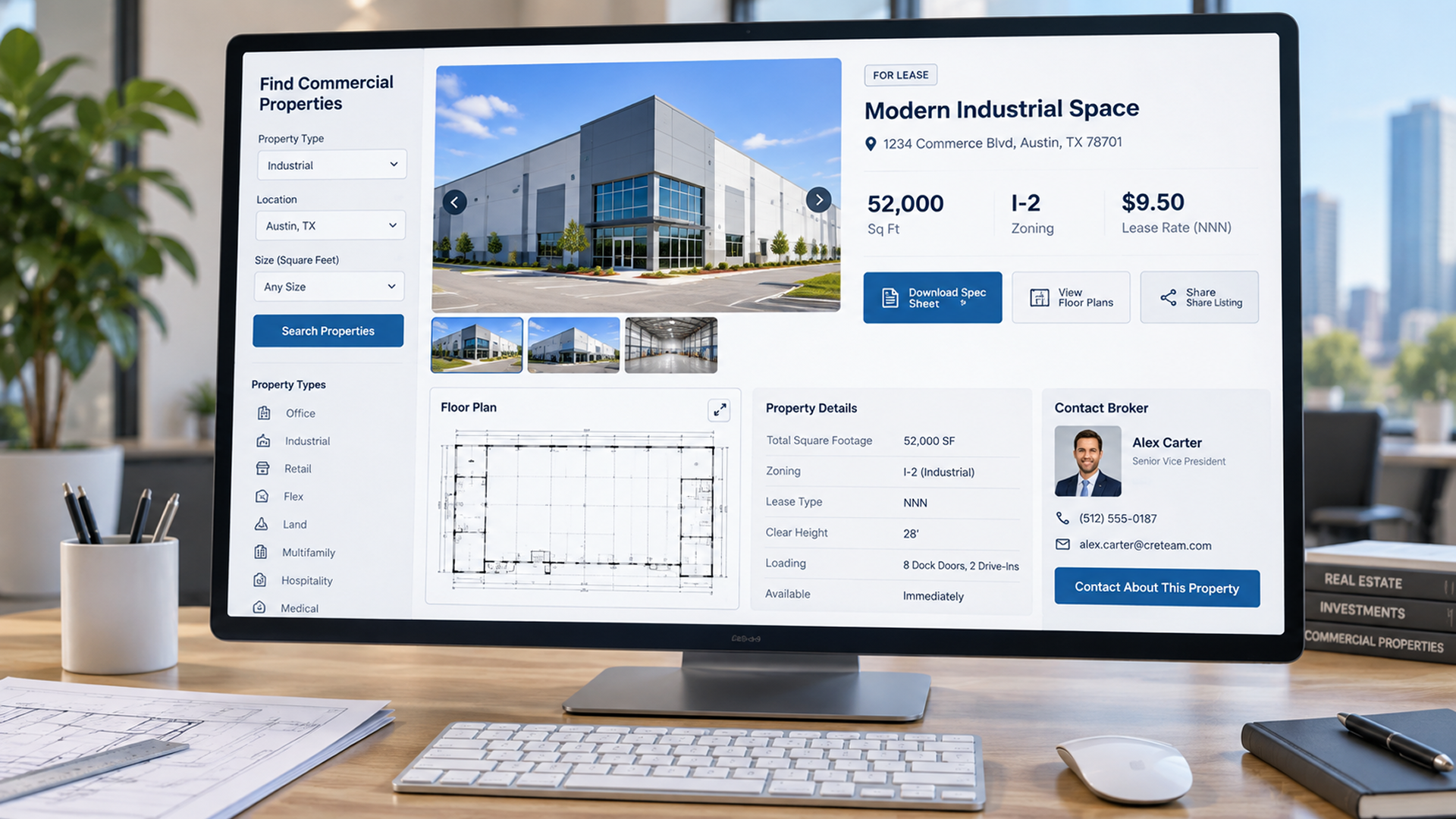
A commercial property portal, built on solid backend development, works best when it lets prospects self-qualify before ever reaching out — the foundation of effective lead generation for commercial properties — since serious commercial inquiries usually require specific details upfront:
- Clear square footage, zoning, and lease or sale terms on every listing
- Downloadable spec sheets and floor plans for detailed evaluation
- Filterable search by property type, size, and location
- Direct contact routing to the specific broker or agent handling that listing
Managing a Longer, More Complex Sales Cycle
Commercial property decisions typically involve multiple stakeholders and a much longer consideration period than residential purchases, sometimes stretching across months as a business evaluates budget, timing, and internal approval. A CRM built through business automation that tracks every touchpoint with a prospect — which properties they've viewed, what questions they've asked, where they are in their internal decision process — keeps this extended relationship organized instead of relying on a broker's memory or scattered email threads that get lost as the process drags on.
Presenting Financial Data Investors Actually Need
Investors evaluating a commercial property are ultimately assessing a financial opportunity, and marketing that omits the numbers that matter — projected returns, occupancy history, comparable rents in the area — forces a serious investor to request basic information before they can even begin a real evaluation, which adds friction and delay to a process that's already lengthy. Presenting this financial context clearly upfront, alongside the physical property details, signals that a listing is being marketed to serious investors rather than treated as a generic real estate listing dressed up for a commercial audience.
Coordinating Between Brokers, Owners, and Marketing
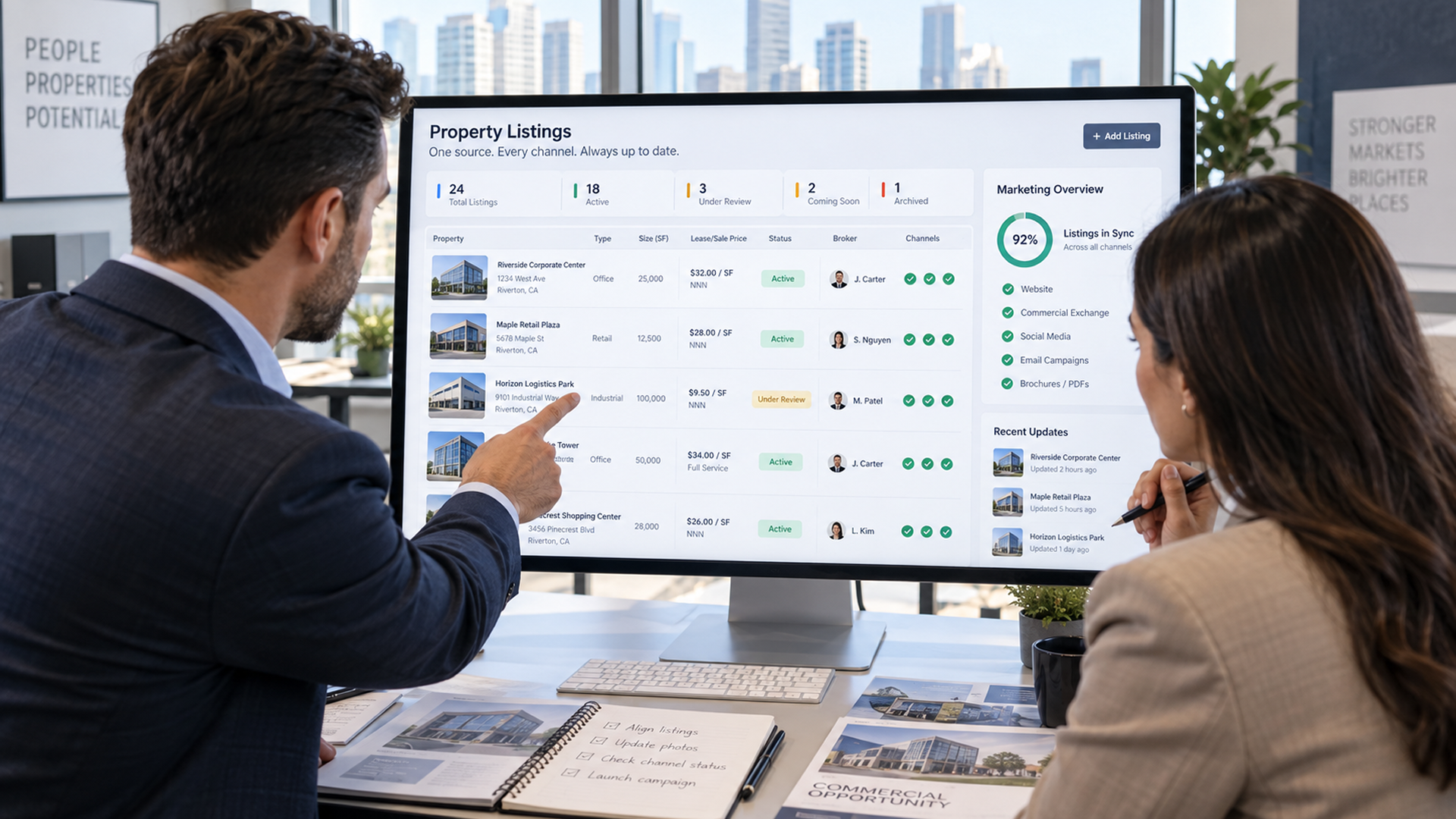
Commercial listings often involve multiple parties with different priorities — a property owner focused on terms, a broker focused on closing the deal, and a marketing effort trying to represent both accurately and consistently. Misalignment between these groups shows up publicly as outdated listings, inconsistent pricing across platforms, or marketing materials that don't match what a broker is actually telling prospects on calls.
Keeping listing information centralized and regularly updated across every channel prevents inconsistency from quietly undermining trust with prospects who notice the discrepancy.
Reaching Investors and Tenants Through Search
Good SEO for commercial real estate starts with the vocabulary: searches often involve specific, professional language — cap rates, triple net lease, class A office space, terminology NAIOP's own resources use extensively — that differs meaningfully from residential search terms. On-page and content SEO built around this specific vocabulary reaches investors and tenants already deep into a serious search, rather than competing broadly against every commercial listing in a market for generic terms that attract far less qualified traffic.
This commercial property marketing guide comes down to speaking directly to the practical, numbers-driven concerns of business buyers, structuring a portal that lets serious prospects self-qualify, managing a longer sales cycle with real organization, and earning visibility for the specific language commercial searchers actually use. Businesses that get all four right convert more of their traffic into genuinely qualified leasing and investment conversations.